Sharkwater: For filmmaker Rob Stewart, exploring sharks began as an underwater adventure. What it turned into was a beautiful and dangerous life journey into the balance of life on earth. riven by passion fed from a lifelong fascination with sharks, Stewart debunks historical stereotypes and media depictions of sharks as bloodthirsty, man-eating monsters and reveals the reality of sharks as pillars in the evolution of the seas. Filmed in visually stunning, high definition video, Sharkwater takes you into the most shark rich waters of the world, exposing the exploitation and corruption surrounding the world’s shark populations in the marine reserves of Cocos Island, Costa Rica and the Galapagos Islands, Ecuador.
The Whale: tells the true story of a young, wild killer whale – an orca – nicknamed Luna, who lost contact with his family on the coast of British Columbia and turned up alone in a narrow stretch of sea between mountains, a place called Nootka Sound. Orcas are social. They live with their families all their lives. An orca who gets separated usually just fades away and dies. Luna was alone, but he didn’t fade away. There weren’t any familiar orcas in Nootka Sound, but there were people, in boats and on the shore. So he started trying to make contact. And people welcomed him. Most of them. This contact did not turn out to be simple. It was as if we humans weren’t ready for him. THE WHALE celebrates the life of a smart, friendly, determined, transcendent being from the other world of the sea who appeared among us like a promise out of the blue: that the greatest secrets in life are still to be discovered.
Eco-Pirate: The Story of Paul Watson: “Eco-Pirate” tells the story of a man on a mission to save the planet and its oceans. The film follows professional radical ecologist, Captain Paul Watson as he repeatedly flouts the law, so that he may apprehend what he sees as the more serious law-breakers: the illegal poachers of the world. Using verité sequences shot aboard his ship as a framing device, the documentary examines Watson’s personal history as an activist through archival footage and interviews, while revealing the impact of this relentless pursuit on his personal life. From the genesis of Greenpeace to sinking a pirate whaling ship off Portugal, and from clashes with fisherman in the Galapagos to Watson’s recent headline-grabbing battles with the Japanese whaling fleet in Antarctica, the film chronicles the extraordinary life of the most controversial figure in the environmental movement; the heroics, the ego, the urgency of the world’s original eco-pirate.
Here are three films the captive marine mammal industry does not want you to see!
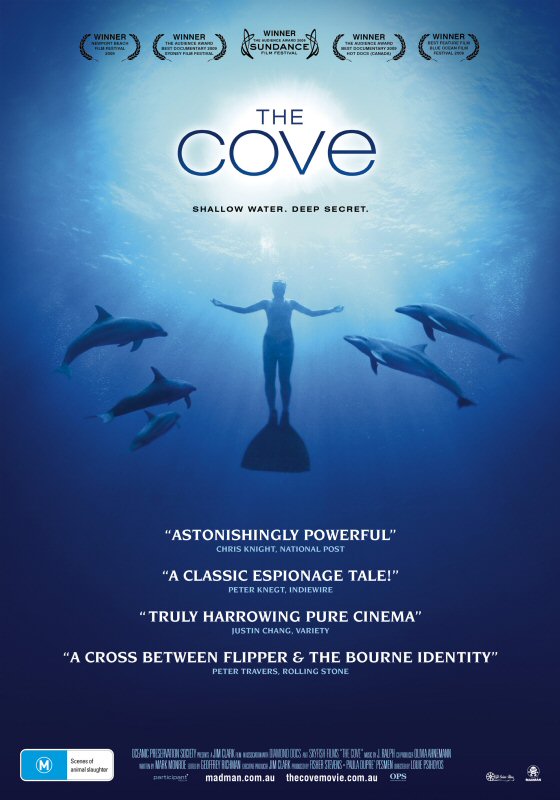
The Cove: Using state-of-the-art equipment, a group of activists, led by renowned dolphin trainer Ric O’Barry, infiltrate a cove near Taijii, Japan to expose both a shocking instance of animal abuse and a serious threat to human health.
A Fall From Freedom: The first comprehensive film to reveal the long and sordid history of the captive whale and dolphin entertainment business. Many of these marine parks and aquariums are directly or indirectly responsible for the death of thousands of the very animals they use for public entertainment. Premature deaths. Trainer injuries. Illegal practices. Educational misrepresentation. Government incompetence. Secret deals. These and many other issues are presented, and documented for the first time in this powerful documentary, narrated by actor Mike Farrell.
Blackfish: Notorious killer whale Tilikum is responsible for the deaths of three individuals, including a top killer whale trainer. Blackfish shows the sometimes devastating consequences of keeping such intelligent and sentient creatures in captivity.
In the wild vs. in captivity ( information credited to – the Animal Welfare Institute http://awionline.org )
In The Wild…
In Captivity…
Each day, dolphins travel up to 40 miles and orcas travel up to 100, feeding and socializing with other members of their pods. Pods can contain hundreds of individuals with complex social bonds and hierarchies.
Cetaceans are housed in small concrete or glass enclosures with no chance to swim for very long or dive deep distances.
Sometimes they are housed alone without opportunities for socialization, or they are forced to be with other animals and even species with whom they would not naturally have close contact.
Dolphins are naturally energetic, playful and inquisitive.
When tasked with entertaining tourists all day, with nowhere to escape, dolphins often become bored, frustrated and aggressive.
Cetaceans spend approximately 80-90% of their time under water. They have the freedom to perform natural behaviors on their own terms.
Dolphins are forced to perform artificial activities such as “walking” on water, jumping through hoops, and nodding their heads on cue.
Whales and dolphins eat a variety of fish, squid and octopi species, as well as smaller mammals.
Orcas and others work in groups, utilizing complex strategies to locate their prey. Some dive thousands of feet in search of food sources.
The animals are given a staple diet of dead fish, often as positive reinforcement during training, with no opportunities to utilize their sophisticated hunting techniques.
Cetaceans live in complex societies with their own cultures and dialects, maintaining close family ties with grandparents, aunts and uncles. Some remain in the same pods for life.
Individuals are violently removed from the wild, with no hope of ever being reunited with their families. Captive animals are withheld forever from the wild gene pool.
Whales and dolphins live in a world of sound.
They rely on echolocation as their main form of communication and use sound to find mates, migrate, communicate, stay at or return to a favored feeding area, nurse, care for young, and catch and escape prey.
Animals are forced to listen to filtration systems, pumps, music and people clapping and yelling on a regular basis.
Their concrete and/or glass enclosures also manipulate sounds, so even if two individuals are housed together, their communication is warped.
Cetaceans are surrounded by other sea life and are an integral part of the marine food web.
Whales and dolphins have evolved for millions of years in the oceans, and in most cases, they are the top predators.
Artificial captive environments are sterile and lack stimulation. The animals’ water is chemically treated with chlorine – though they still suffer from bacterial infections that can be deadly.
The highly chlorinated water can also cause irritation and even blindness.
Activities like beaching themselves in aquatic shows contrast with dolphins in the wild that never would beach themselves. Scientists believe that this is extremely harmful because dolphins resting on their bellies over a hard surface, will eventually damage their internal organs.
By withholding food, some trainers coerce dolphins into repetitive and unnatural behaviours, performing ‘tricks’ for the public. Hunger forces the dolphins to ignore their most basic natural instincts. They are even trained to beach themselves, despite the danger of doing so.
The mortality rates and abnormal behaviours of captive dolphins prove that a lack of stimulation causes them terrible stress. Swimming listlessly in circles is just one common indictor of boredom and psychological distress.
Space is also an issue – pools are miserably small for large, far ranging animals that would swim up to 50 miles a day in the wild. The shallow waters expose dolphins’ delicate skin to painful sunburns.
Dolphins in the wild spend approximately 80% of their time deep below the surface exploring the depths of the ocean. The need for continuous movement of Wild dolphins is one of the reasons that critics of captivity are using as arguments to request the release of dolphins in captivity.
Many dolphins do not survive the trauma of capture. Of those that do, 53% die within three months of confinement. Captive dolphins also suffer and die from intestinal disease, stress-related illness and chlorine poisoning.
‘Swim with dolphins’ programmes cannot guarantee the safety of people interacting with dolphins, even those bred in captivity. These powerful animals are often stressed from being in a confined space. Unsurprisingly, accounts of deliberate and inadvertent human injuries caused by captive dolphins include broken limbs.
Dolphins in captivity are not trained, they are conditioned to perform “tricks” from being starved and only fed twice daily and generally only when performing “tricks”
A very informative video about Dolphin & Whale captivity.
After watching this video – Take the Pledge Not to Buy a Ticket to a Dolphin Show – click here
To date, 15 ex-employees have bravely spoken out about Marineland’s poor treatment of animals; and now the corporation has taken legal action against two. On Oct 17th, Christine Santos was fired after not signing a document that included a statement she’d never seen animal abuse at the park. Shortly thereafter, Marineland served a $1.25 million defamation lawsuit against the former trainer for telling the Toronto Star a killer whale was sporadically bleeding from its tail. Kiska, Marineland’s lone killer whale is now without her most trusted trainer. On Feb 13th Marineland launched a separate suit against Phil Demers citing $1.5 million in damages, with more suits expected.
If you are able to please consider making a donation by clicking here Any and all proceeds will be provided solely for the expenses incurred in defending any whistleblowers and any unused proceeds will be dedicate tot he continued avocation for Ontario’s captive animals.
Tweet Storm for Marineland Whistleblowers March 20, 2013 – click here for the Facebook page and more information
The documentary, The Cove, is in part responsible for what some people call “the 180” I recently took in life. Finally getting up the nerve and deciding to watch The Cove was a life changing experience for me. Prior to the release of this documentary I was completely unaware of the annual dolphin drive hunt that takes place each year in Taiji Japan.
I’ve heard many people say that they simply do not want to watch The Cove, because it’s sad and they do not want to see the slaughter of dolphins. To those people who are afraid and unwilling to watch this documentary, I say just take an hour and half out of your life, watch it and become educated! People watch violence in movies all the time, but when it comes to real life, there are many people who do not want to believe it actually happens. Don’t turn a blind eye to what really happens, take the time, and watch The Cove! I guarantee it will change your perspective on dolphin captivity.
This is a brilliant documentary and the lengths the individuals involved in the film were willing to go to expose the dolphin slaughter is amazing! For instance, going out in the middle of the night and hiding high definition cameras in rocks to record video from vantage points that would have never have been seen before. Sending free divers into the waters of the Cove to place under water cameras and sound recorders. The Cove is a combination of Mission Impossible and Ocean’s Eleven. A team made up of people with special skills, filming what was believed to be the impossible! Mission accomplished and ingeniously done!
For myself, The Cove was a catalyst for change in my life. I have since become more involved, by following the various campaigns currently on the ground in Taiji, who bear witness to the annual slaughter. I have chosen to take a stance against the dolphin slaughter, by informing others of what is still happening in Taiji and will one day stand at the infamous Cove in Taiji to be a voice for the dolphins. And I will certainly never visit another aquarium, Sea World, Marine Park or swim with dolphin program again, if I had known what I know now I would have never visited any of these places in the first place.
Highlights of The Cove:
Taiji appears as the Twilight Zone (in the words of Ric O’Barry) – the town appears to love dolphins and whales – there are dolphin and whale statues throughout the town, everywhere you look in Taiji there is an image of a dolphin or whale – when in reality they are responsible for the mass of slaughter of dolphins and whales each and every year
The Dolphin Smile – is natures greatest deception – while that dolphin performing tricks for your entertainment has a smile – take a look at its eye and you will see the true sadness that hides behind the smile
Only in Taiji can you go to a Dolphin Show and eat dolphin meat at the same time – that’s right they serve dolphin meat at the show. So while you are sitting there watching dolphins perform tricks your entertainment, you may also be eating that dolphins family member.
Taiji is the largest supplier of dolphins to marine parks and swim with dolphins programs around the world – each dolphin can sell for up to $150,000
The majority of Japanese people are unaware of the annual dolphin slaughter in Taiji – when one Japanese lady was interviewed in the film her response was “You’re lying? Are they eaten? Really, it is hard to imagine people eat dolphins.”
Dolphin meat is distributed as whale meat and is not properly labelled – people think they are getting whale meat from the southern hemisphere when its really from the waters of Taiji
The last 10 minutes of the film are when you see the real horror of Taiji – you literally see the water turn from blue to red, you can hear the dolphins cry as they are inhumanely slaughtered and see the true brutality of the dolphin killers. Each of these dolphins fight with everything they have and you watch as these innocent beings struggle to take their last breath and die
One of the most powerful parts of The Cove is in the last five minutes, when Ric O’Barry walks into the International Whaling Commission’s annual meeting with a TV attached to his chest, showing every person in the room the reality of the dolphin slaughter each and every year in Taiji
The Taiji dolphin slaughter resumes every year in September … unless we stop it!
“Any single person can make a difference if he allows his passion to be expressed through action” Margaret Mead
Here is an extended clip of The Cove.
The Cove is a 2009 documentary film that analyzes and questions Japan’s dolphin hunting culture. It was awarded the (82nd) Academy Award for Best Documentary Feature in 2010. The film is a call to action to halt mass dolphin kills, change Japanese fishing practices, and to inform and educate the public about the risks, and increasing hazard, of mercury poisoning from dolphin meat. The film is told from an ocean conservationist’s point of view. The film highlights the fact that the number of dolphins killed in the Taiji dolphin drive hunting is several times greater than the number of whales killed in the Antarctic, and claims that 23,000 dolphins and porpoises are killed in Japan every year by the country’s whaling industry. The migrating dolphins are herded into a cove where they are netted and killed by means of spears and knives over the side of small fishing boats. The film argues that dolphin hunting as practiced in Japan is unnecessary and cruel. The documentary won the U.S. Audience Award at the 25th annual Sundance Film Festival in January 2009. It was selected out of the 879 submissions in the category.
The dolphin drive hunt in Taiji has finally come to an end for 2012-2013 season, however Japan is unfortunately still on their quest of killing whales. The war currently being played out in Antarctica has the Japanese attempting to harpoon and kill whales in the Southern Ocean Sanctuary under the guise of “research” and for commercial purpose.
Sea Shepherd volunteers are currently risking their lives for the whales, as can be seen in the following video.
It is alarming that the Japanese whalers will go to such lengths in their attempt to continue whaling in Antarctica. This is simply a display of no regard for the safety of other human beings. I have watched every season of Whale Wars and am still astonished at what is currently happening! It is highly reminiscent of when the Japanese whalers intentionally ran over and ending up sinking the Ady Gil. You can see in the following video how the Japanese vessel intentionally turns into the Ady Gil, thankfully no one was injured.
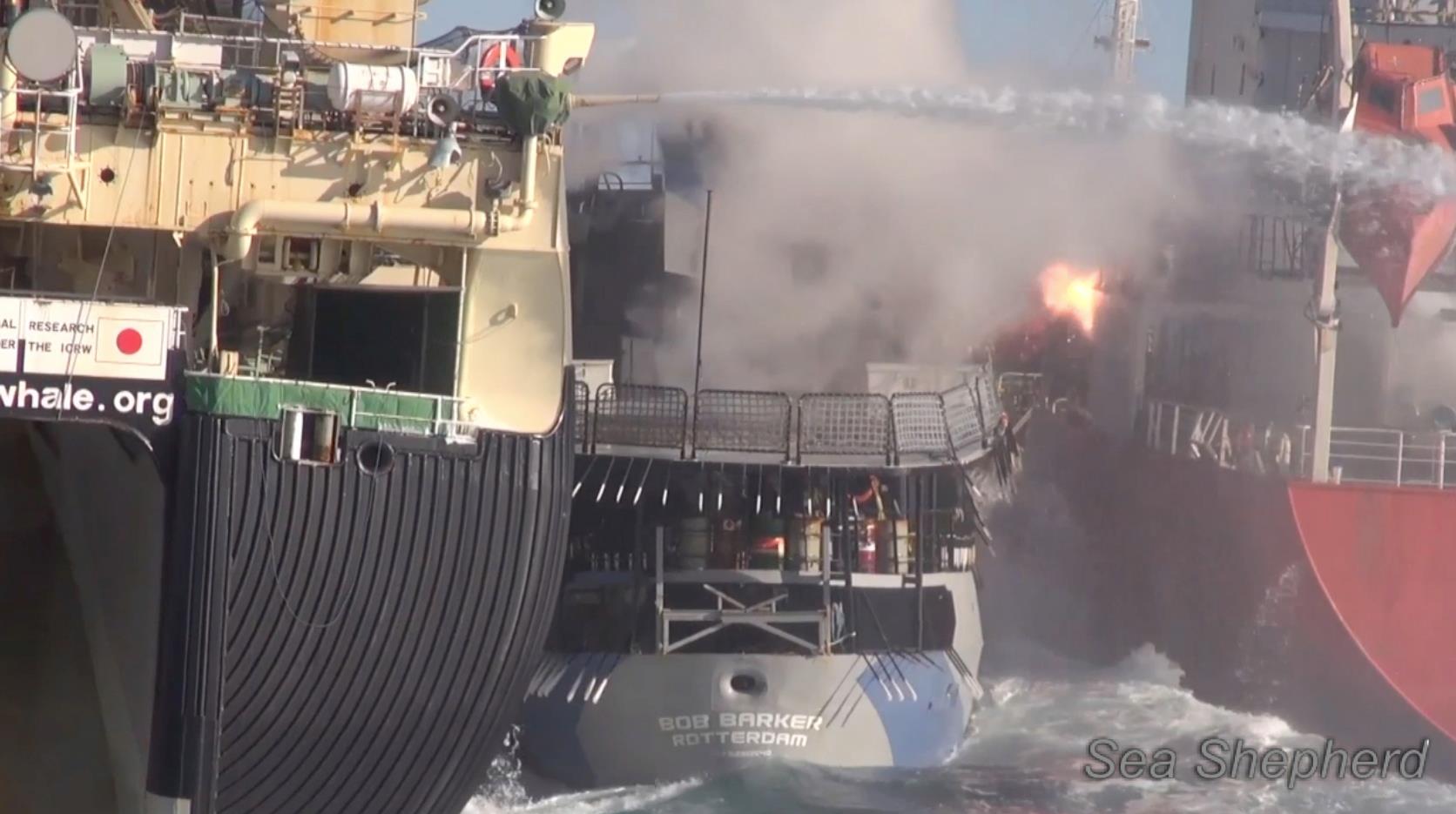
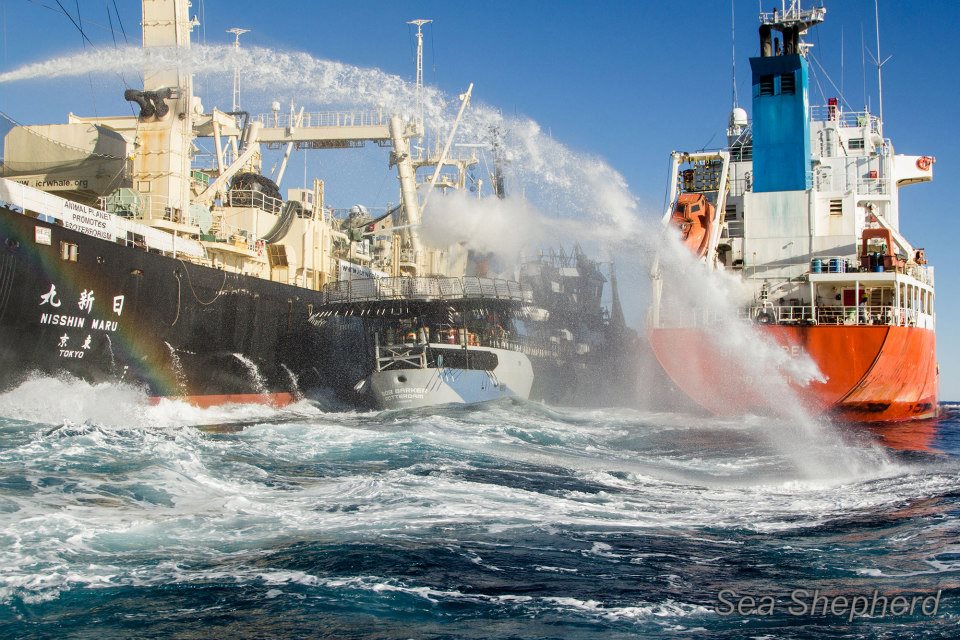
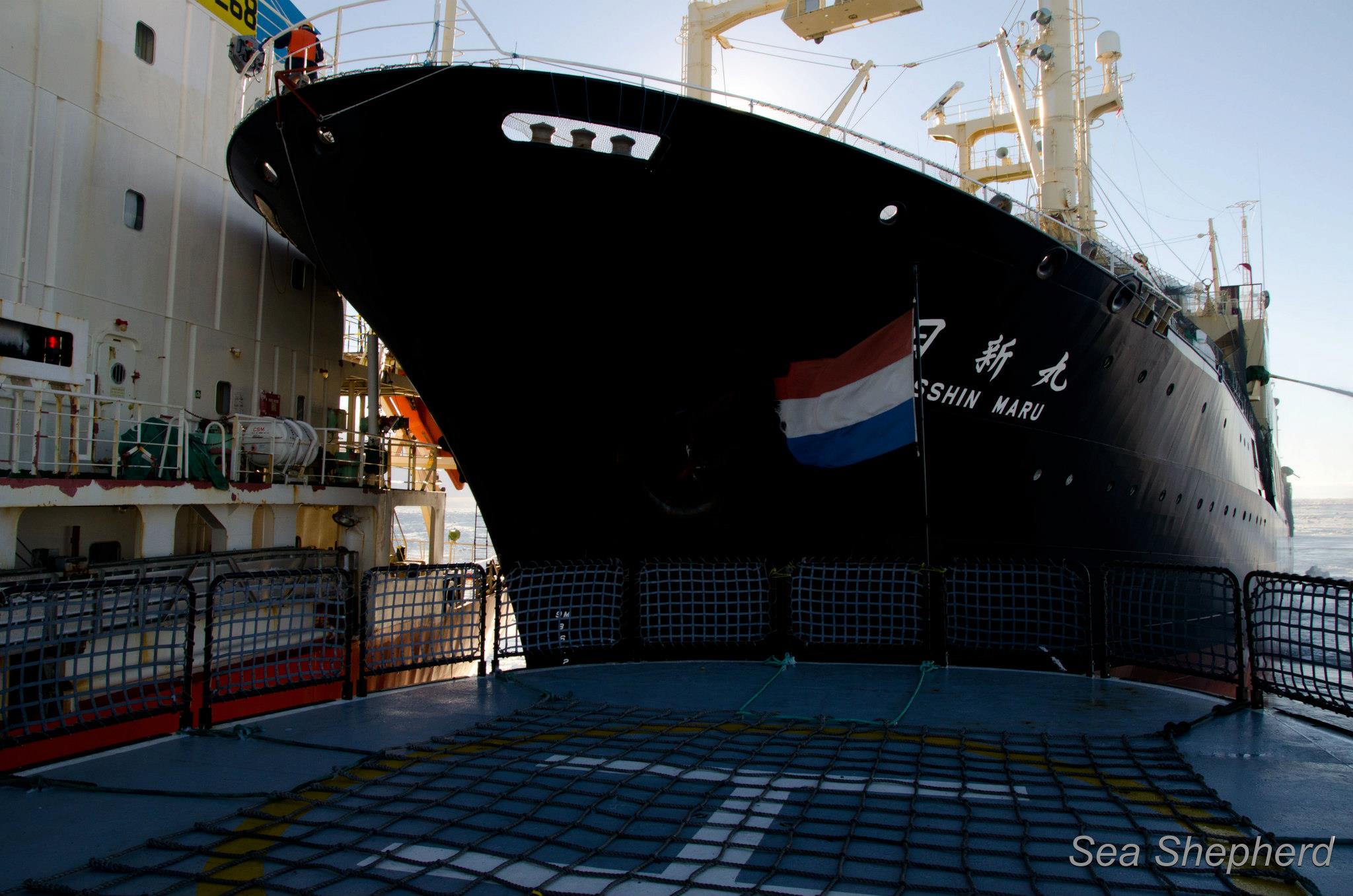
The Nisshin Maru repeatedly ramming all Sea Shepherd vessels is an immediate cause for concern especially for the many courageous volunteers aboard all Sea Shepherd vessels currently putting their live on the line to save whales! Thankfully everyone is currently safe and no injuries have been reported.
The following photos courtesy of Sea Shepherd Conservation Society on Facebook, show just how close the Nisshin Maru comes to and then collides with the Bob Barker.
Via Sea Shepherd New Zealand Zero Tolerance Update. “All attempts by the Nisshin Maru to refuel yesterday failed. The Sea Shepherd ships held their ground. All attempts to kill whales yesterday failed thanks to our inflatable crews intervening. No refuelling or whaling today because it is extremely bad weather, freezing sleet, high winds, heavy seas. Good for us, bad for them. We love bad weather down here and thankfully there is a lot of it and it will become worse each day until the conditions force the poachers from the Southern Ocean Whale Sanctuary by the Ides of March. The Japanese Defence Force ship Shirase is keeping their distance. The Steve Irwin and the Bob Barker continue to tail the Nisshin Maru and the Sam Simon continues to tail the tanker Sun Laurel. The Shonan Maru and the three killer boats are scattered about, everybody just wasting fuel and going nowhere which works for us. As intense and as tough as this campaign has become, it is also the most effective season we have ever undertaken. Last year they took 26% of their kill quota. The year before that they took only 17% of their kill quota and this year it will be much lower than 17%. These poachers are going to have a very light load to take back to Japan and their efforts will be once again – a financial disaster”

 Voice For The Blue