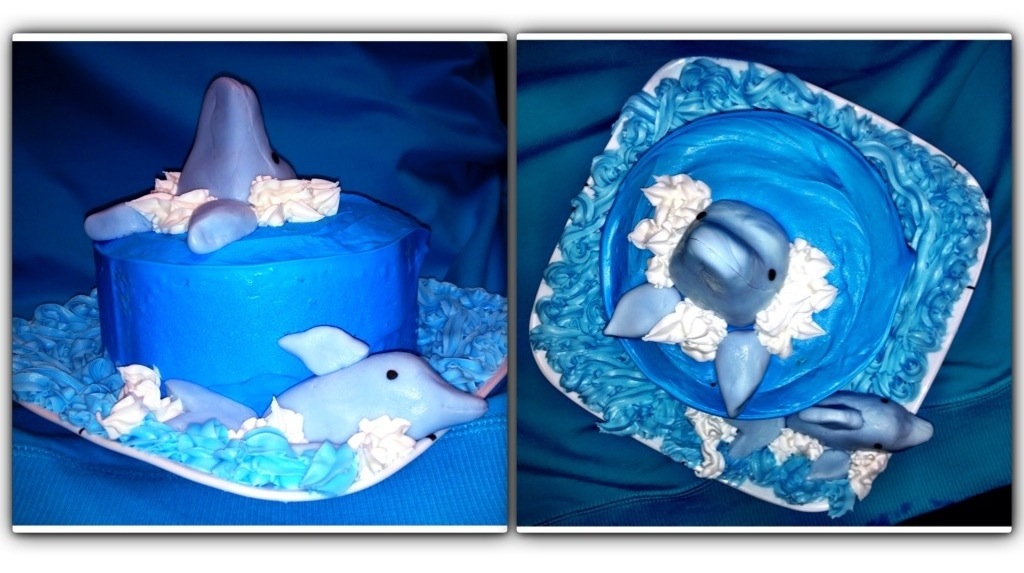
Dolphin Birthday Cake

This amazing birthday cake was made for me by a coworker/friend! She did such an incredible job that I had to share it.

The Dolphins on the cake were edible but I couldn’t bring myself to eat them so I decided to save them instead!

If you have a dolphin loving friend this is the perfect idea for a birthday cake! I absolutely loved it!!

20130512-192836.jpg

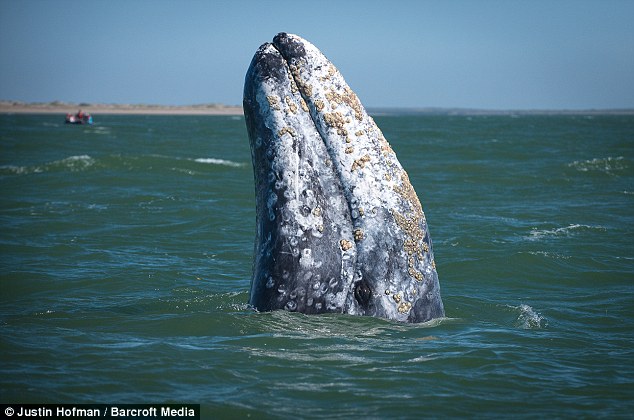
The Real Sea World!

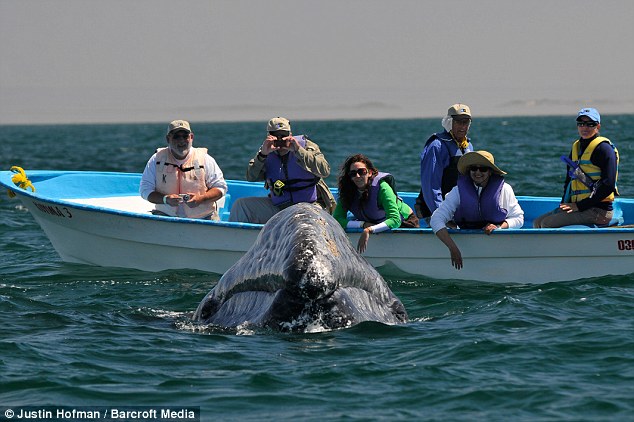
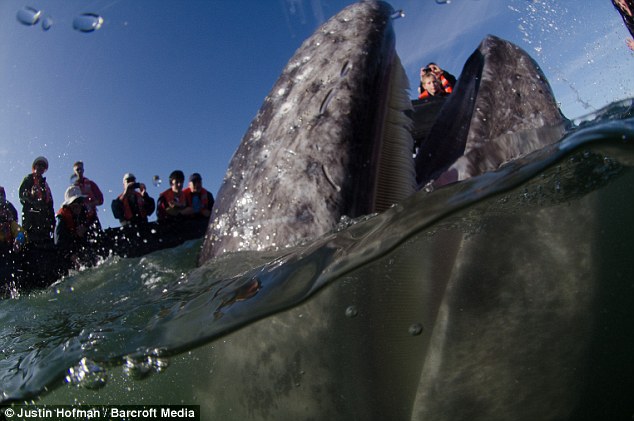
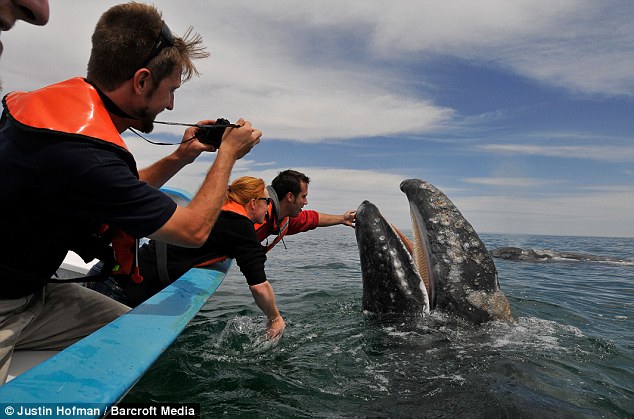
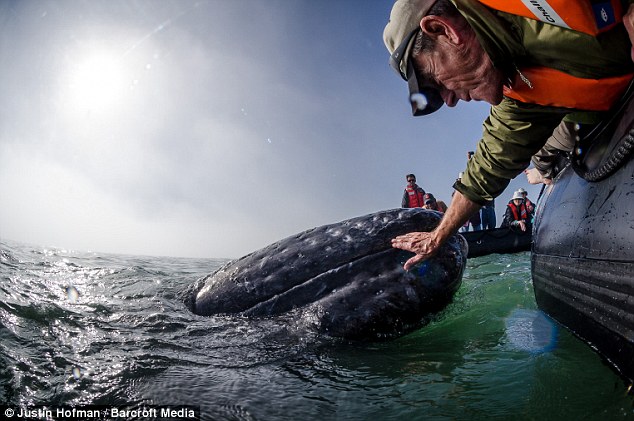
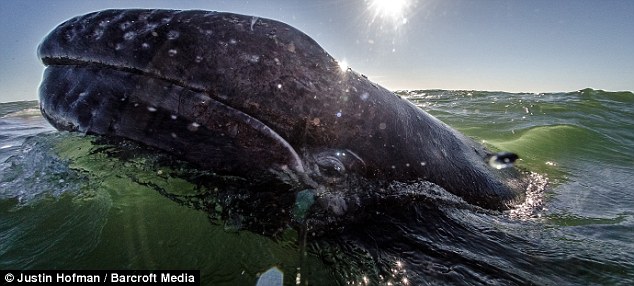
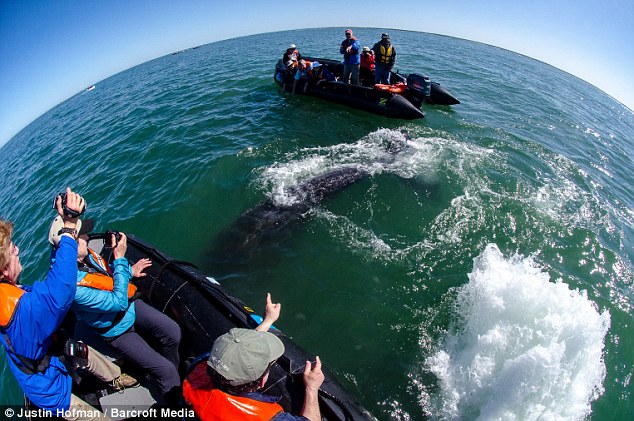
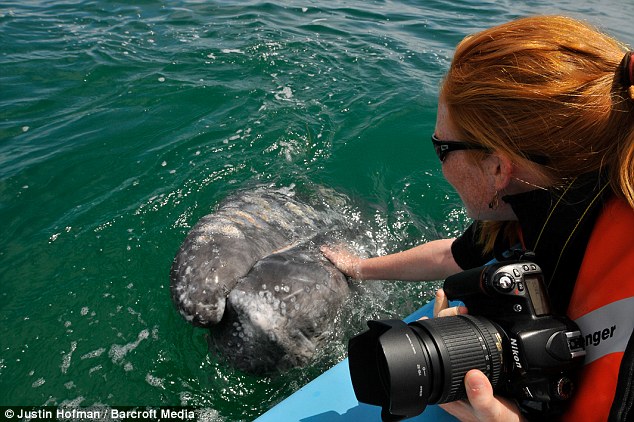
Tourists had a “whale” of a time after a 30 tonne mother gray whale and her calf pop up to say hello!
 
This is the Real Sea World and a heartwarming moment an affectionate 40 ft mother wale and her curious calf popped up to say hello to tourists who showered them with hugs and kisses.
 
The friendly mother rose to the surface just in time to make these holiday snaps ones to definitely remember. Guests were truely amazed when the friendly gray whales drifted up to the boats.

The images were captured by photographer Justin Hofman off the coast of Baja California, Mexico.

article-2300092-18F2B86E000005DC-886_634x420  article-2300092-18F2B7B3000005DC-480_634x422

article-2300092-18F2B5B6000005DC-219_634x421  article-2300092-18F2B622000005DC-2_634x419

article-2300092-18F2B013000005DC-950_634x421  article-2300092-18F2B3E5000005DC-228_634x286article-2300092-18F2B4C1000005DC-443_634x421  article-2300092-18F2B3ED000005DC-448_634x422

Cruelty of Dolphin Captivity – Sensory Deprivation

Is captivity more stressful for dolphins than other animals?

Yes, dolphins are sonic creatures—their primary sense is sound.

If you go to the zoo, take a look at the reptile exhibit and find a snake. You’ll see that the snake is given more consideration than the dolphins at Marineland. You’ll see that the snake has got tree limbs to climb on, he’s got rocks to hide from the public if he wants to, grass—there’s always something natural about the snake’s habitat.

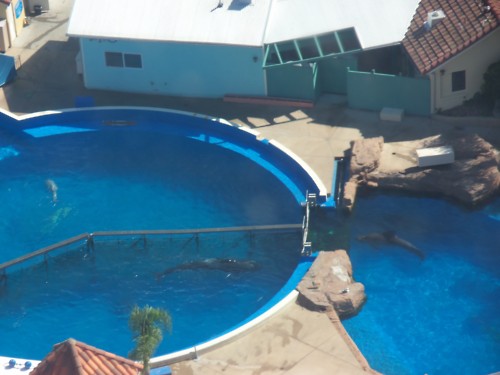
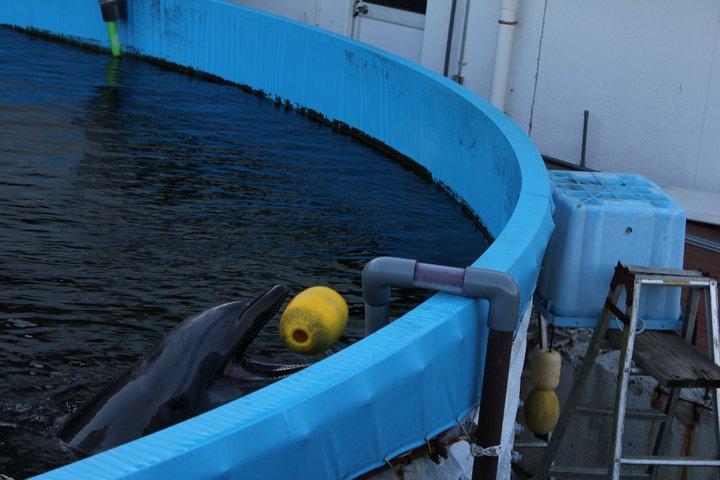
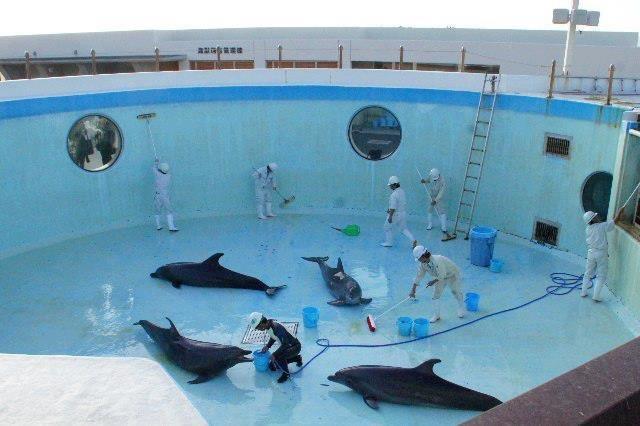
But if you look at the habitat of a captive dolphin, you’ll notice there’s nothing there. It’s just a blank, concrete box. Is that stress? Of course it is.

holding-pools  misty_n

Why can’t marine parks create better environments for dolphins?

It’s really not what’s best for the dolphin; it’s about getting people to come and watch a show, and then getting another group of people to watch the same show.

The dolphins are separated from the natural rhythms of the sea: the tide, the current, the sounds of the sea, the things we take for granted. All of that is missing. That is what we call sensory deprivation. That makes it more stressful for them than other animals in captivity.

captivity12  598858_463115263731552_1963834535_n

Don’t forget that ….

Dolphin Smile

For the dolphins!

Myths – Dolphin Captivity

Myth – Dolphins are happy in captivity.

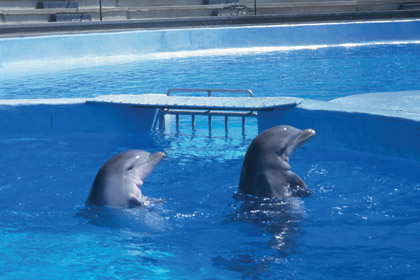
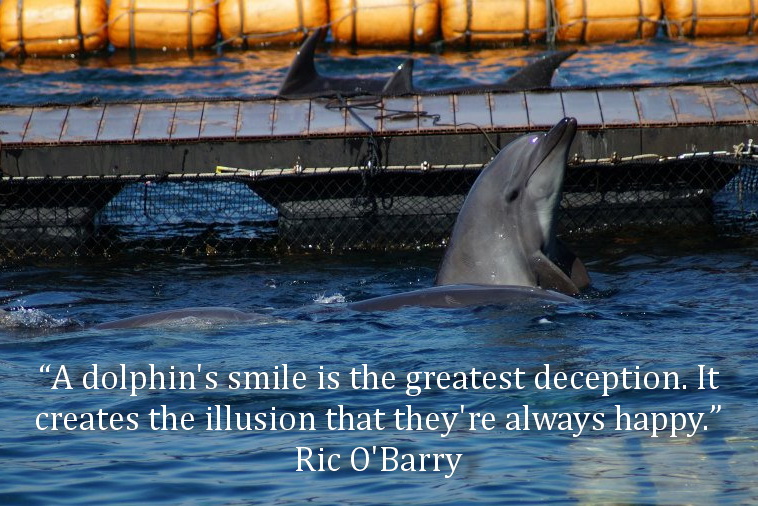
Truth – Dolphins look as though they are smiling because that is the way their faces are shaped. Captive dolphins are constantly on display with nowhere to hide and are forced to perform shows every single day. Dolphins are denied their freedom to travel, and in many cases are taken from their families and homes in the ocean. Would you be happy if you were a captive dolphin?

Myth – Captive dolphins are safe from predators and don’t have to look for food like would in the wild.

Truth – Inmates in prison are safe from being burgled and are fed each day. But do you think they are happy? The main difference between a jail cell and a aquarium tank is that on is filled with water.

Myth – Captive dolphin display have educational value.

Truth – The only thing captivity teaches is that it is okay to imprison animals and force them to perform for our entertainment. In captivity, a dolphin’s natural behavior are repressed. In the wild dolphins do not jump through hoops or drag people through the water with their fins. Captivity presents a completely false image of everything a dolphin is!

Myth – Children establish a connection with dolphins in captivity that would otherwise be impossible to achieve.

Truth – many children care about dinosaurs yet they have never see one. Through photos, videos, stories, tours to see wild dolphins and animations, children can develop love for dolphins without their having to suffer in captivity. Do you think your child would dolphins to suffer if they knew the truth?

Myth – Rescued dolphins have a good home in captivity.

Truth – Dolphins found injured or stranded need medical care and rehabilitation. However, they should not afterwards be forced into a life of servitude and display; they should be released back into the wild. If this is not possible they should be sent to a sea pen where they can live out their lives in privacy and a mostly natural environment.

“Dolphin shows are nothing but a display of human dominance over animals. They are as educational about dolphins as Mickey Mouse is about mice.’ Ric O’Barry

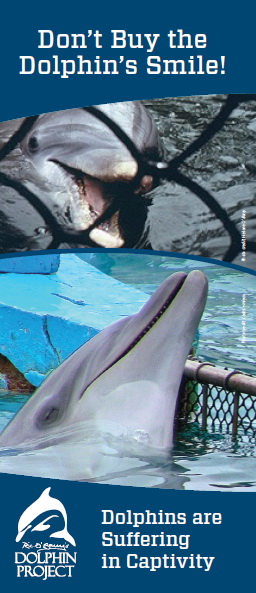
Dolphin exploitation continues to this day because the public remains unaware of dolphin suffering. Now that you are aware, please do not fund the suffering dolphins and other small whales by purchasing a ticket to a dolphin show or swim with dolphin program.

For more information please visit Ric O’Barry’s Dolphin Project

Dontbuyaticket  DolphinProject  cove-poster-0

For the dolphins!

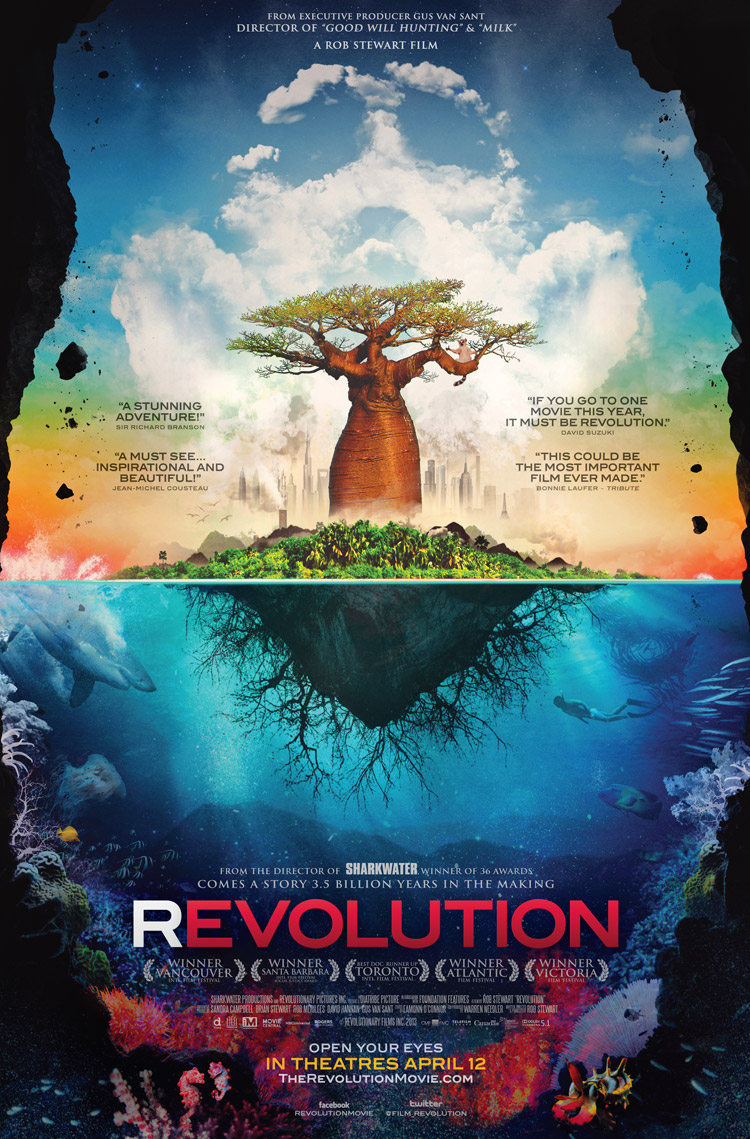
Revolution

revolution-37“Change starts with education. If people are aware of their impact on the earth, they’ll make smarter choices.” -Rob Stewart

Revolution – film about changing the world. The true-life adventure of Rob Stewart, this follow-up to his acclaimed SHARKWATER documentary continues his remarkable journey; one that will take him through 15 countries over four years, and where he’ll discover that it’s not only sharks that are in grave danger — it’s humanity itself.

In an effort to uncover the truth and find the secret to saving the ecosystems we depend on for survival, Stewart embarks on a life-threatening adventure. From the coral reefs in Papua New Guinea and deforestation in Madagascar to the largest and most destructive environmental project in history in Alberta, Canada, he reveals that all of our actions are interconnected and that environmental degradation, species loss, ocean acidification, pollution and food/water scarcity are reducing the Earth’s ability to house humans. How did this happen, and what will it take to change the course that humanity has set itself on?

Travelling the globe to meet with the dedicated individuals and organizations working on a solution, Stewart finds encouragement and hope, pointing to the revolutions of the past and how we’ve evolved and changed our course in times of necessity. If people were informed about what was really going on, they would fight for their future — and the future of other generations. From the evolution of our species to the revolution to save it, Stewart and his team take viewers on a groundbreaking mission into the greatest war ever waged.

Startling, beautiful, and provocative, Revolution inspires audiences from across the globe to start a revolution and change the world forever.


For more info please check out:

http://www.therevolutionmovie.com
http://www.facebook.com/revolutionmovie
http://www.twitter.com/film_revolution

Scientists See Cruelty in Killing Method Used in Japan’s Dolphin Hunt & Slaughter

In a new peer-reviewed study, scientists assess the killing method employed by the dolphin hunters of Taiji, Japan, by watching video recorded surreptitiously in 2011 by a German dolphin-protection group, AtlanticBlue.

Here’s the researchers’ not-so-surprising prime conclusion: This killing method does not conform to the recognized requirement for “immediate insensibility” and would not be tolerated or permitted in any regulated slaughterhouse process in the developed world.

Here’s the abstract of the paper: “A Veterinary and Behavioral Analysis of Dolphin Killing Methods Currently Used in the ‘Drive Hunt’ in Taiji, Japan” Journal of Applied Animal Welfare Science, Volume 16, Issue 2, 2013 (DOI: 10.1080/10888705.2013.768925) Andrew Butterworth, Philippa Brakes, Courtney S. Vail & Diana Reiss

Annually in Japanese waters, small cetaceans are killed in “drive hunts” with quotas set by the government of Japan. The Taiji Fishing Cooperative in Japan has published the details of a new killing method that involves cutting (transecting) the spinal cord and purports to reduce time to death. The method involves the repeated insertion of a metal rod followed by the plugging of the wound to prevent blood loss into the water. To date, a paucity of data exists regarding these methods utilized in the drive hunts. Our veterinary and behavioral analysis of video documentation of this method indicates that it does not immediately lead to death and that the time to death data provided in the description of the method, based on termination of breathing and movement, is not supported by the available video data. The method employed causes damage to the vertebral blood vessels and the vascular rete from insertion of the rod that will lead to significant hemorrhage, but this alone would not produce a rapid death in a large mammal of this type. The method induces paraplegia (paralysis of the body) and death through trauma and gradual blood loss. This killing method does not conform to the recognized requirement for “immediate insensibility” and would not be tolerated or permitted in any regulated slaughterhouse process in the developed world.

Here are questions from Andrew C. Revkin (NY Times) and Diana Reiss’s responses: (source)

Q. Can you tell me in a few words what this analysis means to you in the larger context of human/animal relations?
A. Dolphins are a cognitively and socially complex species that exist in their own societies in the seas. To see any animal treated in this way is shocking. Given what we know scientifically about the awareness, sensitively, cognitive and social prowess of dolphins, this treatment is unjustifiable and unacceptable and needs to be stopped immediately. In the larger context of human and non-human animal relations, the methods used to herd dolphins and then kill them is off-the chart in terms of any concern for animal welfare. At a time when most countries are concerned for the conservation and welfare of dolphins and whales it is strange and disturbing to see a modern country like Japan continue to ignore scientific knowledge and concern for these species. In most modern countries these mammals are protected but sadly we see these exceptions. Our scientific knowledge needs to transcend cultural and geographic boundaries and these species need global protection. 
Q. One of the standard replies from Japan on this issue (whether with whales or dolphins) is that we, for example, cherish bison but eat bison burgers. Is there a distinction?
A. You cannot compare bison to dolphins in the cognitive domain. However, bison are not killed in this inhumane manner.  Nor are lab rats. In cases in which animals are domesticated for food, most modern countries are striving for better animal welfare practices that minimize pain and suffering during the killing process with the goal to render an animal unconscious quickly before it is killed. This is not the case in the dolphin drive hunts. These are not domesticated animals; they are wild dolphins that are captured within their social groups, mother and young, and slaughtered using a technique that actually prolongs death, pain and suffering.  The herding procedures themselves are inhumane and may include forced submersion as the dolphins are dragged by their tails to shore to be killed. This is not to say that dolphins should be killed. They should not.

In an interview last month with the journalist David Kirby, Mark Palmer, the associate director of Earth Island Institute’s International Marine Mammal Project, estimated that the dolphin hunters of Taiji killed nearly 900 dolphins and pilot whales this season and kept nearly 250 to sell for alive to the aquarium trade (which is booming in the Middle East and Asia).

This video is not suitable for children and may be disturbing to some adults:

http://www.youtube.com/watch?v=dzOw5IBmqWk&feature=youtu.be

For the dolphins!!
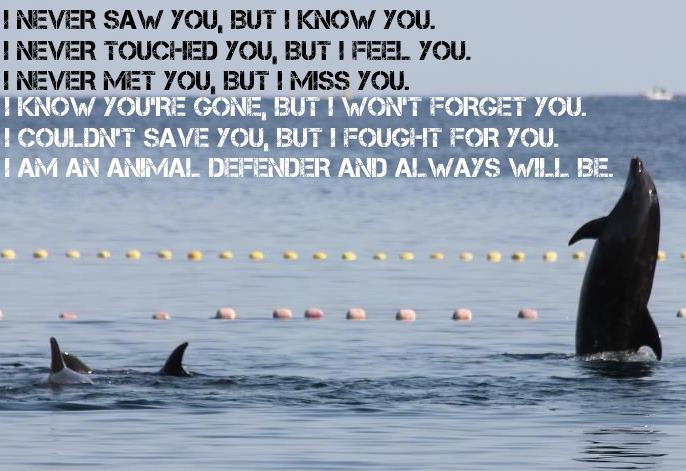
Powerful Message from a Grieving Dolphin

Whale watchers aboard Captain Dave’s Dolphin and Whale Watching Safari had an unexpected and heartbreaking encounter with a pod of bottlenose dolphins yesterday. A deceased dolphin calf was being carried by an adult bottlenose dolphin on its back.

This video sends a powerful message and it is a window into a dolphins heart. This animal is laboring under the strain of carrying the deceased calf on its back and is probably keeping it near the surface so the departed dolphin can breathe. Dolphins do not normally swim with their dorsal fins sticking out of the water continuously like this bottlenose did.  This poor grieving mother dolphin takes us, without words, to a place where as one of our passengers said in the video “humans and dolphins are not so different.”

The pair were surrounded by other dolphins, almost as if they were being protected, during this profoundly sad time. The dolphin was seen an hour later by another boat still carrying the calf.

For the dolphins!

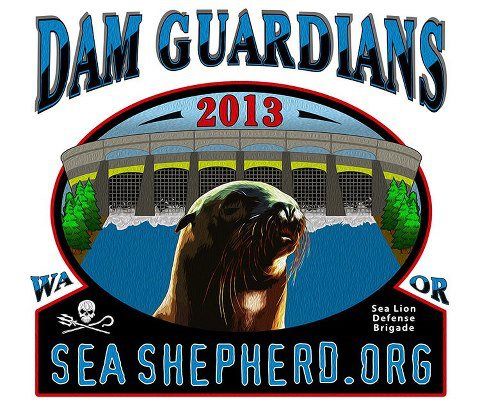
The Dam Guardians – Sea Shepherd Conservation Society

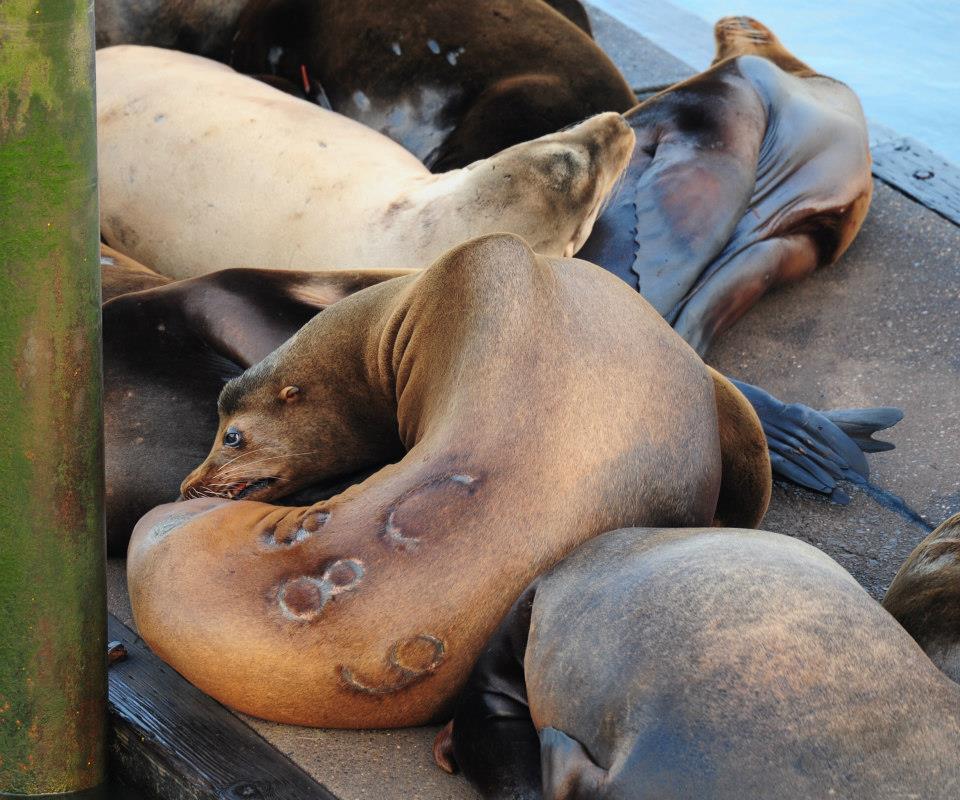
Sea Shepherd Conservation Society, who is well known for their attempts to stop whaling ships in the southern ocean whale sanctuary, now wants to stop Oregon’s killing of sea lions that eat endangered salmon in the Columbia River. The Dam Guardians of Sea Shepherd, in Astoria on Sunday, photographed and video-taped Oregon Department of Fish and Wildlife technicians as they captured and branded  38 sea lions at the East Mooring Basin.

The fact is the sea lions take less than 4% of the salmon runs. Whereas, habitat loss, hydroelectric dams, hatchery fish and harvest are responsible for the bulk of wild salmon declines. The sea lions will be branded with hot irons, hazed with rubber bullets and explosives, and killed by lethal injection or shotgun for eating less than 4% of the salmon at the dam. All of this mayhem, conducted on the dime of taxpayers, takes place while commercial, sport, and tribal fisheries are allowed to take up to 17% of the same endangered salmon and the dam itself claims approximately 17% of adult salmon.

About 1,400 sea lions have been branded at Astoria since 1997 as part of a general population study. Numbers branded on the animals are used to identify sea lions  that go upriver to feed on endangered salmon at Bonneville Dam, where  the fish are vulnerable while waiting to go over the fish ladder.

You can follow the Dam Guardians on twitter: @DamGuardians and on Facebook Sea Shepherd USA

Also check out: http://www.seashepherd.org/dam-guardians/

“Palm Sunday for some is supposed to be a peaceful holiday. We woke to the sounds of sea lion screams coming from Pier 36. We scrambled to get dressed, get our equipment, and get down to the docks. We were astounded by the sight of 30 + beautiful sea lions, in sheer terror, climbing upon eachother and crying out in fear. Trying to escape their human captors. Sea Lions literally filled the trap, and… the weight was causing the cage to sink. The sea lions sitting on the docks were also upset. Little ones were swimming up to see their friends in the trap. Matt from O.D.F.W. would bang on the bottom of the trap with a stick and the only way out of the trap was to go into the squeeze cage. Where they would be held tightly against their will, their movements restricted while seering hot irons were pressed into their flesh. The sea lions don’t understand this type of behavior and the way that these humans were treating them. I don’t think the humans understand how it would feel if this was being done to them. The sea lions do not know things like what would drive a man to put them, in a cage and traumatize their family. They do not understand cold hearts that will press seering hot irons into their flesh because these humans do not want to share the fish with wildlife A woman was screaming “Don’t hurt the babies, Matt, how do you sleep at night?” We talked to tourists who heard the sea lions and this woman screaming. They flocked to the pier, and walked away with the truth about what is happening to our oceans, and to marine wildlife on The Willamette and Columbia River. I noticed they would come with smiles on their faces and left looking disturbed. With horror and tears on their faces.   With tears streaming down our face, we refused not to look away. We documented this horror for over six hours.” Ellie Buchanan Sea Shepherd USA
887251_540100109346534_579627846_o
  601099_539960852693793_1352651390_n   542570_529463687076843_1046342363_n
Photo credits: Sea Shepherd USA
579451_315150071921033_756942383_n

Sharks, A Whale & Eco-Pirate – Must see documentaries!

Sharkwater: For filmmaker Rob Stewart, exploring sharks began as an underwater adventure. What it turned into was a beautiful and dangerous life journey into the balance of life on earth. riven by passion fed from a lifelong fascination with sharks, Stewart debunks historical stereotypes and media depictions of sharks as bloodthirsty, man-eating monsters and reveals the reality of sharks as pillars in the evolution of the seas. Filmed in visually stunning, high definition video, Sharkwater takes you into the most shark rich waters of the world, exposing the exploitation and corruption surrounding the world’s shark populations in the marine reserves of Cocos Island, Costa Rica and the Galapagos Islands, Ecuador.

The Whale: tells the true story of a young, wild killer whale – an orca – nicknamed Luna, who lost contact with his family on the coast of British Columbia and turned up alone in a narrow stretch of sea between mountains, a place called Nootka Sound. Orcas are social. They live with their families all their lives. An orca who gets separated usually just fades away and dies. Luna was alone, but he didn’t fade away. There weren’t any familiar orcas in Nootka Sound, but there were people, in boats and on the shore. So he started trying to make contact. And people welcomed him. Most of them. This contact did not turn out to be simple. It was as if we humans weren’t ready for him. THE WHALE celebrates the life of a smart, friendly, determined, transcendent being from the other world of the sea who appeared among us like a promise out of the blue: that the greatest secrets in life are still to be discovered.

Eco-Pirate: The Story of Paul Watson: “Eco-Pirate” tells the story of a man on a mission to save the planet and its oceans. The film follows professional radical ecologist, Captain Paul Watson as he repeatedly flouts the law, so that he may apprehend what he sees as the more serious law-breakers: the illegal poachers of the world. Using verité sequences shot aboard his ship as a framing device, the documentary examines Watson’s personal history as an activist through archival footage and interviews, while revealing the impact of this relentless pursuit on his personal life. From the genesis of Greenpeace to sinking a pirate whaling ship off Portugal, and from clashes with fisherman in the Galapagos to Watson’s recent headline-grabbing battles with the Japanese whaling fleet in Antarctica, the film chronicles the extraordinary life of the most controversial figure in the environmental movement; the heroics, the ego, the urgency of the world’s original eco-pirate.

For the oceans!

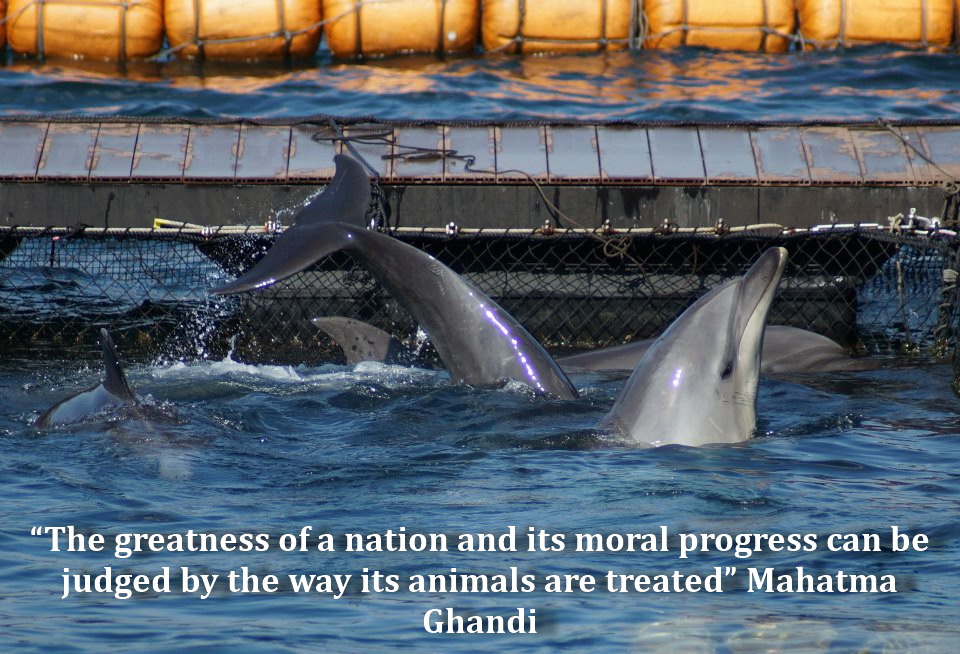
Thought for the Day

Ghandi quote

“I know that some members of the captivity industry have made the point that in captivity these animals are fed fish and they don’t need to deal with the stress of capturing their own prey. But in fact, being fed dead fish can be a stress. In the wild, they really enjoy the opportunity to collaborate with each other and catch prey and travel with their companions, and basically work for their prey. In captivity, all of that stimulation is taken away. There is a lot of scientific evidence that shows that dolphins and whales — both wild-born and captive-born — exhibit a lot of psychological abnormalities in captivity.” Lori Marino. Behavioral neuroscientist at Emory University

What the Captive Marine Mammal Industry Doesn’t Want You to See!

Here are three films the captive marine mammal industry does not want you to see!

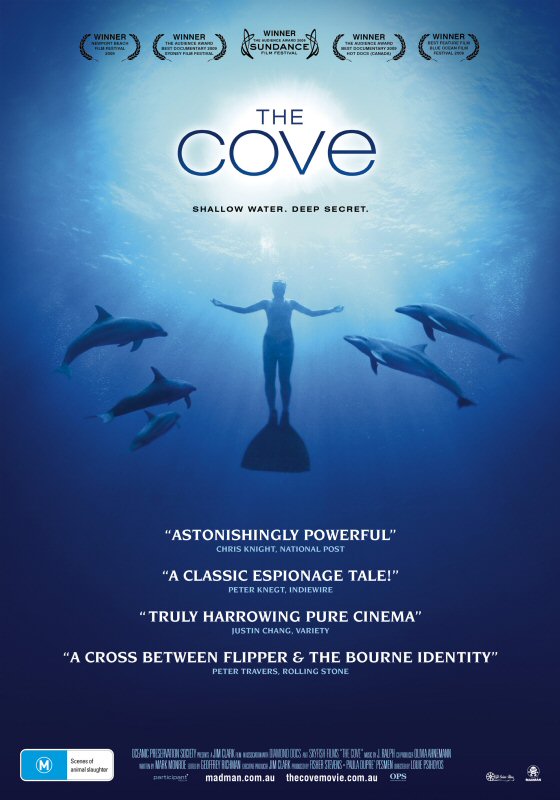
The Cove: Using state-of-the-art equipment, a group of activists, led by renowned dolphin trainer Ric O’Barry, infiltrate a cove near Taijii, Japan to expose both a shocking instance of animal abuse and a serious threat to human health.

A Fall From Freedom: The first comprehensive film to reveal the long and sordid history of the captive whale and dolphin entertainment business. Many of these marine parks and aquariums are directly or indirectly responsible for the death of thousands of the very animals they use for public entertainment. Premature deaths. Trainer injuries. Illegal practices. Educational misrepresentation. Government incompetence. Secret deals. These and many other issues are presented, and documented for the first time in this powerful documentary, narrated by actor Mike Farrell.

Blackfish: Notorious killer whale Tilikum is responsible for the deaths of three individuals, including a top killer whale trainer. Blackfish shows the sometimes devastating consequences of keeping such intelligent and sentient creatures in captivity.


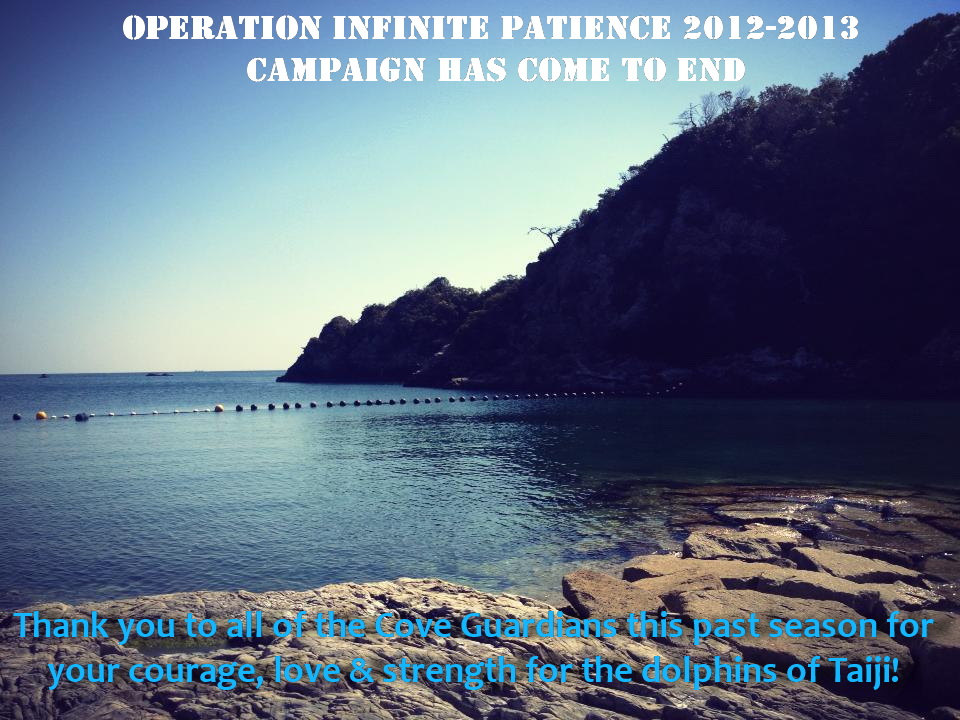
Opertation Infinite Patience 2012-2013

CG OIP

To read the most recent and past Cove Guardian reports please click here

Facebook – Sea Shepherd Cove Guardians

Twitter – @CoveGuardians

Email – coveguardian@seashepherd.org if you are interested in becoming a Cove Guardian for next season

cove guardian logo2

1876_10151779292794616_1726133112_n

For the dolphins!