
Only 69 days until Sept 1, 2013 and the start of the annual Dolphin hunt and slaughter in Taiji.
Please check out www.japandolphinsday.net to join an event near you or host your own event.

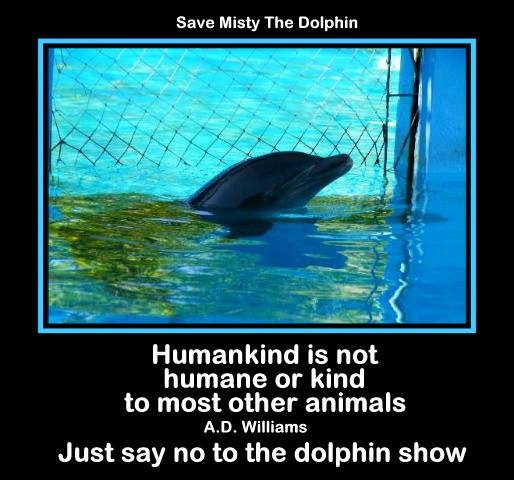
Only 69 days until Sept 1, 2013 and the start of the annual Dolphin hunt and slaughter in Taiji.
Please check out www.japandolphinsday.net to join an event near you or host your own event.
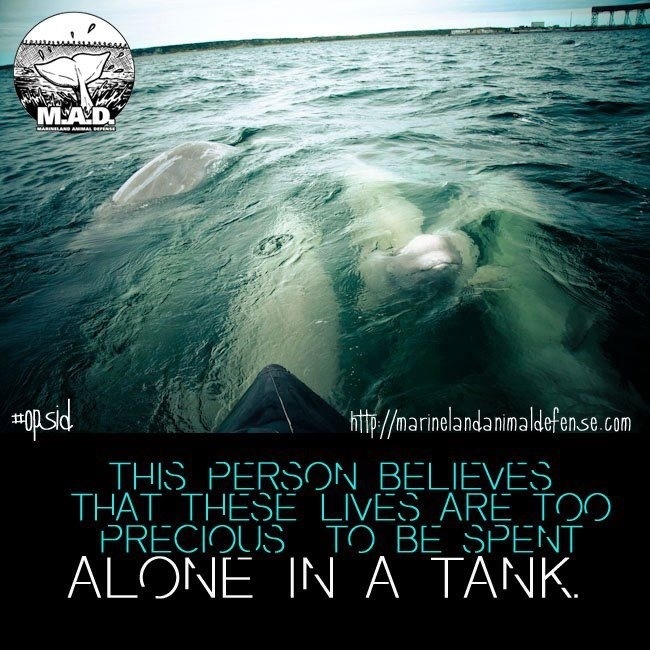
Killer whales are highly social; some pods are composed of matrilineal family groups which are the most stable of any animal species. Killer Whales are notable for these complex societies. Only elephants and higher primates, such as humans, live in comparably complex social structures. It is because of these complex social bonds and society that one should wonder why we attempt keep Killer Whales in captivity.
Captivity is about separation and exclusion. It is about the destruction of families and communities. For wild caught animals, many watch their parents and family killed in front of them at a young age so that they won’t be able to put up a fight to defend them from capture. For the animals bred in captivity at Marineland, those parents routinely watch as their offspring suffer and die in infancy.
There are no heart warming stories at Marineland, Niagara Falls, Canada. There are endless sad stories, but none may be more pressing and sad than that of Kiska. Marineland’s last remaining Orca, Kiska was wild caught from Iceland in the 1980’s. At Marineland, Kiska is the longest serving resident and she has seen dozens of Orcas come and go – and estimated 14 other Orcas die. Of those 14, 5 of them have been her own children. The oldest surviving just 6 years. (Source)
Since the removal of Ikaika back to SeaWorld she has spent her days alone. Ex-trainers have spoken publicly about their concern for her and Marineland itself have gone on public legal record establishing their concern for the health of their lone Orca held in solitary. (Source)
Kiska’s story is the story of captivity. She has survived, but at what cost? Her life has been painfully sad, she is alone and completely dependent upon humans – humans who are only interested in her as an “asset.”
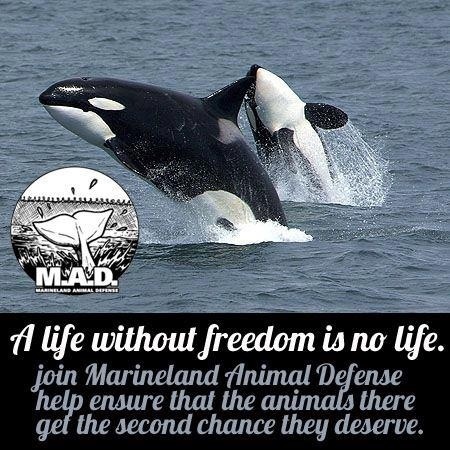
There is no human need to hold other animals in captivity. There is no human need to gawk at or to turn other animals into mere commodities and spectacles. Marineland Animal Defense fights to remove Kiska and all of the other animals at Marineland and to ensure there are no more captives!
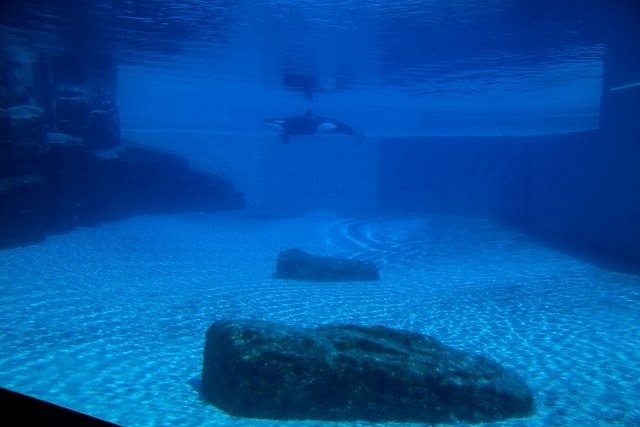
Kiska alone in her tank.
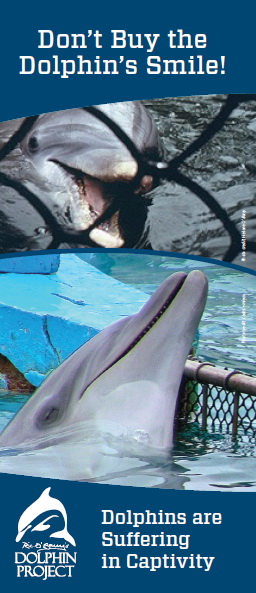
Myth – Dolphins are happy in captivity.
Truth – Dolphins look as though they are smiling because that is the way their faces are shaped. Captive dolphins are constantly on display with nowhere to hide and are forced to perform shows every single day. Dolphins are denied their freedom to travel, and in many cases are taken from their families and homes in the ocean. Would you be happy if you were a captive dolphin?
Myth – Captive dolphins are safe from predators and don’t have to look for food like would in the wild.
Truth – Inmates in prison are safe from being burgled and are fed each day. But do you think they are happy? The main difference between a jail cell and a aquarium tank is that on is filled with water.
Myth – Captive dolphin display have educational value.
Truth – The only thing captivity teaches is that it is okay to imprison animals and force them to perform for our entertainment. In captivity, a dolphin’s natural behavior are repressed. In the wild dolphins do not jump through hoops or drag people through the water with their fins. Captivity presents a completely false image of everything a dolphin is!
Myth – Children establish a connection with dolphins in captivity that would otherwise be impossible to achieve.
Truth – many children care about dinosaurs yet they have never see one. Through photos, videos, stories, tours to see wild dolphins and animations, children can develop love for dolphins without their having to suffer in captivity. Do you think your child would dolphins to suffer if they knew the truth?
Myth – Rescued dolphins have a good home in captivity.
Truth – Dolphins found injured or stranded need medical care and rehabilitation. However, they should not afterwards be forced into a life of servitude and display; they should be released back into the wild. If this is not possible they should be sent to a sea pen where they can live out their lives in privacy and a mostly natural environment.
“Dolphin shows are nothing but a display of human dominance over animals. They are as educational about dolphins as Mickey Mouse is about mice.’ Ric O’Barry
Dolphin exploitation continues to this day because the public remains unaware of dolphin suffering. Now that you are aware, please do not fund the suffering dolphins and other small whales by purchasing a ticket to a dolphin show or swim with dolphin program.
For more information please visit Ric O’Barry’s Dolphin Project
For the dolphins!
In a new peer-reviewed study, scientists assess the killing method employed by the dolphin hunters of Taiji, Japan, by watching video recorded surreptitiously in 2011 by a German dolphin-protection group, AtlanticBlue.
Here’s the researchers’ not-so-surprising prime conclusion: This killing method does not conform to the recognized requirement for “immediate insensibility” and would not be tolerated or permitted in any regulated slaughterhouse process in the developed world.
Here’s the abstract of the paper: “A Veterinary and Behavioral Analysis of Dolphin Killing Methods Currently Used in the ‘Drive Hunt’ in Taiji, Japan” Journal of Applied Animal Welfare Science, Volume 16, Issue 2, 2013 (DOI: 10.1080/10888705.2013.768925) Andrew Butterworth, Philippa Brakes, Courtney S. Vail & Diana Reiss
Annually in Japanese waters, small cetaceans are killed in “drive hunts” with quotas set by the government of Japan. The Taiji Fishing Cooperative in Japan has published the details of a new killing method that involves cutting (transecting) the spinal cord and purports to reduce time to death. The method involves the repeated insertion of a metal rod followed by the plugging of the wound to prevent blood loss into the water. To date, a paucity of data exists regarding these methods utilized in the drive hunts. Our veterinary and behavioral analysis of video documentation of this method indicates that it does not immediately lead to death and that the time to death data provided in the description of the method, based on termination of breathing and movement, is not supported by the available video data. The method employed causes damage to the vertebral blood vessels and the vascular rete from insertion of the rod that will lead to significant hemorrhage, but this alone would not produce a rapid death in a large mammal of this type. The method induces paraplegia (paralysis of the body) and death through trauma and gradual blood loss. This killing method does not conform to the recognized requirement for “immediate insensibility” and would not be tolerated or permitted in any regulated slaughterhouse process in the developed world.
Here are questions from Andrew C. Revkin (NY Times) and Diana Reiss’s responses: (source)
Q. Can you tell me in a few words what this analysis means to you in the larger context of human/animal relations?A. Dolphins are a cognitively and socially complex species that exist in their own societies in the seas. To see any animal treated in this way is shocking. Given what we know scientifically about the awareness, sensitively, cognitive and social prowess of dolphins, this treatment is unjustifiable and unacceptable and needs to be stopped immediately. In the larger context of human and non-human animal relations, the methods used to herd dolphins and then kill them is off-the chart in terms of any concern for animal welfare. At a time when most countries are concerned for the conservation and welfare of dolphins and whales it is strange and disturbing to see a modern country like Japan continue to ignore scientific knowledge and concern for these species. In most modern countries these mammals are protected but sadly we see these exceptions. Our scientific knowledge needs to transcend cultural and geographic boundaries and these species need global protection.Q. One of the standard replies from Japan on this issue (whether with whales or dolphins) is that we, for example, cherish bison but eat bison burgers. Is there a distinction?A. You cannot compare bison to dolphins in the cognitive domain. However, bison are not killed in this inhumane manner. Nor are lab rats. In cases in which animals are domesticated for food, most modern countries are striving for better animal welfare practices that minimize pain and suffering during the killing process with the goal to render an animal unconscious quickly before it is killed. This is not the case in the dolphin drive hunts. These are not domesticated animals; they are wild dolphins that are captured within their social groups, mother and young, and slaughtered using a technique that actually prolongs death, pain and suffering. The herding procedures themselves are inhumane and may include forced submersion as the dolphins are dragged by their tails to shore to be killed. This is not to say that dolphins should be killed. They should not.
In an interview last month with the journalist David Kirby, Mark Palmer, the associate director of Earth Island Institute’s International Marine Mammal Project, estimated that the dolphin hunters of Taiji killed nearly 900 dolphins and pilot whales this season and kept nearly 250 to sell for alive to the aquarium trade (which is booming in the Middle East and Asia).
This video is not suitable for children and may be disturbing to some adults:
http://www.youtube.com/watch?v=dzOw5IBmqWk&feature=youtu.be
For the dolphins!!
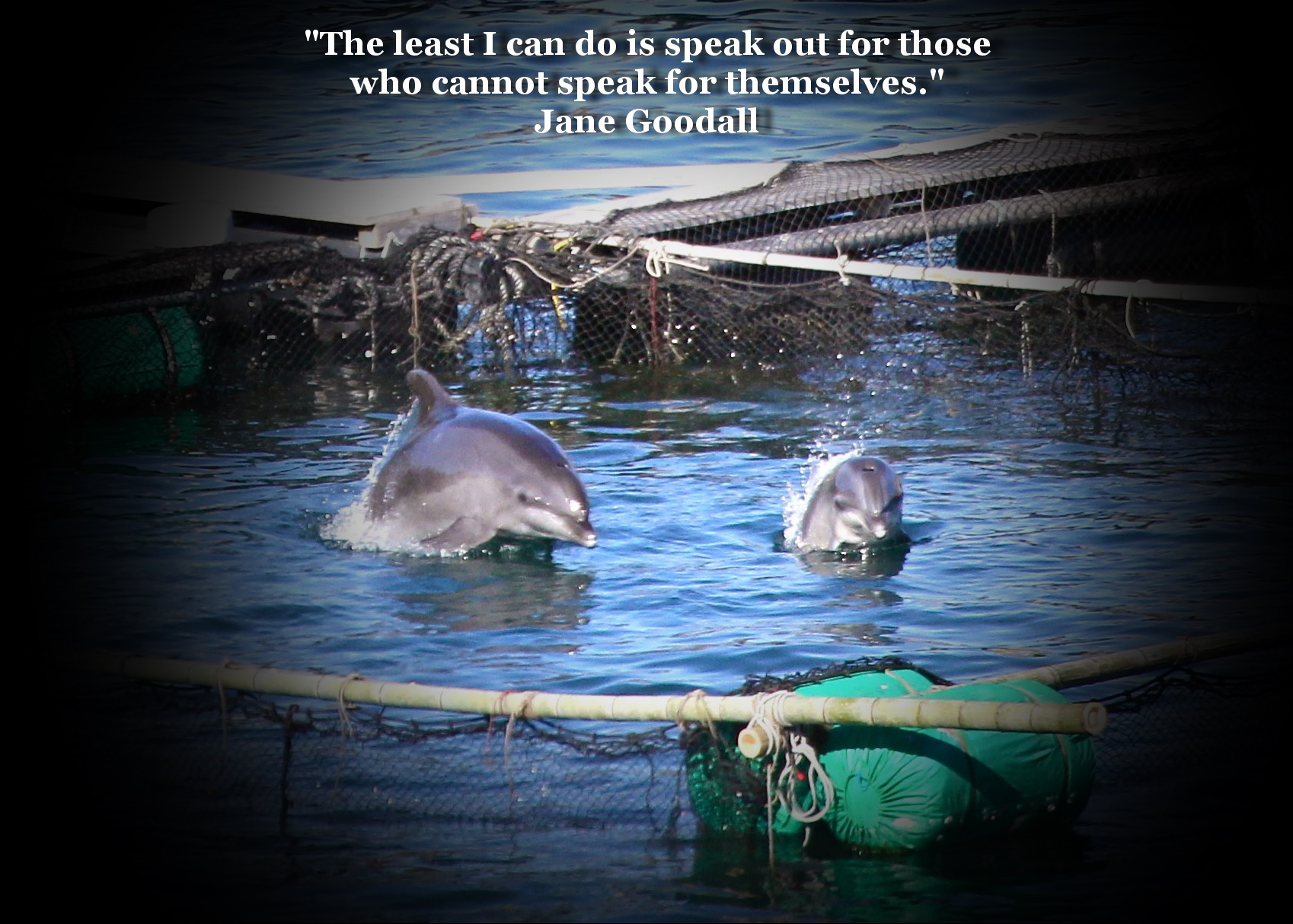
Two captive bottlenose dolphins in the Taiji harbour pens
Photo Credit Sea Shepherd Cove Guardians
For the Dolphins!!
Minds in the Water – 5 years in the making, Minds In The Water is the story of one surfer’s international journey to help protect dolphins, whales and their ocean environment. Shot on location in Australia, the Galapagos, Chile and Japan, the film captures a key moment in one person’s life when apathy is no longer an option. Pro surfer Dave Rastovich went from observer to activist when he embarked on a personal mission to help stop the worldwide commercial slaughter of dolphins and whales. While unsure at first, Rasta quickly found his activist sea legs and helped build a core team of filmmakers, journalists, musicians, eco-pirates and celebrity surfers to help spread the message. All this has been documented in the film, Minds In The Water. (Source)
Here are three films the captive marine mammal industry does not want you to see!
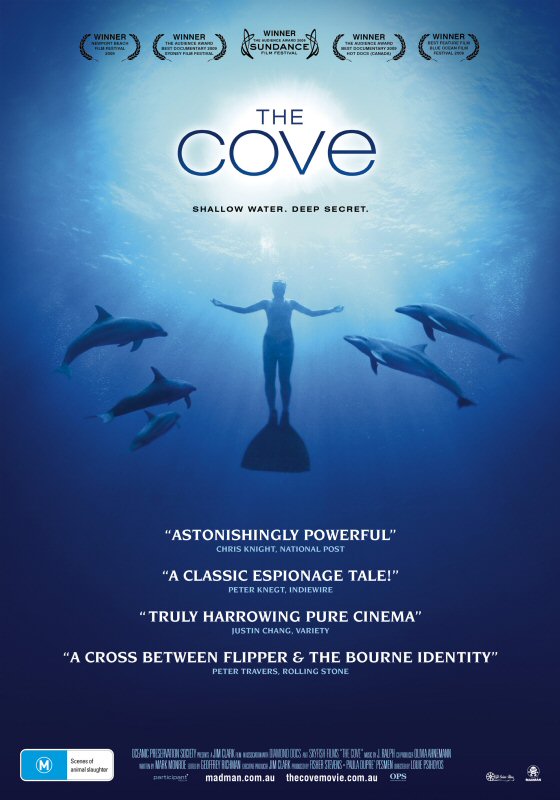
The Cove: Using state-of-the-art equipment, a group of activists, led by renowned dolphin trainer Ric O’Barry, infiltrate a cove near Taijii, Japan to expose both a shocking instance of animal abuse and a serious threat to human health.
A Fall From Freedom: The first comprehensive film to reveal the long and sordid history of the captive whale and dolphin entertainment business. Many of these marine parks and aquariums are directly or indirectly responsible for the death of thousands of the very animals they use for public entertainment. Premature deaths. Trainer injuries. Illegal practices. Educational misrepresentation. Government incompetence. Secret deals. These and many other issues are presented, and documented for the first time in this powerful documentary, narrated by actor Mike Farrell.
Blackfish: Notorious killer whale Tilikum is responsible for the deaths of three individuals, including a top killer whale trainer. Blackfish shows the sometimes devastating consequences of keeping such intelligent and sentient creatures in captivity.
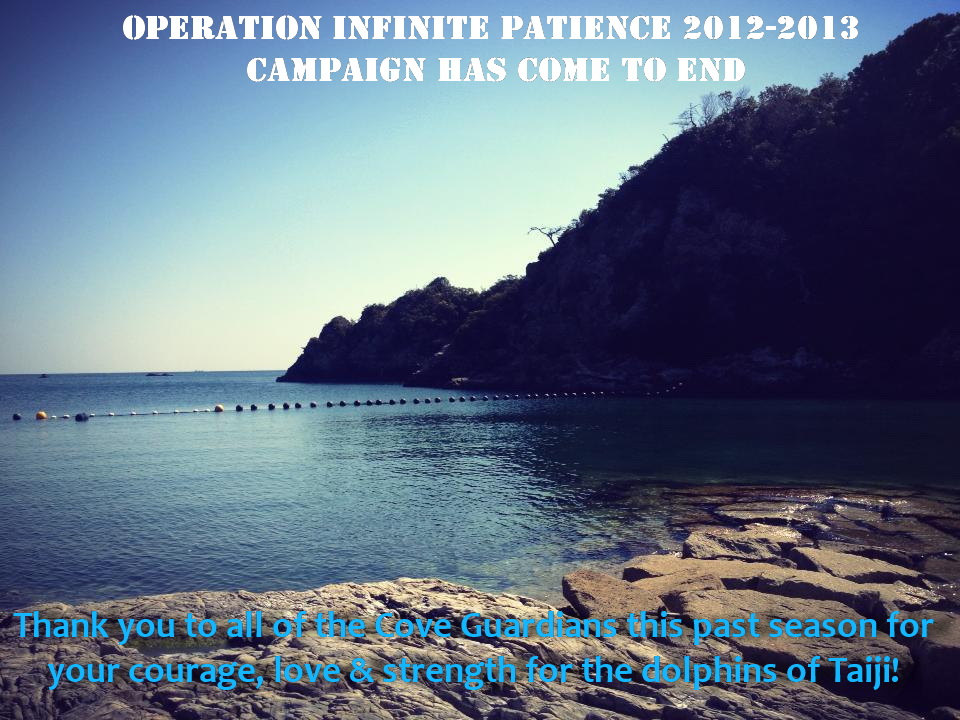
To read the most recent and past Cove Guardian reports please click here
Facebook – Sea Shepherd Cove Guardians
Twitter – @CoveGuardians
Email – coveguardian@seashepherd.org if you are interested in becoming a Cove Guardian for next season

For the dolphins!
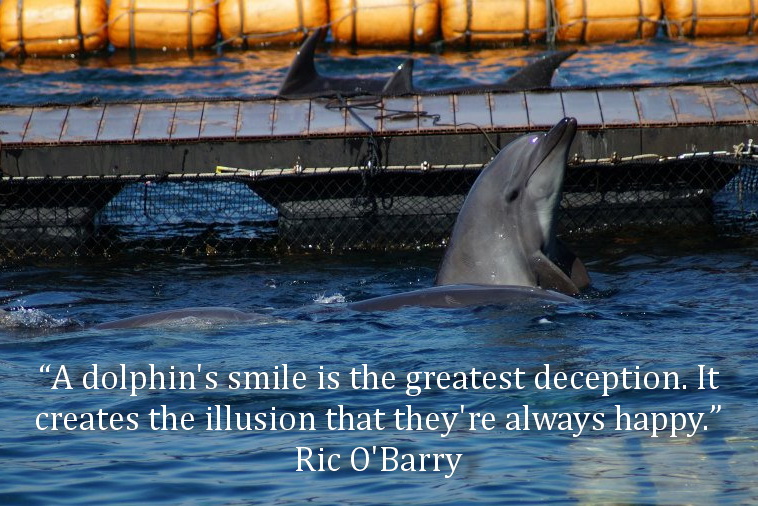
“What’s wrong with captivity? The capture, bring them into a concrete chlorinated box, reducing them to circus clowns and then selling this as educational to the public. And I think it’s extremely dangerous. This issue for me is not just about the dolphins. There’s about a thousand in captivity and it’s more about the millions of people who go and see the show, go and see Shamu. They’re learning, it is educational, they’re learning, however, that it’s okay to abuse nature. That’s what they come away with that these – it only serves – the Shamu experience or the captivity experience only serves to perpetuate our insidious, utilitarian perception of nature and it’s an issue about education. To teach a child not to step on a caterpillar or a butterfly is as important to the child as it is the butterfly. And that’s what’s wrong with it.“ – Ric O’Barry
Please click here for more information on Ric O’Barry’s Dolphin Project
The documentary, The Cove, is in part responsible for what some people call “the 180” I recently took in life. Finally getting up the nerve and deciding to watch The Cove was a life changing experience for me. Prior to the release of this documentary I was completely unaware of the annual dolphin drive hunt that takes place each year in Taiji Japan.
I’ve heard many people say that they simply do not want to watch The Cove, because it’s sad and they do not want to see the slaughter of dolphins. To those people who are afraid and unwilling to watch this documentary, I say just take an hour and half out of your life, watch it and become educated! People watch violence in movies all the time, but when it comes to real life, there are many people who do not want to believe it actually happens. Don’t turn a blind eye to what really happens, take the time, and watch The Cove! I guarantee it will change your perspective on dolphin captivity.
This is a brilliant documentary and the lengths the individuals involved in the film were willing to go to expose the dolphin slaughter is amazing! For instance, going out in the middle of the night and hiding high definition cameras in rocks to record video from vantage points that would have never have been seen before. Sending free divers into the waters of the Cove to place under water cameras and sound recorders. The Cove is a combination of Mission Impossible and Ocean’s Eleven. A team made up of people with special skills, filming what was believed to be the impossible! Mission accomplished and ingeniously done!
For myself, The Cove was a catalyst for change in my life. I have since become more involved, by following the various campaigns currently on the ground in Taiji, who bear witness to the annual slaughter. I have chosen to take a stance against the dolphin slaughter, by informing others of what is still happening in Taiji and will one day stand at the infamous Cove in Taiji to be a voice for the dolphins. And I will certainly never visit another aquarium, Sea World, Marine Park or swim with dolphin program again, if I had known what I know now I would have never visited any of these places in the first place.
Highlights of The Cove:
The Taiji dolphin slaughter resumes every year in September … unless we stop it!
“Any single person can make a difference if he allows his passion to be expressed through action” Margaret Mead
Here is an extended clip of The Cove.
The Cove is a 2009 documentary film that analyzes and questions Japan’s dolphin hunting culture. It was awarded the (82nd) Academy Award for Best Documentary Feature in 2010. The film is a call to action to halt mass dolphin kills, change Japanese fishing practices, and to inform and educate the public about the risks, and increasing hazard, of mercury poisoning from dolphin meat. The film is told from an ocean conservationist’s point of view. The film highlights the fact that the number of dolphins killed in the Taiji dolphin drive hunting is several times greater than the number of whales killed in the Antarctic, and claims that 23,000 dolphins and porpoises are killed in Japan every year by the country’s whaling industry. The migrating dolphins are herded into a cove where they are netted and killed by means of spears and knives over the side of small fishing boats. The film argues that dolphin hunting as practiced in Japan is unnecessary and cruel. The documentary won the U.S. Audience Award at the 25th annual Sundance Film Festival in January 2009. It was selected out of the 879 submissions in the category.
For the dolphins!
It’s OFFICIAL … the slaughter season Sept 1, 2012 to February 25, 2013 is finally over! And what a relief that it has finally come to an end, as reported by the Sea Shepherd Cove Guardians currently on the ground in Taiji.
The killers take down “death door” of the Taiji butcher house, where hundreds of dolphins and pilot whale bodies were dragged through and then dismantled for human consumption.
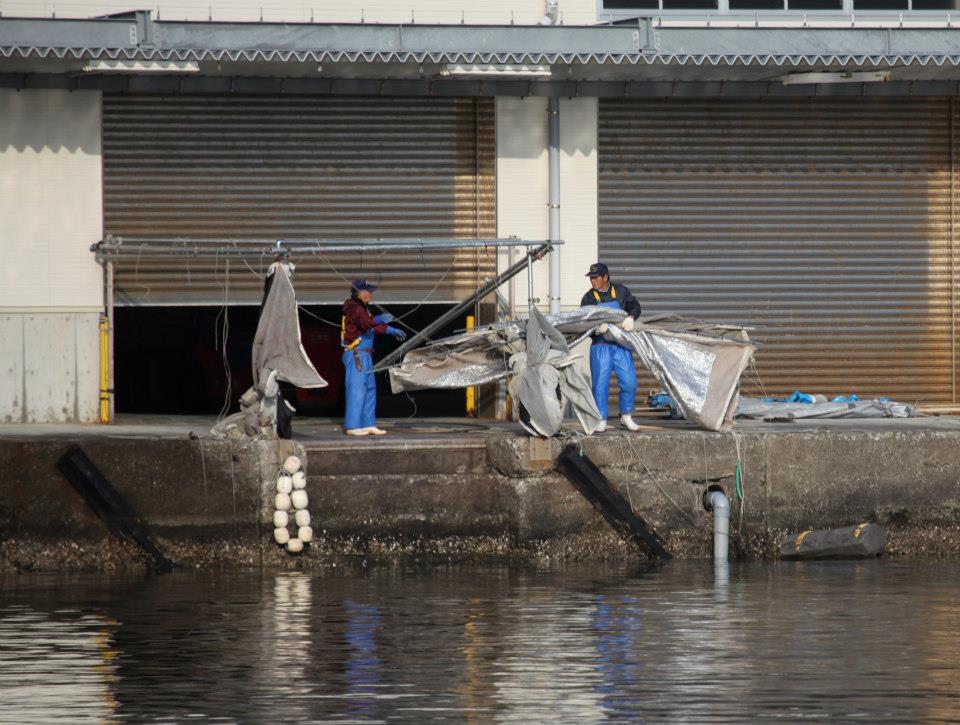
Photo credit SSCS Cove Guardians
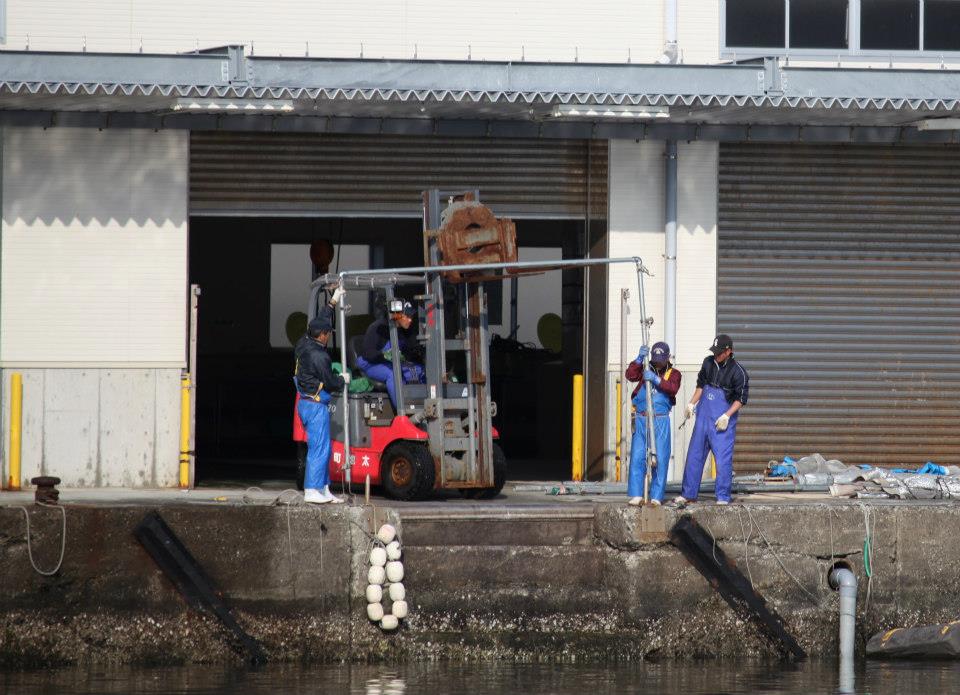
Photo credit SSCS Cove Guardians
Then then the clean up inside begins … washing away blood, that was still present on the kill floor.
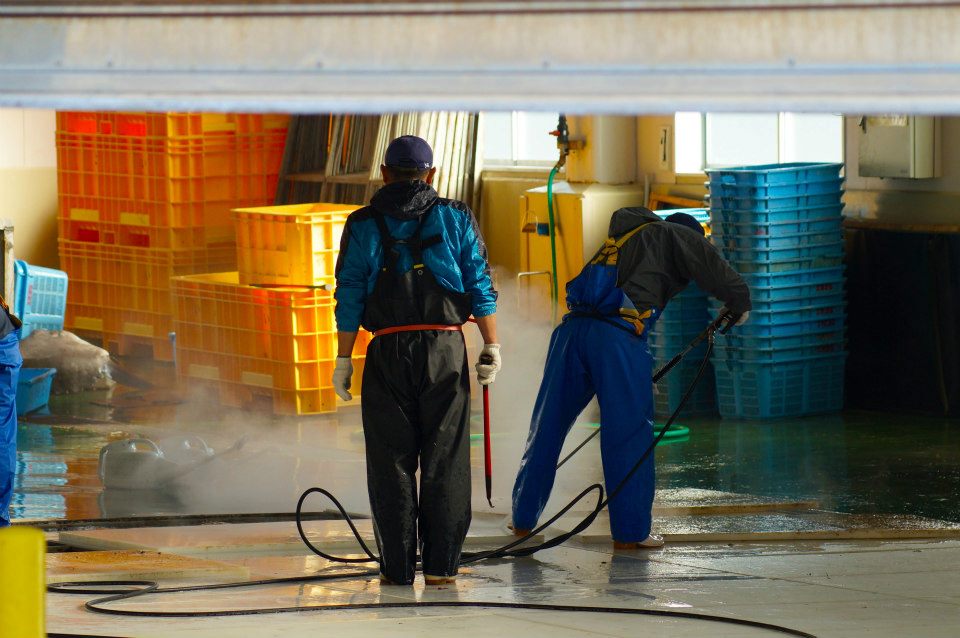
Photo credit SSCS Cove Guardians
While the dolphin drive season has ended, the killing unfortunately does continue year round. Some boats, such as the one seen below are dry docked and maintenanced. The dolphin killers remove the banger poles but leave them inside the boat to use during the off season. The killing boats are permitted to hunt pilot whales until May and also assist local fisherman with harpooning dolphins during the offseason.
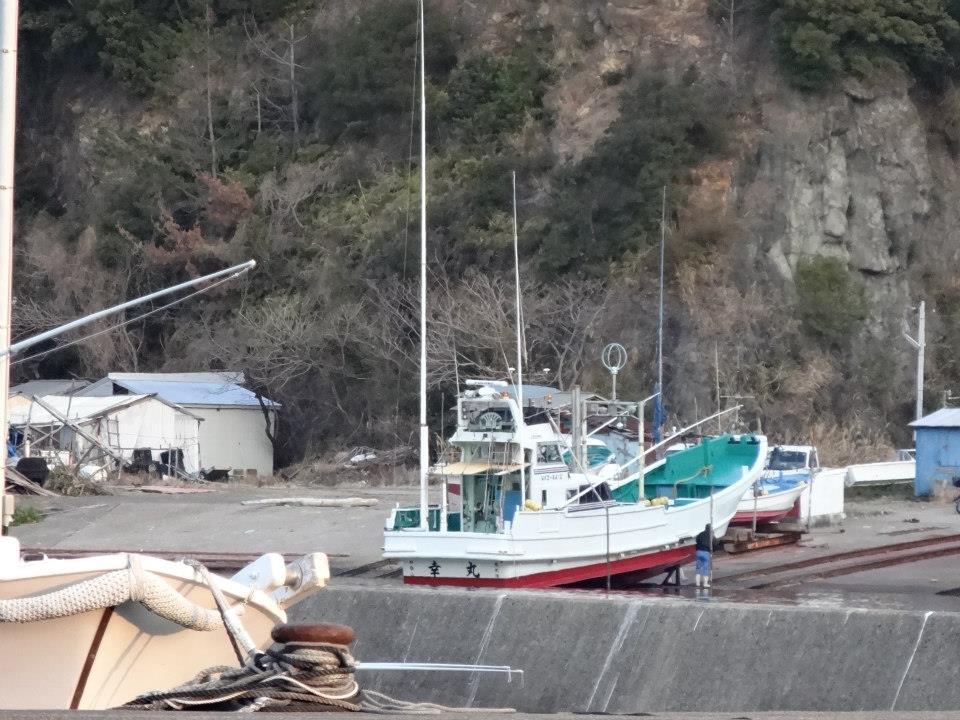
Photo credit SSCS Cove Guardians
Even though the 2012-2013 hunt season has officially come to an end … I will not be able to forget the many dolphins taken captive this season who are deemed to live out their lives in a small pool performing tricks for survival, food and most of all … Human Entertainment.
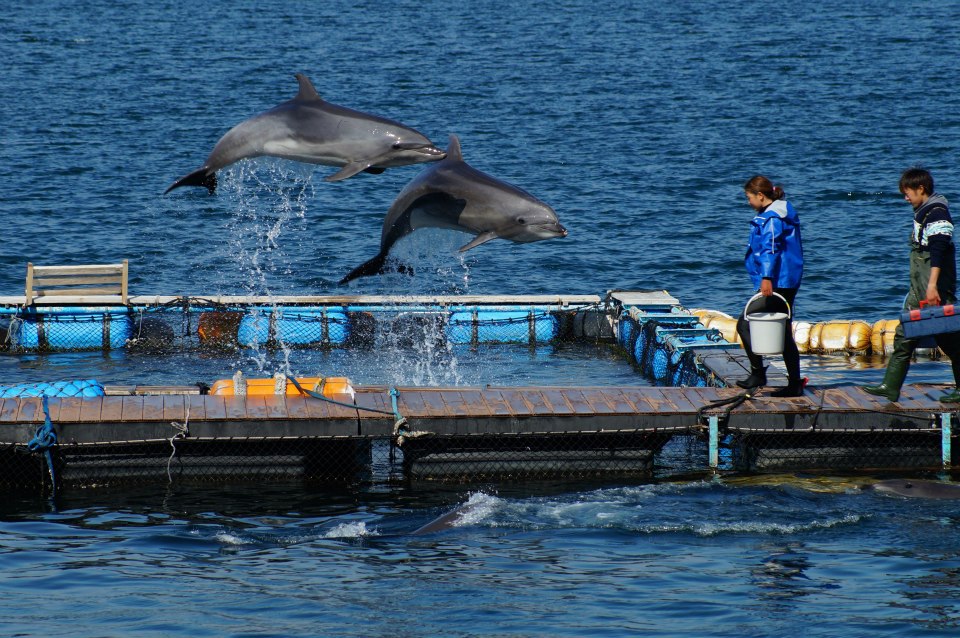
Photo credit SSCS Cove Guardians
Now only one net remains at the cove and this is the view a tourist would see from the view. What a beautiful place this could be if it were not for the thousands of dolphins inhumanely slaughtered here each and every year.
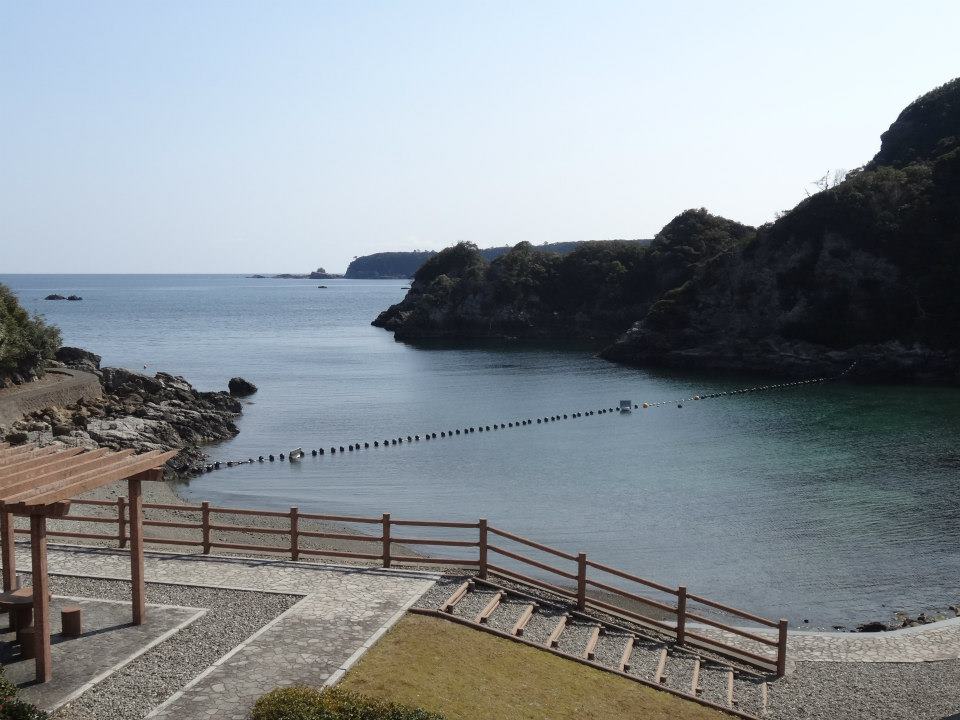
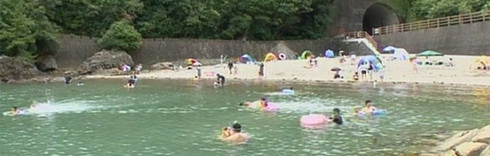
Photo credit SSCS Cove Guardians
In the summer months, the infamous cove is filled with people. How someone would be able to swim in the waters of this dark ominous place baffles me. Perhaps it is because they unaware of what occurs here each year between September and March, but then again maybe they are aware? I’ll leave that debate up to all of you.
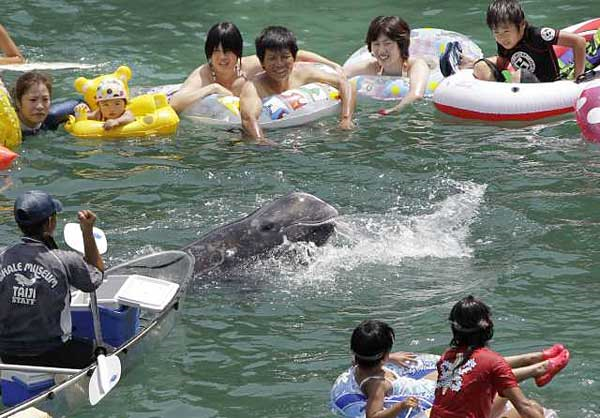
What is also heartbreaking is that there is often a captive dolphin taken to the cove. This unfortunate dolphin has to return to the place where it’s life was forever changed after witnessing the slaughter of the majority of it’s podmates and then being torn from a life of freedom in the wide open ocean.
Perhaps it appears that people are having a good time, but really, look at that Risso dolphin … terrified and alone surrounded by unfamiliar people in an all too familiar place that represents the horror of Taiji!
“Confining marine animals to tanks and separating them from their families and their natural surroundings, just so people can watch them swim in endless circles, teaches us far more about humans than it does about animals – and the lesson is not a flattering one” Pamela Anderson
For the dolphins!
On 22 February 2013 there will be an International Taiji Action Day for Dolphins and many cities all over the world will be hosting peaceful protests outside Japanese Embassies.
Those of us who do not live near a Japanese Embassy are participating in an online protest. While it’s not quite February 22 here where I live, I know its already February 22 and mid morning in Taiji already so why not get this online protest started!
The Taiji Action Day for Dolphins 2013 Online Protest on Facebook provided all the information needed to participate in the protest. And simple enough it was, download the four posters provided (or create your own) take a photo of yourself holding the poster and email it to taijiactionday2013@gmail.com prior to February 28. They will forward the messages to Japan and the Fisherman’s Union and the Olympic Committee so that they hear our voices LOUD and CLEAR!
In addition to this I will also be forwarding my message to the Japanese Embassy in Ottawa Canada: H.E. The Ambassador, Mr. Kaoru Ishikawa, Embassy of Japan in Canada, 255 Sussex Drive, Ottawa, Ontario, K1N 9E6, Canada Tel: 613-241-8541, Fax: 613-241-7415, Email: infocul@embjapan.ca
I also suggest taking a minute to sign the following petition: Challenge Japan to End Taiji Dolphin Hunt for Tokyo 2020 Olympic Bid
When I initially heard about the online protest I knew instantly that I would be participating and then I was thought how I could manage to get more people involved and create a greater awareness of this great cause? I decided to mention it to my co-workers and pleasantly surprised when all of them did not even hesitate at the chance to participate as well. So in the end I was an initial voice for the dolphins and managed to bring along 9 of my friends who are also my co-workers! A huge thank you to all of the women I work with on a daily basis at Capital Corner Dental!! It means the world to me that all these women took the time to participate in a cause that is very dear to my heart! You should all be proud of yourselves for being a voice for the dolphins!
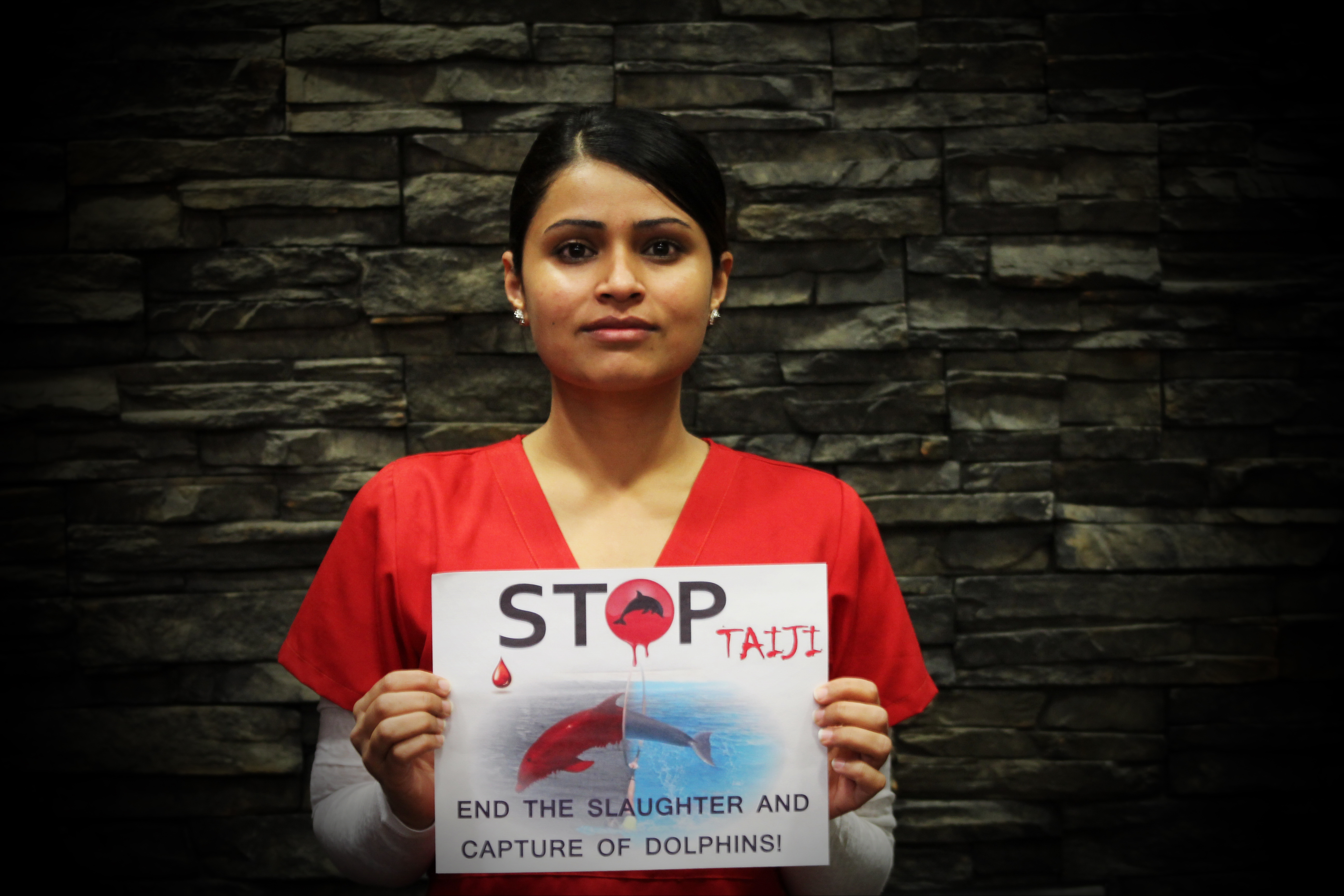
Lovin
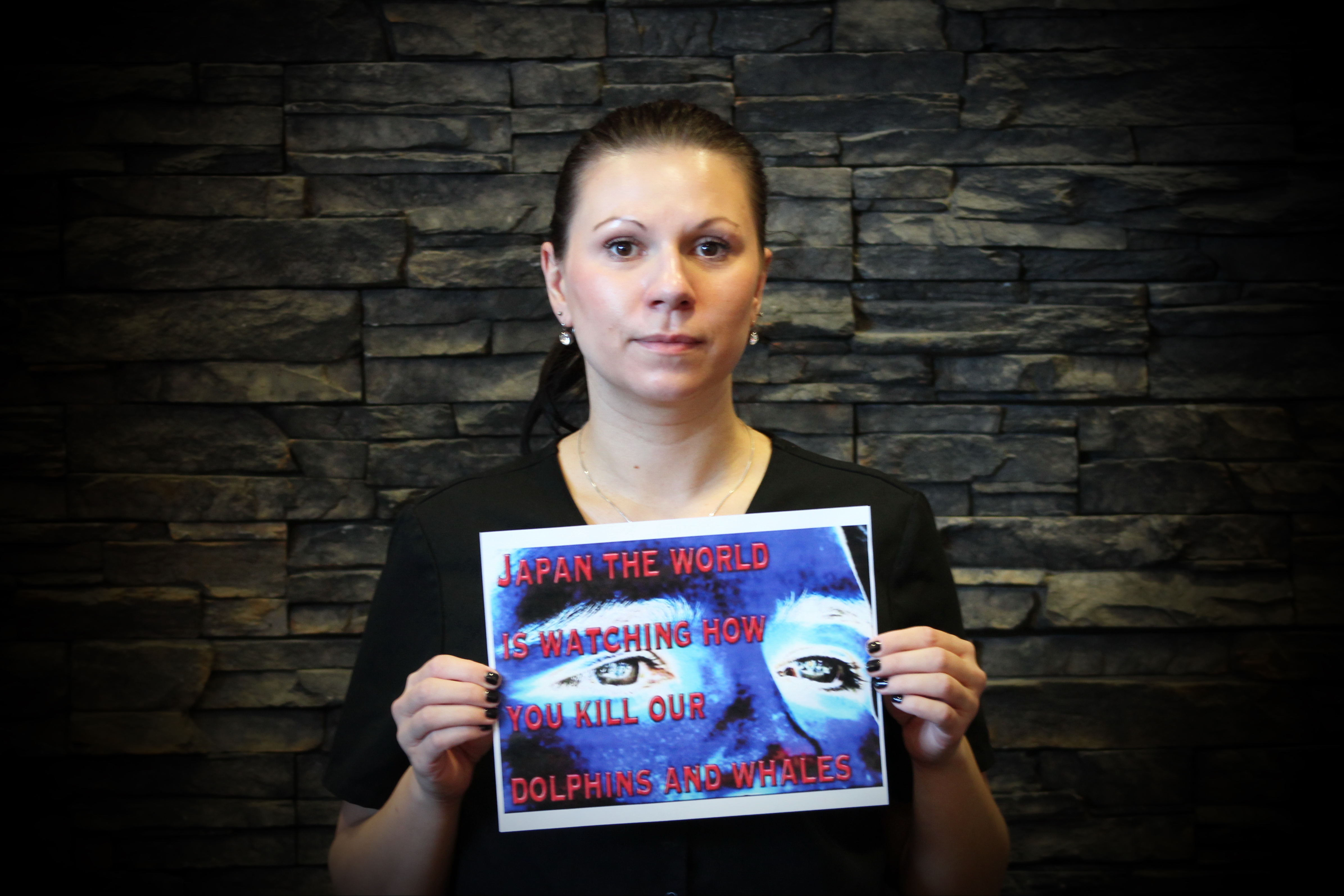
Renae

Mel
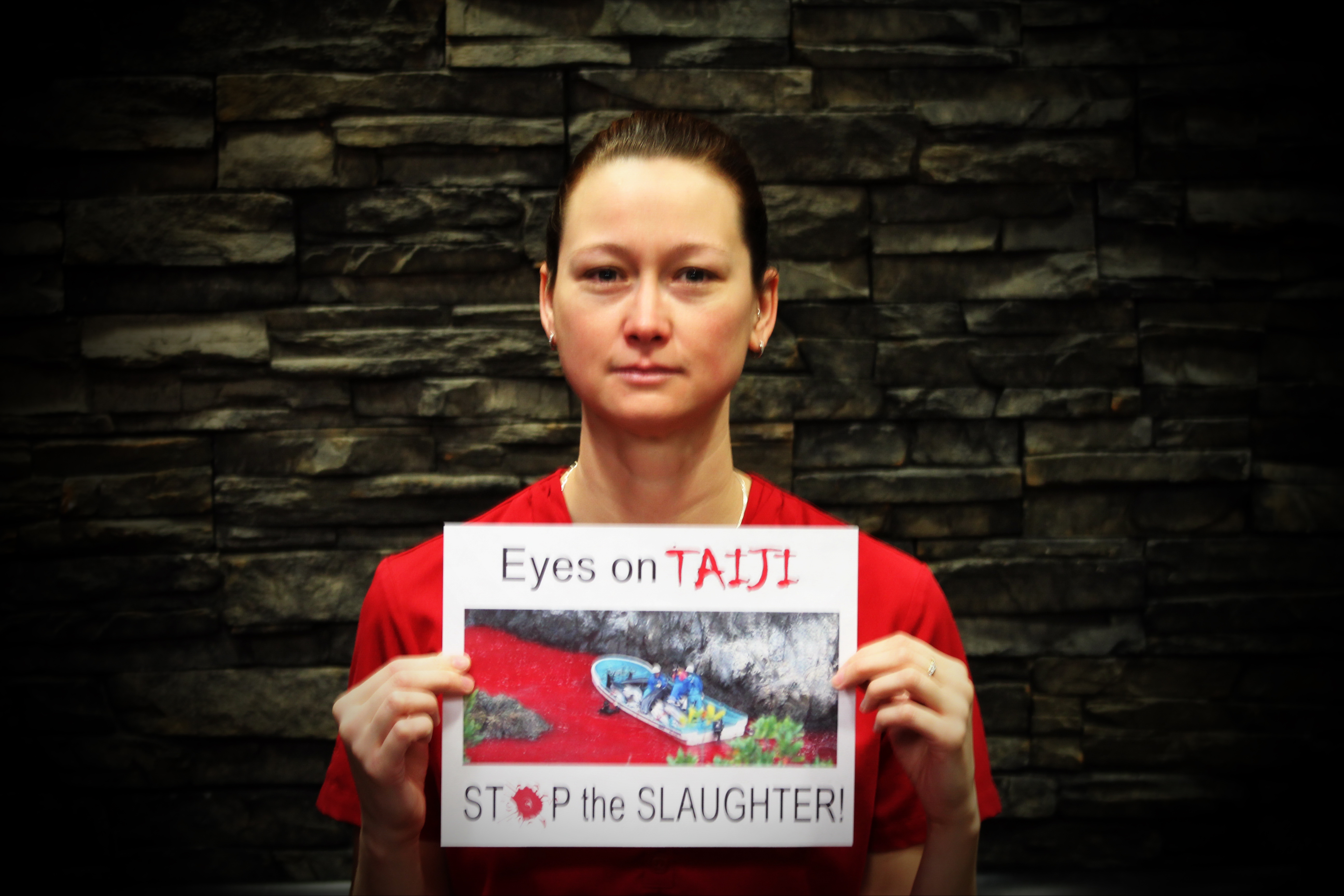
Carynne
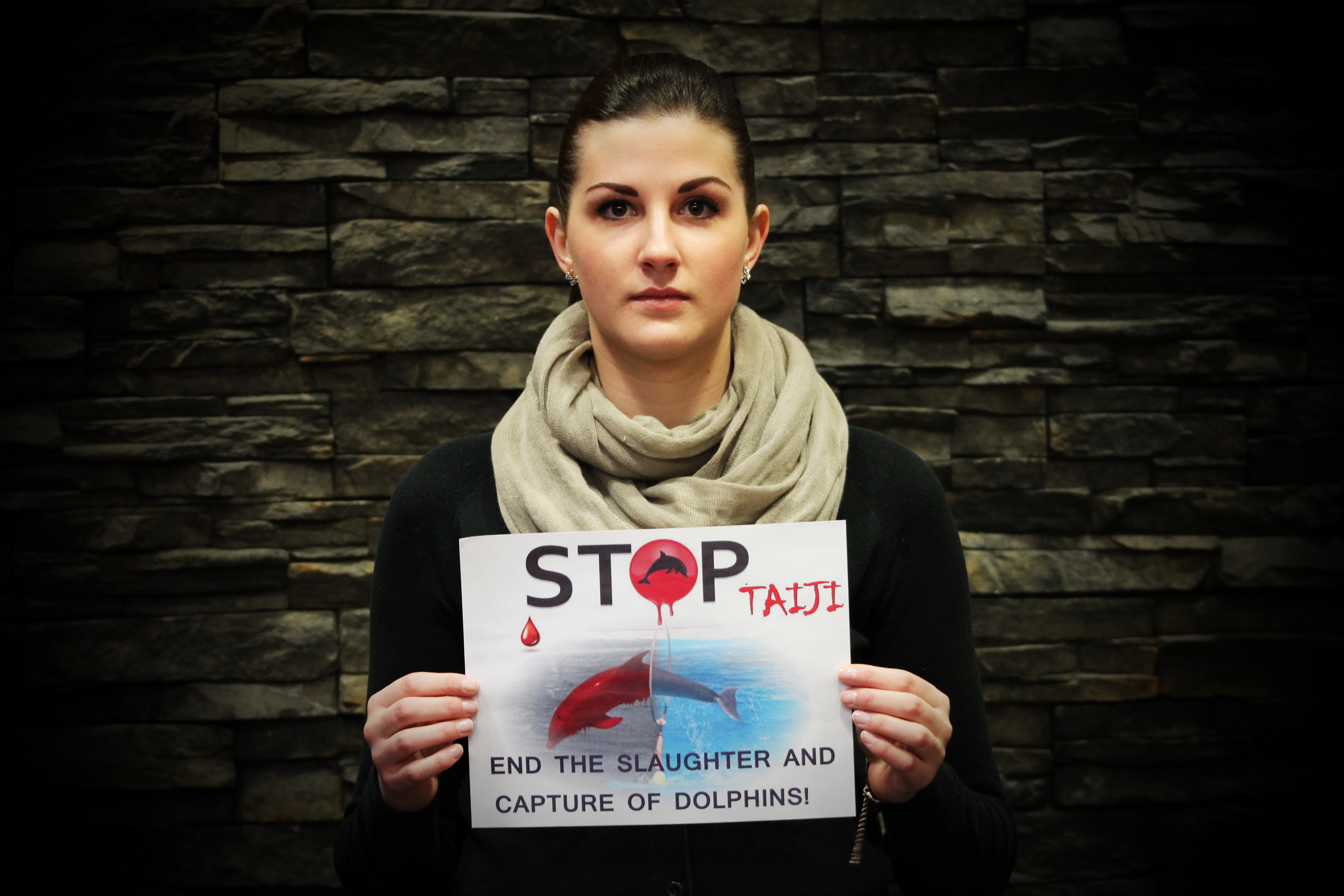
Lexie

Kelsey

Ashley
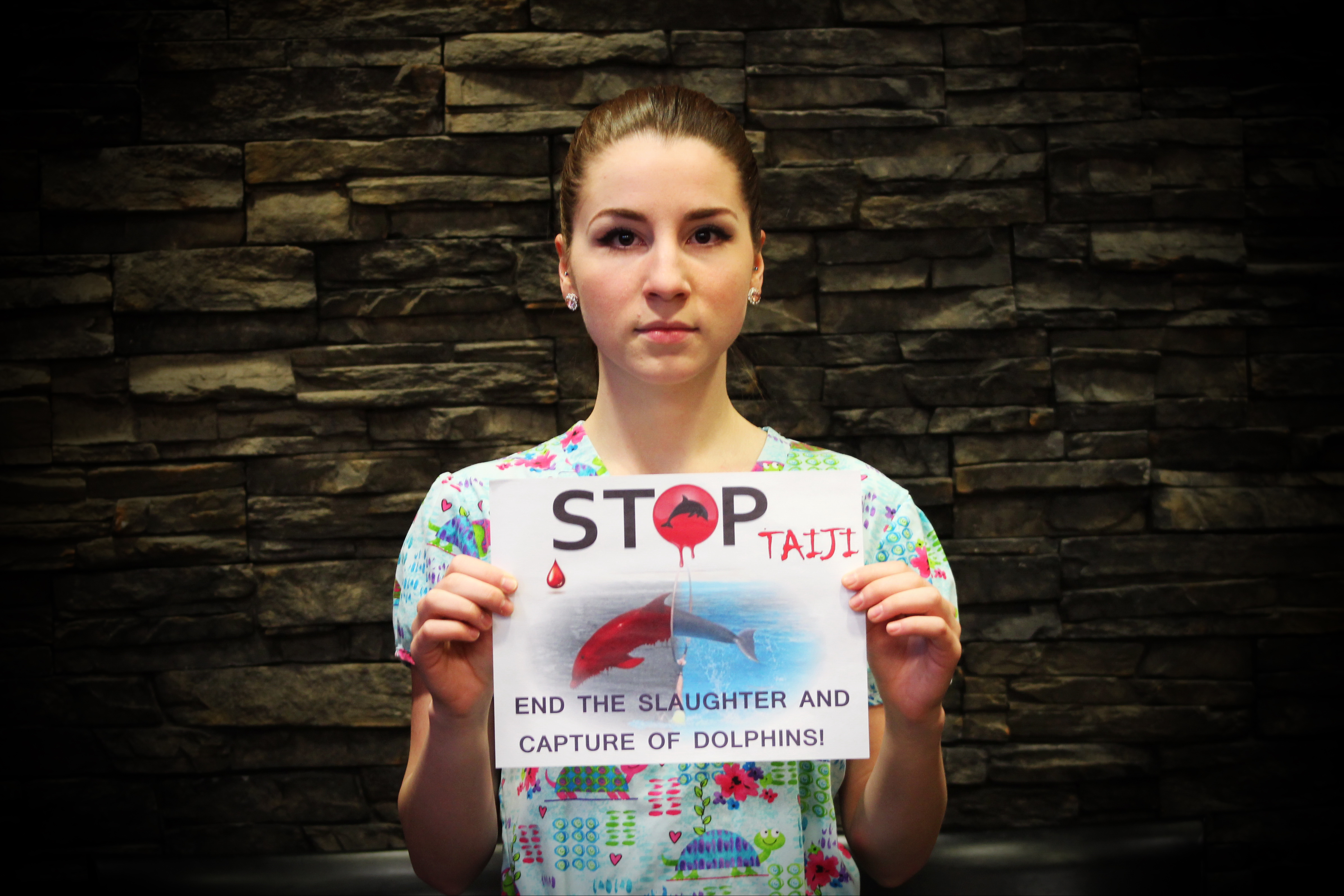
Amy

Jen
Of course I could not forget or resist including my dog, Abby, who is also proud to be a voice for the dolphins!
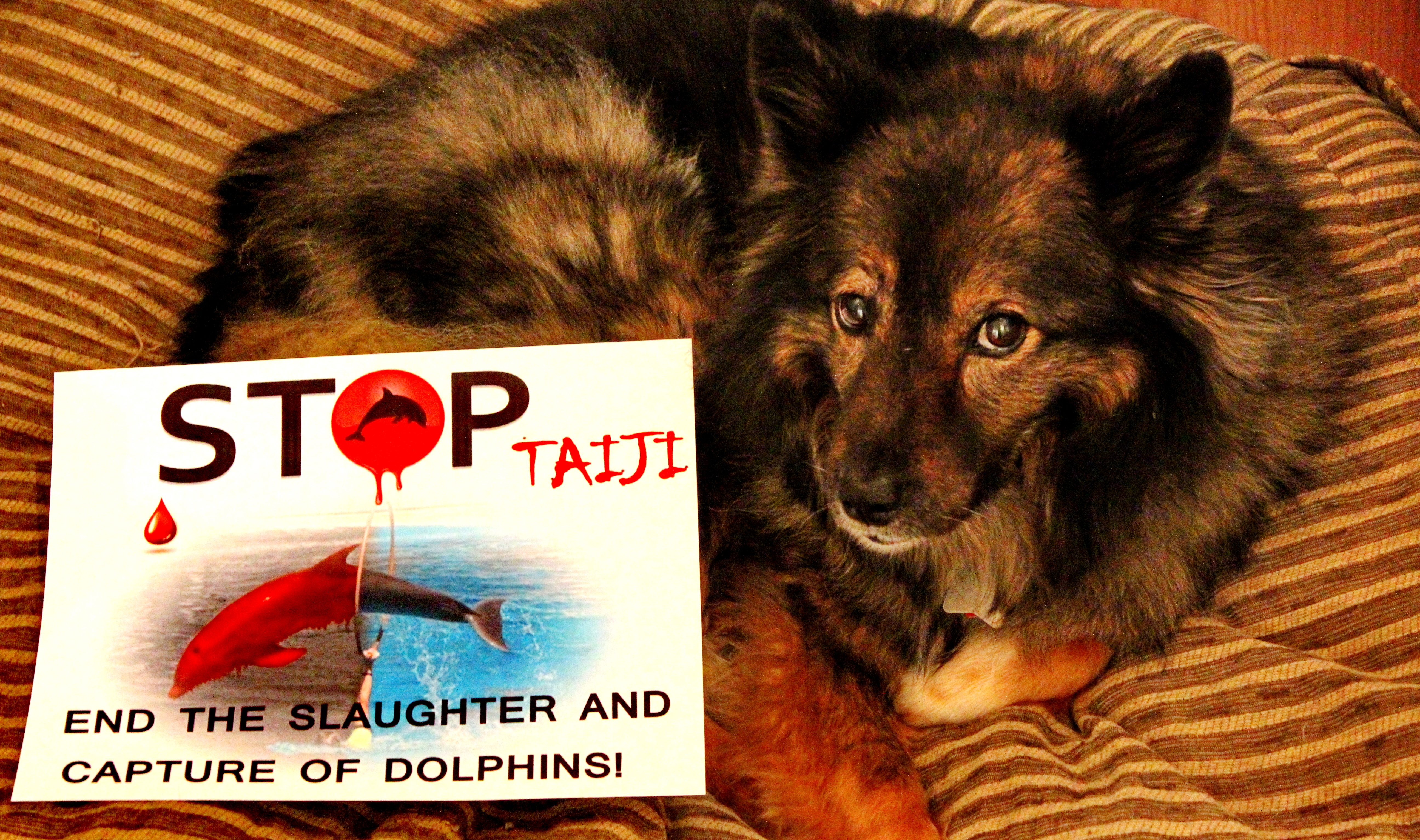
Abby
And lastly, myself, the person behind Voice for the Blue and I will always be a voice for the dolphins!!
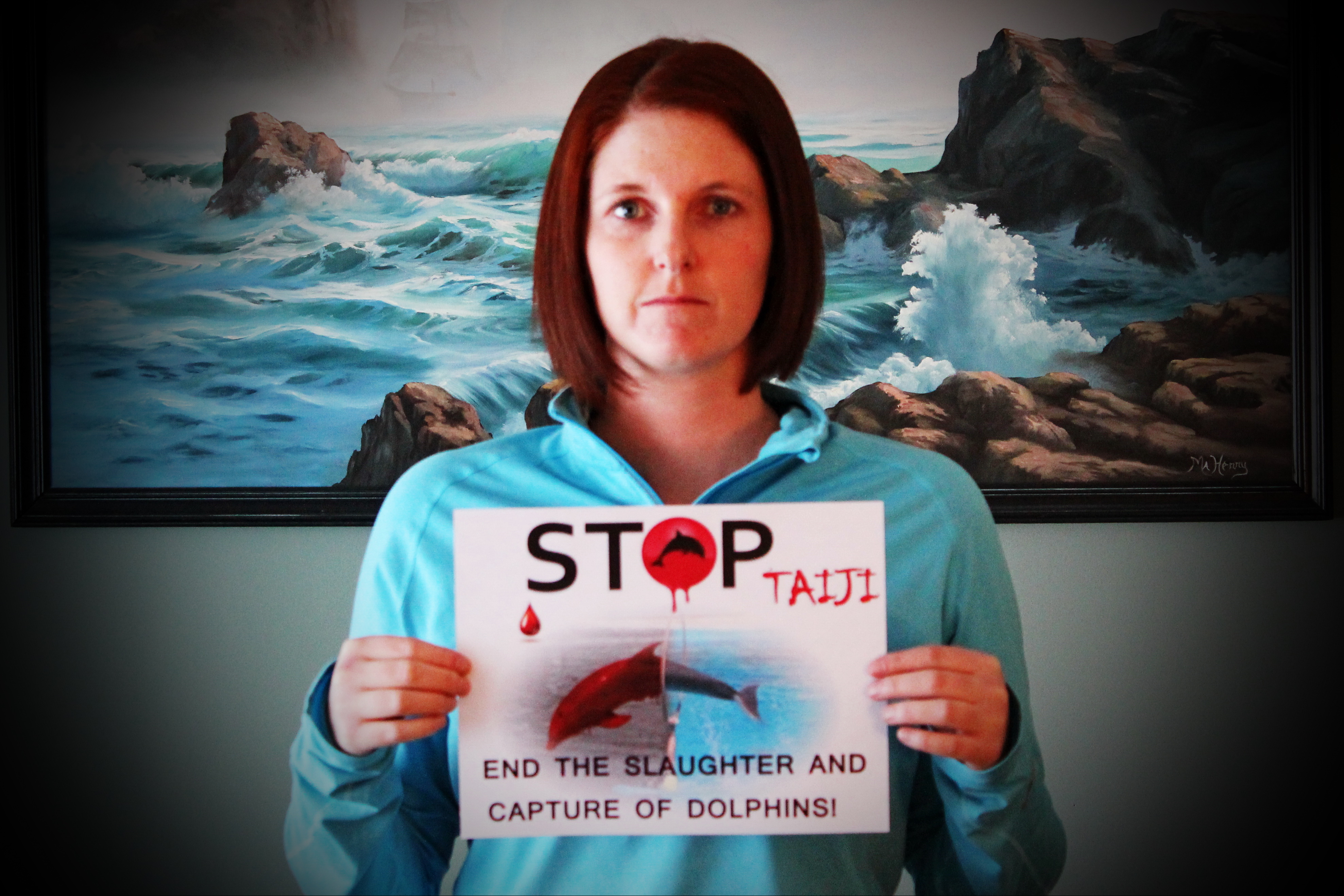
 Voice For The Blue