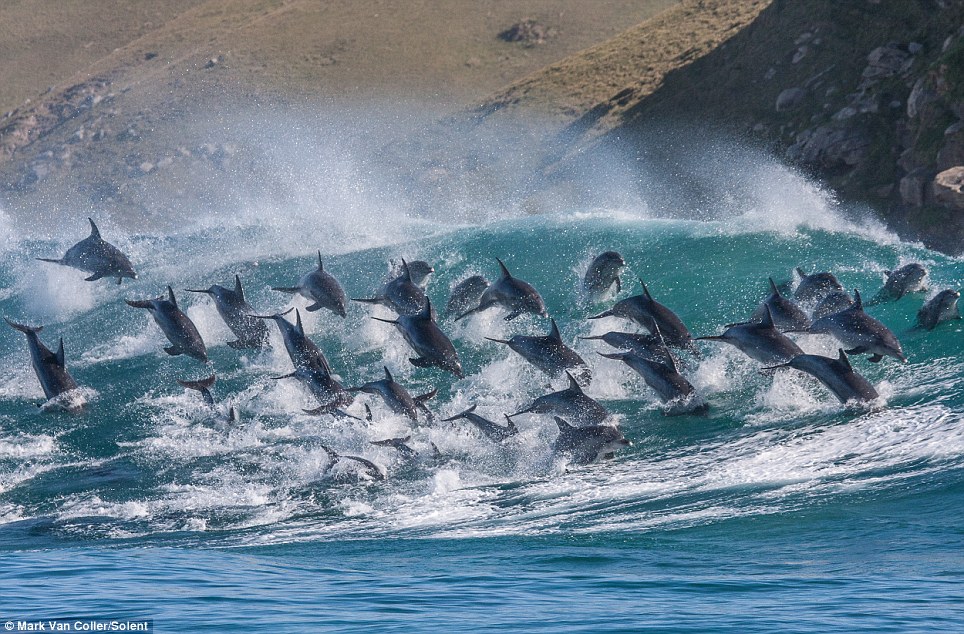
A pod of 40 bottlenose dolphins were spotted jumping out of the back of the breaking waves that were rolling into the east coast of South Africa. Despite facing waves as big as eight feet, some of the more energetic marine mammals were seen leaping six foot out of the sea.
The dolphins were photographed by Mark van Collier as they made their north up the east coast of South Africa, near Port St Johns. Mark travelled alongside the pod on a boat and was amazed to see so many dolphins ‘surfing’ in unison.
Are you considering a trip to Sea World? Before doing so, take a moment to watch the new full length trailer released by CNN films of Blackfish.
Blackfish is the Sundance decuting film about killer whales in captivity and their propensity of living up to their namesake.
The haunting footage revolves mostly around one whale, Tilikum, responsible for the very public and very horrifying death of a Sea World trainer in 2010.
Are these animals truly killers, or did we make them into killers when we stuck them inside a tank and made them perform for crowds? That seems to be the essential question at the heart of Gabriela Cowperthwaite’s unsettling documentary.
Watch the trailer for Blackfish:
Blackfish opens in limited release July 19. Here’s the official synopsis:
Many of us have experienced the excitement and awe of watching 8,000 pound orcas, or “killer whales,” soar out of the water and fly through the air at sea parks, as if in perfect harmony with their trainers. Yet, in our contemporary lore this mighty black and white mammal is like a two-faced Janus—beloved as a majestic, friendly giant yet infamous for its capacity to kill viciously. Blackfish unravels the complexities of this dichotomy, employing the story of notorious performing whale Tilikum, who—unlike any orca in the wild—has taken the lives of several people while in captivity. So what exactly went wrong?
Shocking, never before seen footage and riveting interviews with trainers and experts manifest the orca’s extraordinary nature, the species’ cruel treatment in captivity over the last four decades and the growing disillusionment of workers who were misled and endangered by the highly profitable sea-park industry. This emotionally wrenching, tautly structured story challenges us to consider our relationship to nature and reveals how little we humans have learned from these highly intelligent and enormously sentient fellow mammals.
In many animal societies, if a member of a group is gravely wounded or born with disabling deformities, that animal becomes an unsustainable burden on the others, and is often left behind at the mercy of predators, hunger and disease.
Not so with killer whales. They are among the few species in the world to look after members of their family who cannot look after themselves. Their patience and compassion for each other surpasses, perhaps, even that of humans
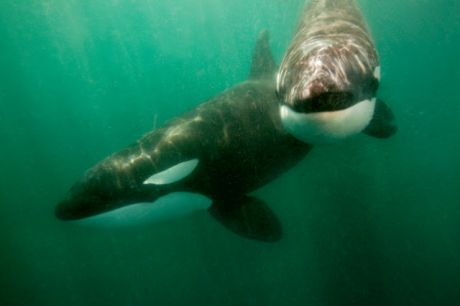
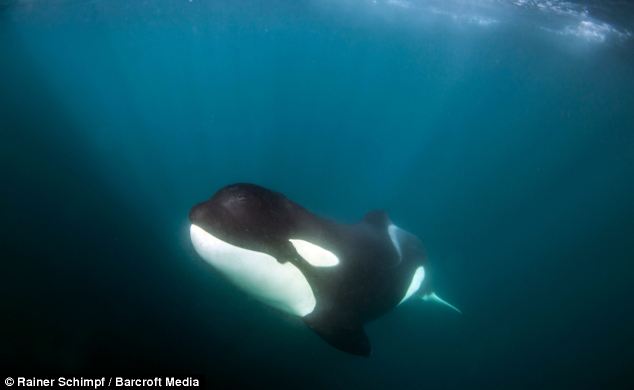
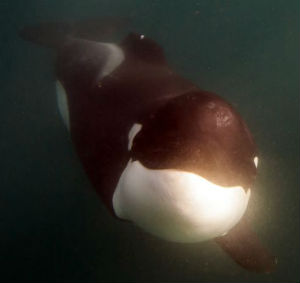
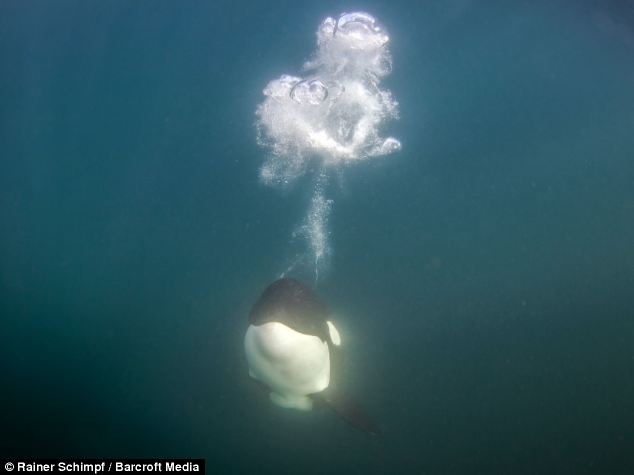
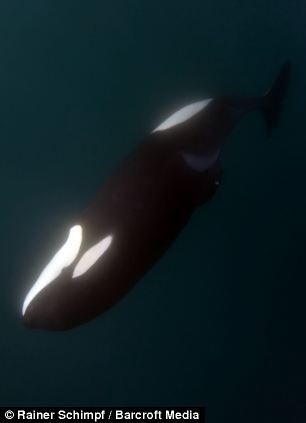
The most recent example of this extraordinary commitment to one another was revealed recently in the UK’s Daily Mail, which ran a story and photo essay of a disabled young male orca off the coast of South Africa. The disabled killer whale that is missing two fins is able to survive in the wild with the help of its family, who hunt food its food. The young killer whale has no dorsal fin or right-side pectoral fin, leaving it unable to hunt for itself.
These disfigurements make it impossible for the whale to hunt alongside his pod. Luckily for him, they are only too willing to hunt for their disabled pod mate.
Underwater photographer Rainer Schimpf came face to face with the pod while the members hunted in waters off Port Elizabeth in South Africa. He said: “Incapable of fast hunting and ambushing prey it has to be dependent on the pod which, one assumes, looks after it very well. It shows these mammals are not really just ruthless killing machines but they also have complex, caring social-structures in which they and care for their own disabled members.”
Of course, the more you learn about the intelligence, compassion and complex social bonds these amazing animals have developed over millions of years of evolution, the idea of keeping them locked up in tanks for human entertainment and profit becomes even more ludicrous.
Killer whales are highly social; some pods are composed of matrilineal family groups which are the most stable of any animal species. Killer Whales are notable for these complex societies. Only elephants and higher primates, such as humans, live in comparably complex social structures. It is because of these complex social bonds and society that one should wonder why we attempt keep Killer Whales in captivity.
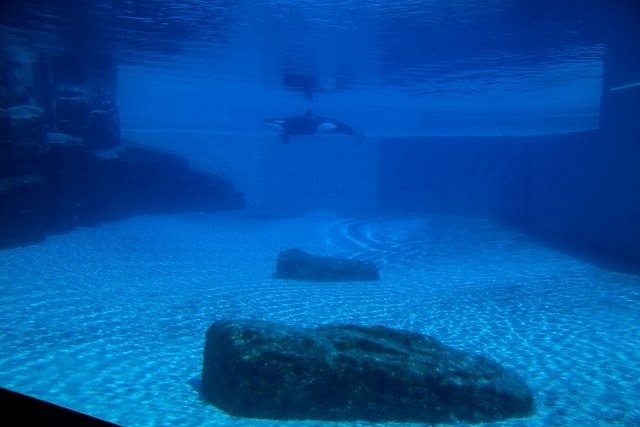
Captivity is about separation and exclusion. It is about the destruction of families and communities. For wild caught animals, many watch their parents and family killed in front of them at a young age so that they won’t be able to put up a fight to defend them from capture. For the animals bred in captivity at Marineland, those parents routinely watch as their offspring suffer and die in infancy.
There are no heart warming stories at Marineland, Niagara Falls, Canada. There are endless sad stories, but none may be more pressing and sad than that of Kiska. Marineland’s last remaining Orca, Kiska was wild caught from Iceland in the 1980’s. At Marineland, Kiska is the longest serving resident and she has seen dozens of Orcas come and go – and estimated 14 other Orcas die. Of those 14, 5 of them have been her own children. The oldest surviving just 6 years. (Source)
Since the removal of Ikaika back to SeaWorld she has spent her days alone. Ex-trainers have spoken publicly about their concern for her and Marineland itself have gone on public legal record establishing their concern for the health of their lone Orca held in solitary. (Source)
Kiska’s story is the story of captivity. She has survived, but at what cost? Her life has been painfully sad, she is alone and completely dependent upon humans – humans who are only interested in her as an “asset.”
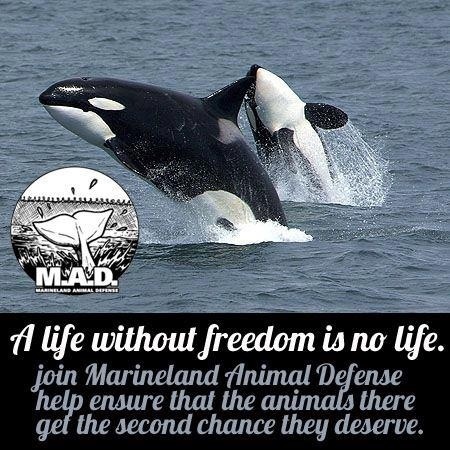
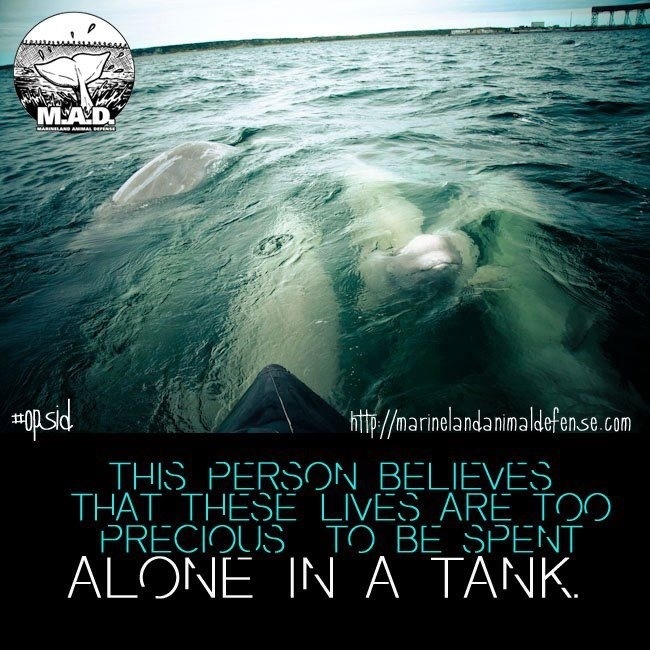
There is no human need to hold other animals in captivity. There is no human need to gawk at or to turn other animals into mere commodities and spectacles. Marineland Animal Defense fights to remove Kiska and all of the other animals at Marineland and to ensure there are no more captives!
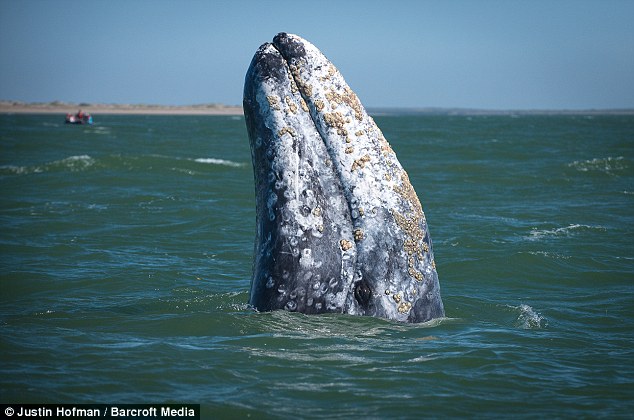
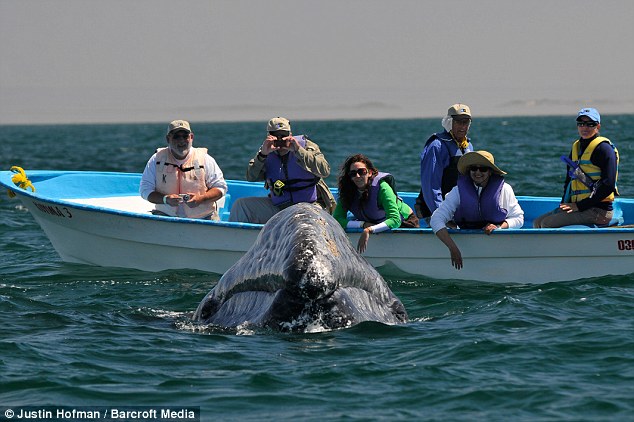
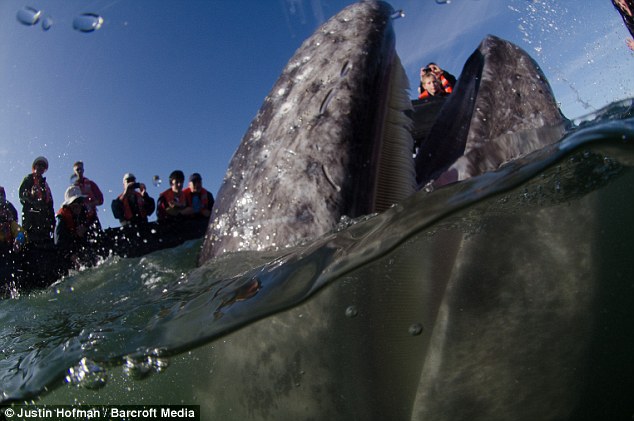
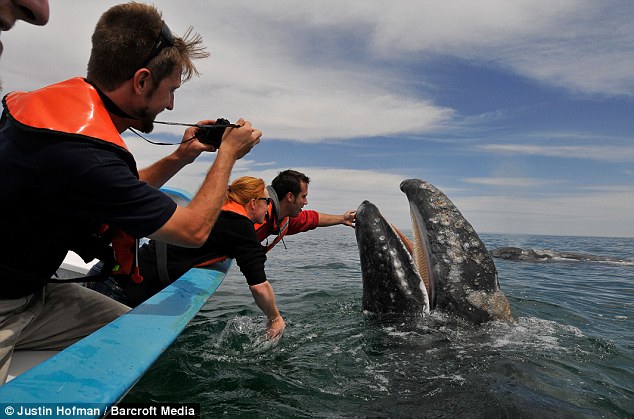
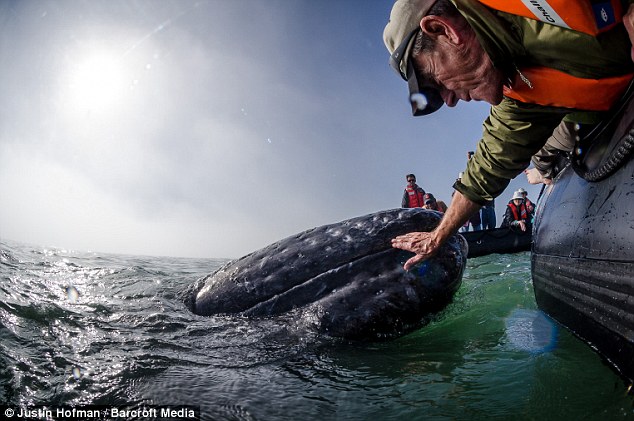
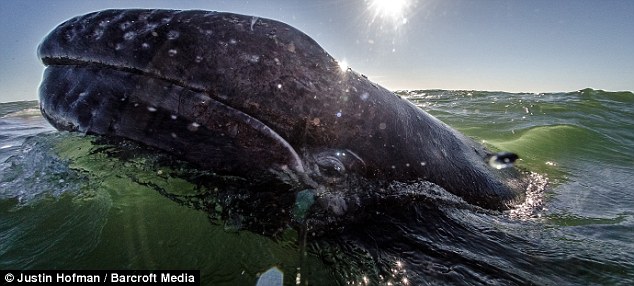
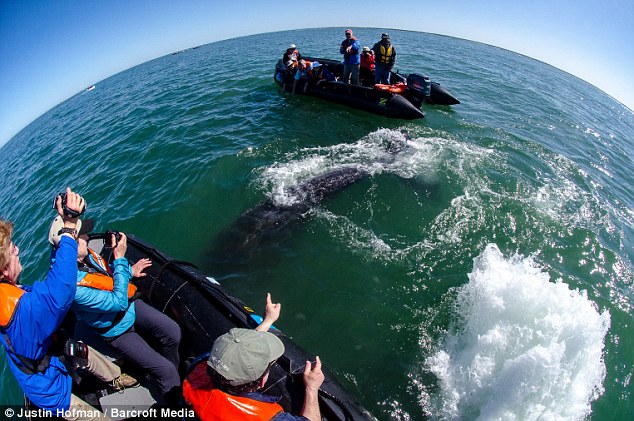
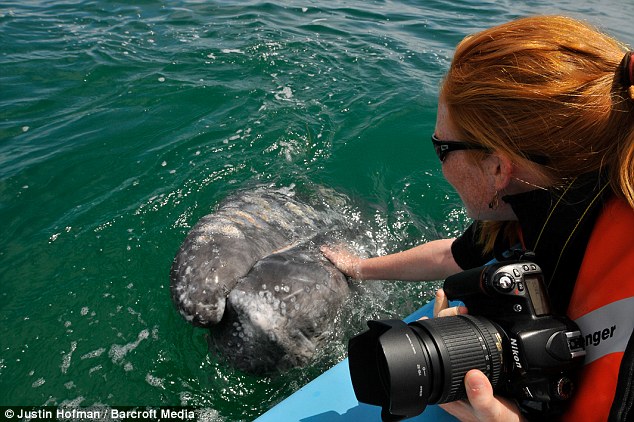
Tourists had a “whale” of a time after a 30 tonne mother gray whale and her calf pop up to say hello!
This is the Real Sea World and a heartwarming moment an affectionate 40 ft mother wale and her curious calf popped up to say hello to tourists who showered them with hugs and kisses.
The friendly mother rose to the surface just in time to make these holiday snaps ones to definitely remember. Guests were truely amazed when the friendly gray whales drifted up to the boats.
The images were captured by photographer Justin Hofman off the coast of Baja California, Mexico.
“Change starts with education. If people are aware of their impact on the earth, they’ll make smarter choices.” -Rob Stewart
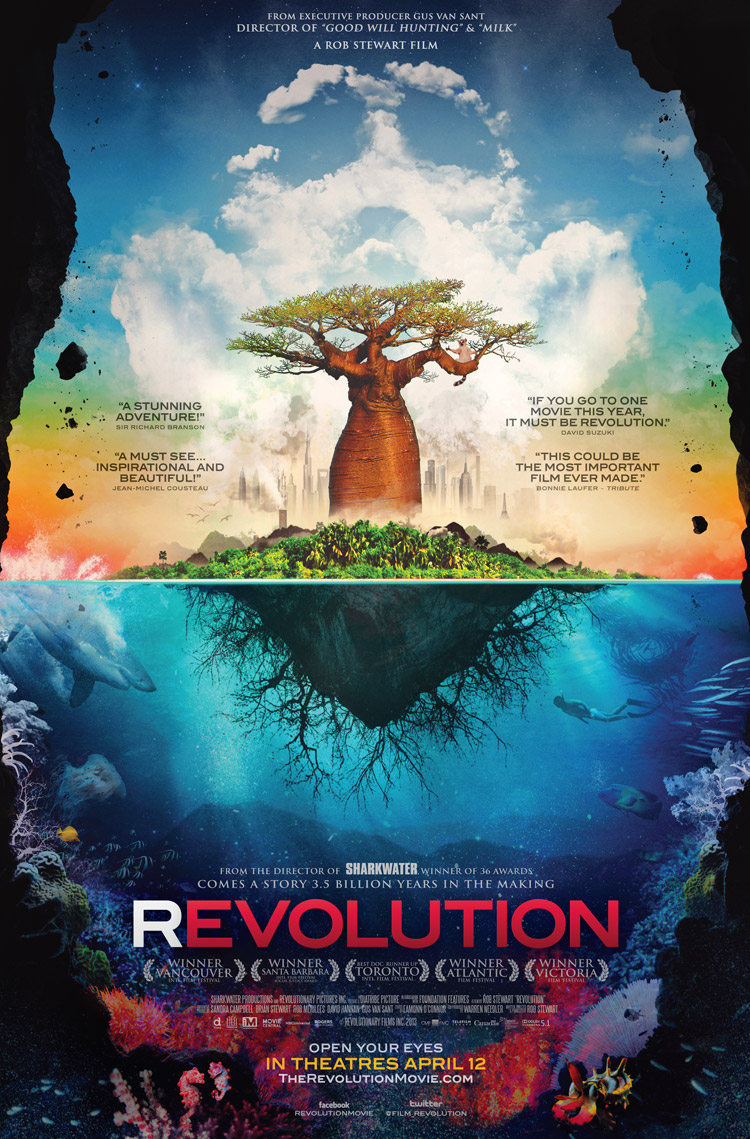
Revolution – film about changing the world. The true-life adventure of Rob Stewart, this follow-up to his acclaimed SHARKWATER documentary continues his remarkable journey; one that will take him through 15 countries over four years, and where he’ll discover that it’s not only sharks that are in grave danger — it’s humanity itself.
In an effort to uncover the truth and find the secret to saving the ecosystems we depend on for survival, Stewart embarks on a life-threatening adventure. From the coral reefs in Papua New Guinea and deforestation in Madagascar to the largest and most destructive environmental project in history in Alberta, Canada, he reveals that all of our actions are interconnected and that environmental degradation, species loss, ocean acidification, pollution and food/water scarcity are reducing the Earth’s ability to house humans. How did this happen, and what will it take to change the course that humanity has set itself on?
Travelling the globe to meet with the dedicated individuals and organizations working on a solution, Stewart finds encouragement and hope, pointing to the revolutions of the past and how we’ve evolved and changed our course in times of necessity. If people were informed about what was really going on, they would fight for their future — and the future of other generations. From the evolution of our species to the revolution to save it, Stewart and his team take viewers on a groundbreaking mission into the greatest war ever waged.
Startling, beautiful, and provocative, Revolution inspires audiences from across the globe to start a revolution and change the world forever.
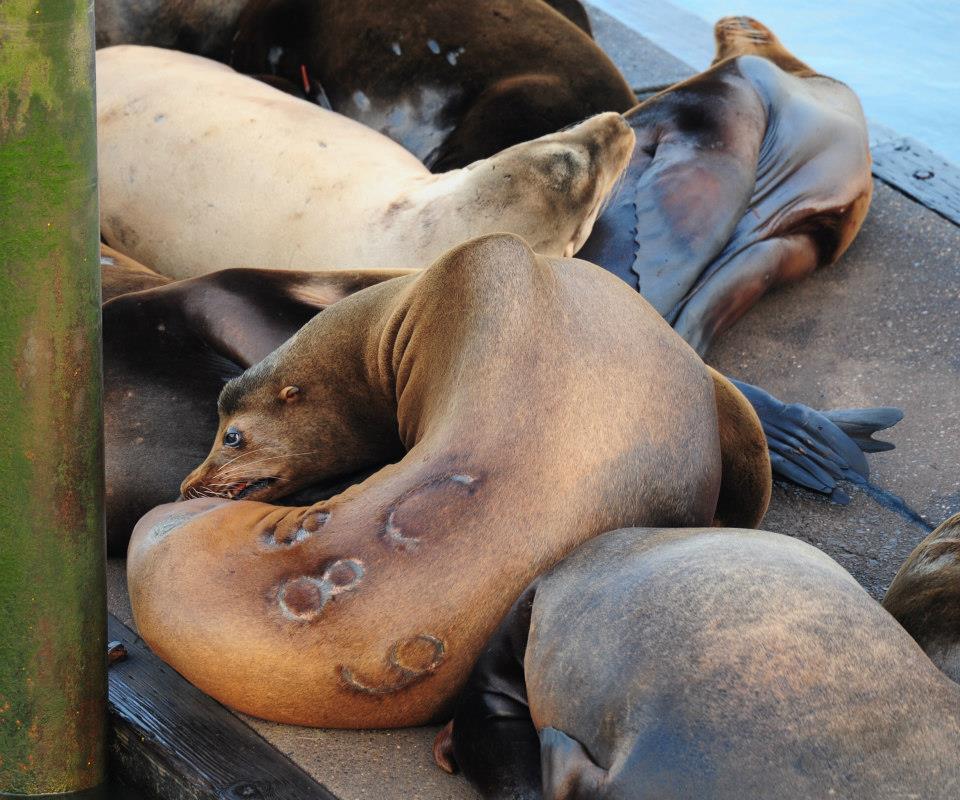
Sea Shepherd Conservation Society, who is well known for their attempts to stop whaling ships in the southern ocean whale sanctuary, now wants to stop Oregon’s killing of sea lions that eat endangered salmon in the Columbia River. The Dam Guardians of Sea Shepherd, in Astoria on Sunday, photographed and video-taped Oregon Department of Fish and Wildlife technicians as they captured and branded 38 sea lions at the East Mooring Basin.
The fact is the sea lions take less than 4% of the salmon runs. Whereas, habitat loss, hydroelectric dams, hatchery fish and harvest are responsible for the bulk of wild salmon declines. The sea lions will be branded with hot irons, hazed with rubber bullets and explosives, and killed by lethal injection or shotgun for eating less than 4% of the salmon at the dam. All of this mayhem, conducted on the dime of taxpayers, takes place while commercial, sport, and tribal fisheries are allowed to take up to 17% of the same endangered salmon and the dam itself claims approximately 17% of adult salmon.
About 1,400 sea lions have been branded at Astoria since 1997 as part of a general population study. Numbers branded on the animals are used to identify sea lions that go upriver to feed on endangered salmon at Bonneville Dam, where the fish are vulnerable while waiting to go over the fish ladder.
“Palm Sunday for some is supposed to be a peaceful holiday. We woke to the sounds of sea lion screams coming from Pier 36. We scrambled to get dressed, get our equipment, and get down to the docks. We were astounded by the sight of 30 + beautiful sea lions, in sheer terror, climbing upon eachother and crying out in fear. Trying to escape their human captors. Sea Lions literally filled the trap, and… the weight was causing the cage to sink. The sea lions sitting on the docks were also upset. Little ones were swimming up to see their friends in the trap. Matt from O.D.F.W. would bang on the bottom of the trap with a stick and the only way out of the trap was to go into the squeeze cage. Where they would be held tightly against their will, their movements restricted while seering hot irons were pressed into their flesh. The sea lions don’t understand this type of behavior and the way that these humans were treating them. I don’t think the humans understand how it would feel if this was being done to them. The sea lions do not know things like what would drive a man to put them, in a cage and traumatize their family. They do not understand cold hearts that will press seering hot irons into their flesh because these humans do not want to share the fish with wildlife A woman was screaming “Don’t hurt the babies, Matt, how do you sleep at night?” We talked to tourists who heard the sea lions and this woman screaming. They flocked to the pier, and walked away with the truth about what is happening to our oceans, and to marine wildlife on The Willamette and Columbia River. I noticed they would come with smiles on their faces and left looking disturbed. With horror and tears on their faces. With tears streaming down our face, we refused not to look away. We documented this horror for over six hours.” Ellie Buchanan Sea Shepherd USA





 Voice For The Blue