Taiji Dolphin Drive Hunt & Slaughter #tweet4taiji

Only 8 days remain until the fisherman of Taiji begin another season of the annual Dolphin Drive Hunt & Slaughter

The slaughter of dolphins, porpoises and small whales occurs in Taiji, Japan each year. Starting on September 1 and usually continues through March of the next year. Fisherman herd whole families of small cetaceans into a shallow bay and mercilessly stab and drown them to death.

563151_160881450728760_1081871098_n

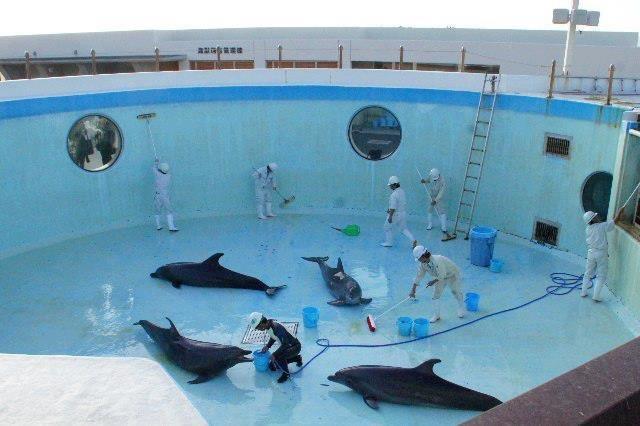
The dolphin drive hunts in Taiji do not just end in the killing of dolphins, Taiji is “ground zero” for the international trade in live dolphins. There is a direct link between the captive dolphin entertainment industry and the bloody waters of the Cove in Taiji. Supporting a live dolphin show or participating in a confined swim with dolphin program is supporting the annual dolphin hunt in Taiji and in return directly relates to killing of thousands of dolphins each year for human consumption.  It is the dolphin entertainment industry that drive the hunt and the killing of dolphins follows in its wake. For the dolphins pulled from their families and sold into captivity, life is beyond horrible.
598858_463115263731552_1963834535_n  419650_121085998041639_346487572_n

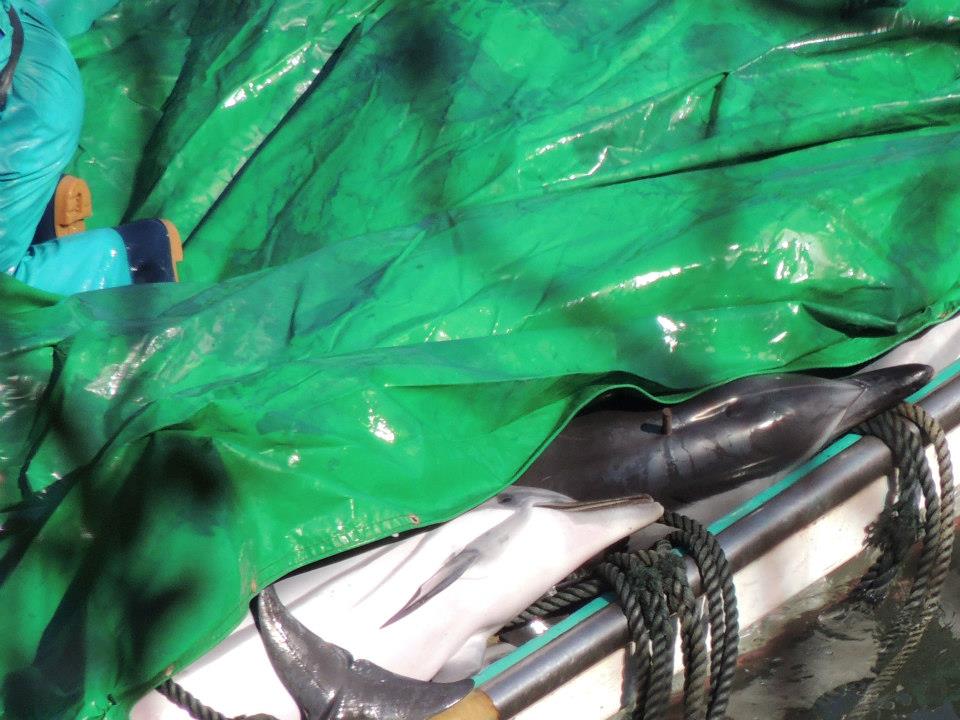
Once the dolphins are driven into the Cove area, they are then herded into a southern finger off the Cove. Oftern main mammal trainers from the nearby Dolphin Base and the Taiji Whale Museum wil move among the captured dolphins and select the young dolphins and those deemed “beautiful” (that is without any scarring) for the captive entertainment industry. Those not selected are pushed further into the Cove and hunters push a metal rod into the dolphin’s spinal cords. Once the rod is removed, a wooden plud is then hammered into the pole. The insertion of the rod causes paralysis, however the dolphins are stil alive and very much aware of what is happening to them and to their family members. A rope is then tied around their tails adn they are hauled out tothe waiting gutting barge by small skiffs. Most of them slowly drown and die during this towing activity.
73416_160877837395788_1660810474_n  484721_154136091403296_97215824_n

What can you do to help:

Dolphin exploitation continues to this day because the public remains unaware of dolphin suffering. Now that you are aware, please do not fund the suffering of dolphins and cetaceans by purchasing a ticket to a dolphin show or swim with dolphin program

Spread the word by following  Sea Shepherd Conservation Society’s Operation Infinite Patience on social media and spread the word to your friends and family

Follow the Cove Guardians on Facebook & Twitter for daily activity in Taiji at the Cove:

Sea Shepherd Cove Guardians Page (official) & @CoveGuardians

Educate others on the link between the Taiji dolphin slaughter and the captive dolphin entertainment industry. Discourage your family and friends from visiting dolphinariums, such as Sea World, Marineland Canada, etc., or participating in swim with dolphin programs.


Thoughts for the Day

IMG_2848

Only 69 days until Sept 1, 2013 and the start of the annual Dolphin hunt and slaughter in Taiji.

Please check out www.japandolphinsday.net to join an event near you or host your own event.

IMG_3252

IMG_3052

IMG_3275

Myths – Dolphin Captivity

Myth – Dolphins are happy in captivity.

Truth – Dolphins look as though they are smiling because that is the way their faces are shaped. Captive dolphins are constantly on display with nowhere to hide and are forced to perform shows every single day. Dolphins are denied their freedom to travel, and in many cases are taken from their families and homes in the ocean. Would you be happy if you were a captive dolphin?

Myth – Captive dolphins are safe from predators and don’t have to look for food like would in the wild.

Truth – Inmates in prison are safe from being burgled and are fed each day. But do you think they are happy? The main difference between a jail cell and a aquarium tank is that on is filled with water.

Myth – Captive dolphin display have educational value.

Truth – The only thing captivity teaches is that it is okay to imprison animals and force them to perform for our entertainment. In captivity, a dolphin’s natural behavior are repressed. In the wild dolphins do not jump through hoops or drag people through the water with their fins. Captivity presents a completely false image of everything a dolphin is!

Myth – Children establish a connection with dolphins in captivity that would otherwise be impossible to achieve.

Truth – many children care about dinosaurs yet they have never see one. Through photos, videos, stories, tours to see wild dolphins and animations, children can develop love for dolphins without their having to suffer in captivity. Do you think your child would dolphins to suffer if they knew the truth?

Myth – Rescued dolphins have a good home in captivity.

Truth – Dolphins found injured or stranded need medical care and rehabilitation. However, they should not afterwards be forced into a life of servitude and display; they should be released back into the wild. If this is not possible they should be sent to a sea pen where they can live out their lives in privacy and a mostly natural environment.

“Dolphin shows are nothing but a display of human dominance over animals. They are as educational about dolphins as Mickey Mouse is about mice.’ Ric O’Barry

Dolphin exploitation continues to this day because the public remains unaware of dolphin suffering. Now that you are aware, please do not fund the suffering dolphins and other small whales by purchasing a ticket to a dolphin show or swim with dolphin program.

For more information please visit Ric O’Barry’s Dolphin Project

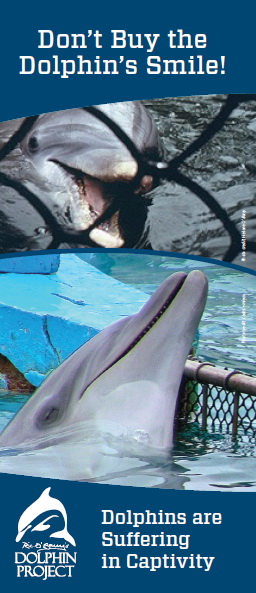
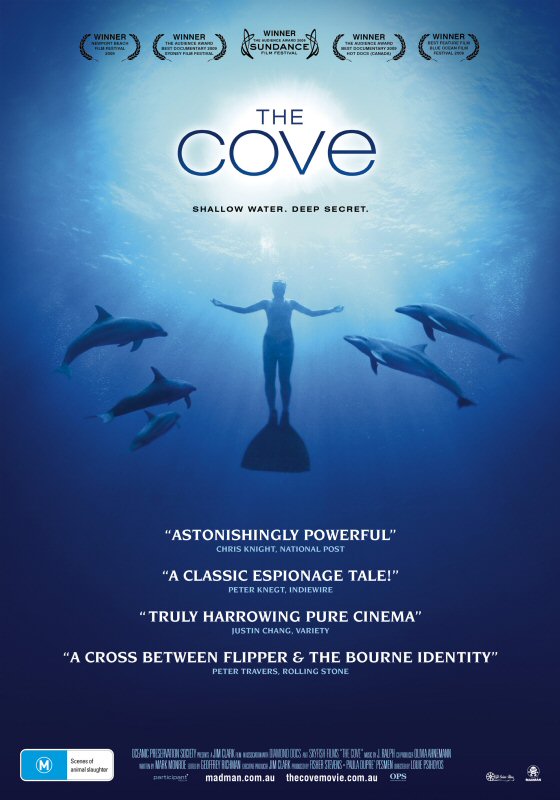
Dontbuyaticket  DolphinProject  cove-poster-0

For the dolphins!

Scientists See Cruelty in Killing Method Used in Japan’s Dolphin Hunt & Slaughter

In a new peer-reviewed study, scientists assess the killing method employed by the dolphin hunters of Taiji, Japan, by watching video recorded surreptitiously in 2011 by a German dolphin-protection group, AtlanticBlue.

Here’s the researchers’ not-so-surprising prime conclusion: This killing method does not conform to the recognized requirement for “immediate insensibility” and would not be tolerated or permitted in any regulated slaughterhouse process in the developed world.

Here’s the abstract of the paper: “A Veterinary and Behavioral Analysis of Dolphin Killing Methods Currently Used in the ‘Drive Hunt’ in Taiji, Japan” Journal of Applied Animal Welfare Science, Volume 16, Issue 2, 2013 (DOI: 10.1080/10888705.2013.768925) Andrew Butterworth, Philippa Brakes, Courtney S. Vail & Diana Reiss

Annually in Japanese waters, small cetaceans are killed in “drive hunts” with quotas set by the government of Japan. The Taiji Fishing Cooperative in Japan has published the details of a new killing method that involves cutting (transecting) the spinal cord and purports to reduce time to death. The method involves the repeated insertion of a metal rod followed by the plugging of the wound to prevent blood loss into the water. To date, a paucity of data exists regarding these methods utilized in the drive hunts. Our veterinary and behavioral analysis of video documentation of this method indicates that it does not immediately lead to death and that the time to death data provided in the description of the method, based on termination of breathing and movement, is not supported by the available video data. The method employed causes damage to the vertebral blood vessels and the vascular rete from insertion of the rod that will lead to significant hemorrhage, but this alone would not produce a rapid death in a large mammal of this type. The method induces paraplegia (paralysis of the body) and death through trauma and gradual blood loss. This killing method does not conform to the recognized requirement for “immediate insensibility” and would not be tolerated or permitted in any regulated slaughterhouse process in the developed world.

Here are questions from Andrew C. Revkin (NY Times) and Diana Reiss’s responses: (source)

Q. Can you tell me in a few words what this analysis means to you in the larger context of human/animal relations?
A. Dolphins are a cognitively and socially complex species that exist in their own societies in the seas. To see any animal treated in this way is shocking. Given what we know scientifically about the awareness, sensitively, cognitive and social prowess of dolphins, this treatment is unjustifiable and unacceptable and needs to be stopped immediately. In the larger context of human and non-human animal relations, the methods used to herd dolphins and then kill them is off-the chart in terms of any concern for animal welfare. At a time when most countries are concerned for the conservation and welfare of dolphins and whales it is strange and disturbing to see a modern country like Japan continue to ignore scientific knowledge and concern for these species. In most modern countries these mammals are protected but sadly we see these exceptions. Our scientific knowledge needs to transcend cultural and geographic boundaries and these species need global protection. 
Q. One of the standard replies from Japan on this issue (whether with whales or dolphins) is that we, for example, cherish bison but eat bison burgers. Is there a distinction?
A. You cannot compare bison to dolphins in the cognitive domain. However, bison are not killed in this inhumane manner.  Nor are lab rats. In cases in which animals are domesticated for food, most modern countries are striving for better animal welfare practices that minimize pain and suffering during the killing process with the goal to render an animal unconscious quickly before it is killed. This is not the case in the dolphin drive hunts. These are not domesticated animals; they are wild dolphins that are captured within their social groups, mother and young, and slaughtered using a technique that actually prolongs death, pain and suffering.  The herding procedures themselves are inhumane and may include forced submersion as the dolphins are dragged by their tails to shore to be killed. This is not to say that dolphins should be killed. They should not.

In an interview last month with the journalist David Kirby, Mark Palmer, the associate director of Earth Island Institute’s International Marine Mammal Project, estimated that the dolphin hunters of Taiji killed nearly 900 dolphins and pilot whales this season and kept nearly 250 to sell for alive to the aquarium trade (which is booming in the Middle East and Asia).

This video is not suitable for children and may be disturbing to some adults:

http://www.youtube.com/watch?v=dzOw5IBmqWk&feature=youtu.be

For the dolphins!!

Thought for the Day

jane goodall 2

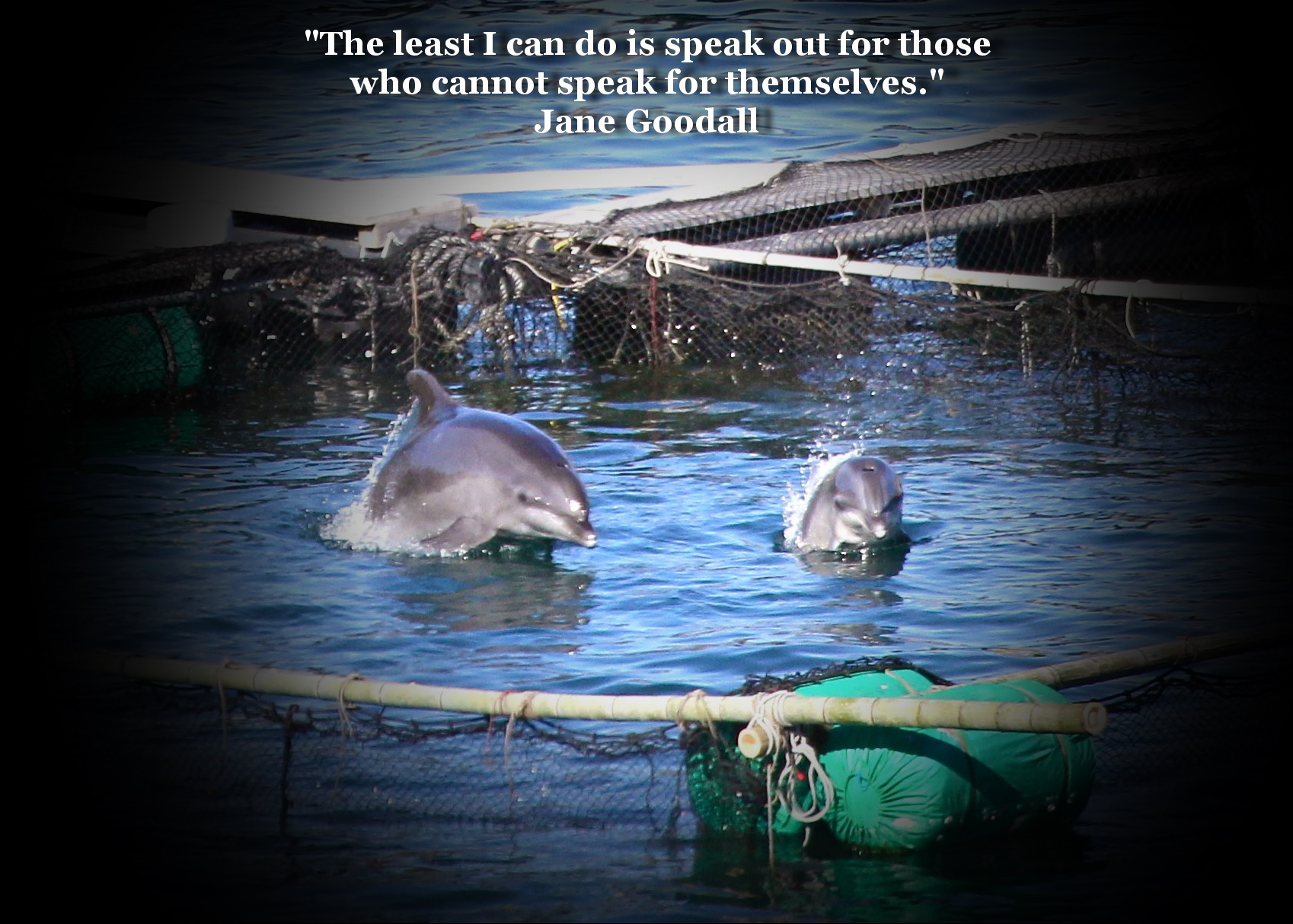
Two captive bottlenose dolphins in the Taiji harbour pens

Photo Credit Sea Shepherd Cove Guardians

For the Dolphins!!


Minds in the Water … Another must see!

Minds in the Water – 5 years in the making, Minds In The Water is the story of one surfer’s international journey to help protect dolphins, whales and their ocean environment. Shot on location in Australia, the Galapagos, Chile and Japan, the film captures a key moment in one person’s life when apathy is no longer an option. Pro surfer Dave Rastovich went from observer to activist when he embarked on a personal mission to help stop the worldwide commercial slaughter of dolphins and whales. While unsure at first, Rasta quickly found his activist sea legs and helped build a core team of filmmakers, journalists, musicians, eco-pirates and celebrity surfers to help spread the message. All this has been documented in the film, Minds In The Water. (Source)