Cruelty of Dolphin Captivity – Sensory Deprivation

Is captivity more stressful for dolphins than other animals?

Yes, dolphins are sonic creatures—their primary sense is sound.

If you go to the zoo, take a look at the reptile exhibit and find a snake. You’ll see that the snake is given more consideration than the dolphins at Marineland. You’ll see that the snake has got tree limbs to climb on, he’s got rocks to hide from the public if he wants to, grass—there’s always something natural about the snake’s habitat.

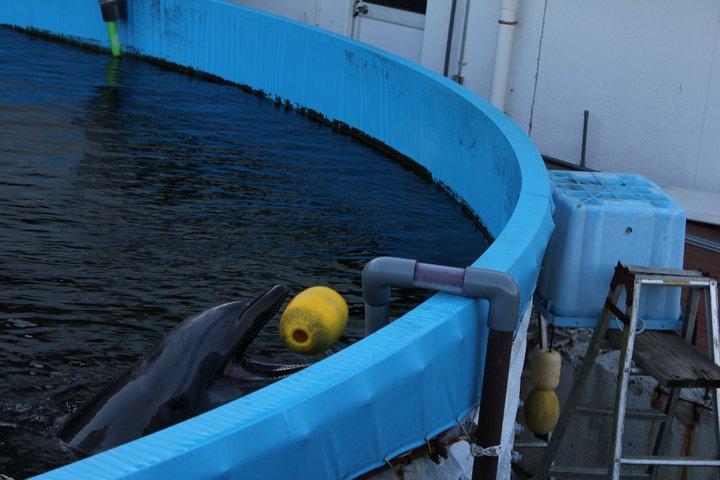
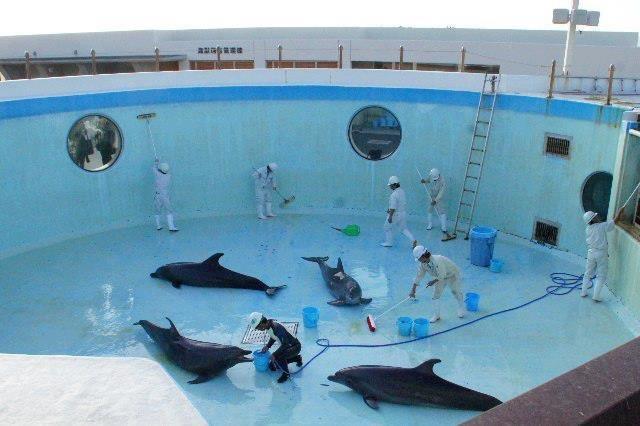
But if you look at the habitat of a captive dolphin, you’ll notice there’s nothing there. It’s just a blank, concrete box. Is that stress? Of course it is.

holding-pools  misty_n

Why can’t marine parks create better environments for dolphins?

It’s really not what’s best for the dolphin; it’s about getting people to come and watch a show, and then getting another group of people to watch the same show.

The dolphins are separated from the natural rhythms of the sea: the tide, the current, the sounds of the sea, the things we take for granted. All of that is missing. That is what we call sensory deprivation. That makes it more stressful for them than other animals in captivity.

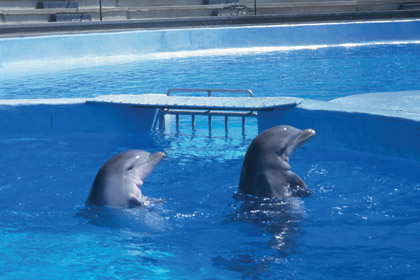
captivity12  598858_463115263731552_1963834535_n

Don’t forget that ….

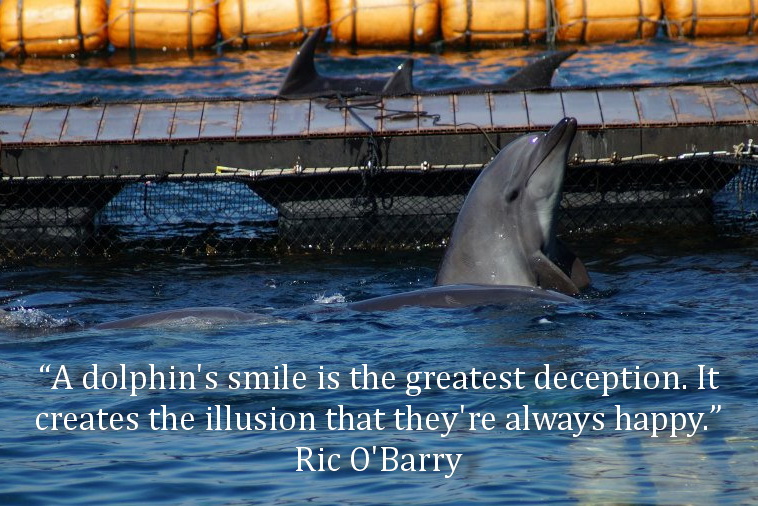
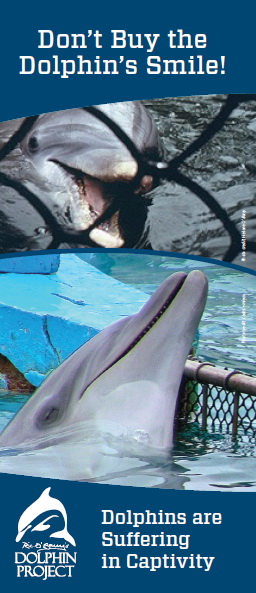
Dolphin Smile

For the dolphins!

Myths – Dolphin Captivity

Myth – Dolphins are happy in captivity.

Truth – Dolphins look as though they are smiling because that is the way their faces are shaped. Captive dolphins are constantly on display with nowhere to hide and are forced to perform shows every single day. Dolphins are denied their freedom to travel, and in many cases are taken from their families and homes in the ocean. Would you be happy if you were a captive dolphin?

Myth – Captive dolphins are safe from predators and don’t have to look for food like would in the wild.

Truth – Inmates in prison are safe from being burgled and are fed each day. But do you think they are happy? The main difference between a jail cell and a aquarium tank is that on is filled with water.

Myth – Captive dolphin display have educational value.

Truth – The only thing captivity teaches is that it is okay to imprison animals and force them to perform for our entertainment. In captivity, a dolphin’s natural behavior are repressed. In the wild dolphins do not jump through hoops or drag people through the water with their fins. Captivity presents a completely false image of everything a dolphin is!

Myth – Children establish a connection with dolphins in captivity that would otherwise be impossible to achieve.

Truth – many children care about dinosaurs yet they have never see one. Through photos, videos, stories, tours to see wild dolphins and animations, children can develop love for dolphins without their having to suffer in captivity. Do you think your child would dolphins to suffer if they knew the truth?

Myth – Rescued dolphins have a good home in captivity.

Truth – Dolphins found injured or stranded need medical care and rehabilitation. However, they should not afterwards be forced into a life of servitude and display; they should be released back into the wild. If this is not possible they should be sent to a sea pen where they can live out their lives in privacy and a mostly natural environment.

“Dolphin shows are nothing but a display of human dominance over animals. They are as educational about dolphins as Mickey Mouse is about mice.’ Ric O’Barry

Dolphin exploitation continues to this day because the public remains unaware of dolphin suffering. Now that you are aware, please do not fund the suffering dolphins and other small whales by purchasing a ticket to a dolphin show or swim with dolphin program.

For more information please visit Ric O’Barry’s Dolphin Project

Dontbuyaticket  DolphinProject  cove-poster-0

For the dolphins!

Scientists See Cruelty in Killing Method Used in Japan’s Dolphin Hunt & Slaughter

In a new peer-reviewed study, scientists assess the killing method employed by the dolphin hunters of Taiji, Japan, by watching video recorded surreptitiously in 2011 by a German dolphin-protection group, AtlanticBlue.

Here’s the researchers’ not-so-surprising prime conclusion: This killing method does not conform to the recognized requirement for “immediate insensibility” and would not be tolerated or permitted in any regulated slaughterhouse process in the developed world.

Here’s the abstract of the paper: “A Veterinary and Behavioral Analysis of Dolphin Killing Methods Currently Used in the ‘Drive Hunt’ in Taiji, Japan” Journal of Applied Animal Welfare Science, Volume 16, Issue 2, 2013 (DOI: 10.1080/10888705.2013.768925) Andrew Butterworth, Philippa Brakes, Courtney S. Vail & Diana Reiss

Annually in Japanese waters, small cetaceans are killed in “drive hunts” with quotas set by the government of Japan. The Taiji Fishing Cooperative in Japan has published the details of a new killing method that involves cutting (transecting) the spinal cord and purports to reduce time to death. The method involves the repeated insertion of a metal rod followed by the plugging of the wound to prevent blood loss into the water. To date, a paucity of data exists regarding these methods utilized in the drive hunts. Our veterinary and behavioral analysis of video documentation of this method indicates that it does not immediately lead to death and that the time to death data provided in the description of the method, based on termination of breathing and movement, is not supported by the available video data. The method employed causes damage to the vertebral blood vessels and the vascular rete from insertion of the rod that will lead to significant hemorrhage, but this alone would not produce a rapid death in a large mammal of this type. The method induces paraplegia (paralysis of the body) and death through trauma and gradual blood loss. This killing method does not conform to the recognized requirement for “immediate insensibility” and would not be tolerated or permitted in any regulated slaughterhouse process in the developed world.

Here are questions from Andrew C. Revkin (NY Times) and Diana Reiss’s responses: (source)

Q. Can you tell me in a few words what this analysis means to you in the larger context of human/animal relations?
A. Dolphins are a cognitively and socially complex species that exist in their own societies in the seas. To see any animal treated in this way is shocking. Given what we know scientifically about the awareness, sensitively, cognitive and social prowess of dolphins, this treatment is unjustifiable and unacceptable and needs to be stopped immediately. In the larger context of human and non-human animal relations, the methods used to herd dolphins and then kill them is off-the chart in terms of any concern for animal welfare. At a time when most countries are concerned for the conservation and welfare of dolphins and whales it is strange and disturbing to see a modern country like Japan continue to ignore scientific knowledge and concern for these species. In most modern countries these mammals are protected but sadly we see these exceptions. Our scientific knowledge needs to transcend cultural and geographic boundaries and these species need global protection. 
Q. One of the standard replies from Japan on this issue (whether with whales or dolphins) is that we, for example, cherish bison but eat bison burgers. Is there a distinction?
A. You cannot compare bison to dolphins in the cognitive domain. However, bison are not killed in this inhumane manner.  Nor are lab rats. In cases in which animals are domesticated for food, most modern countries are striving for better animal welfare practices that minimize pain and suffering during the killing process with the goal to render an animal unconscious quickly before it is killed. This is not the case in the dolphin drive hunts. These are not domesticated animals; they are wild dolphins that are captured within their social groups, mother and young, and slaughtered using a technique that actually prolongs death, pain and suffering.  The herding procedures themselves are inhumane and may include forced submersion as the dolphins are dragged by their tails to shore to be killed. This is not to say that dolphins should be killed. They should not.

In an interview last month with the journalist David Kirby, Mark Palmer, the associate director of Earth Island Institute’s International Marine Mammal Project, estimated that the dolphin hunters of Taiji killed nearly 900 dolphins and pilot whales this season and kept nearly 250 to sell for alive to the aquarium trade (which is booming in the Middle East and Asia).

This video is not suitable for children and may be disturbing to some adults:

http://www.youtube.com/watch?v=dzOw5IBmqWk&feature=youtu.be

For the dolphins!!
Thought for the Day

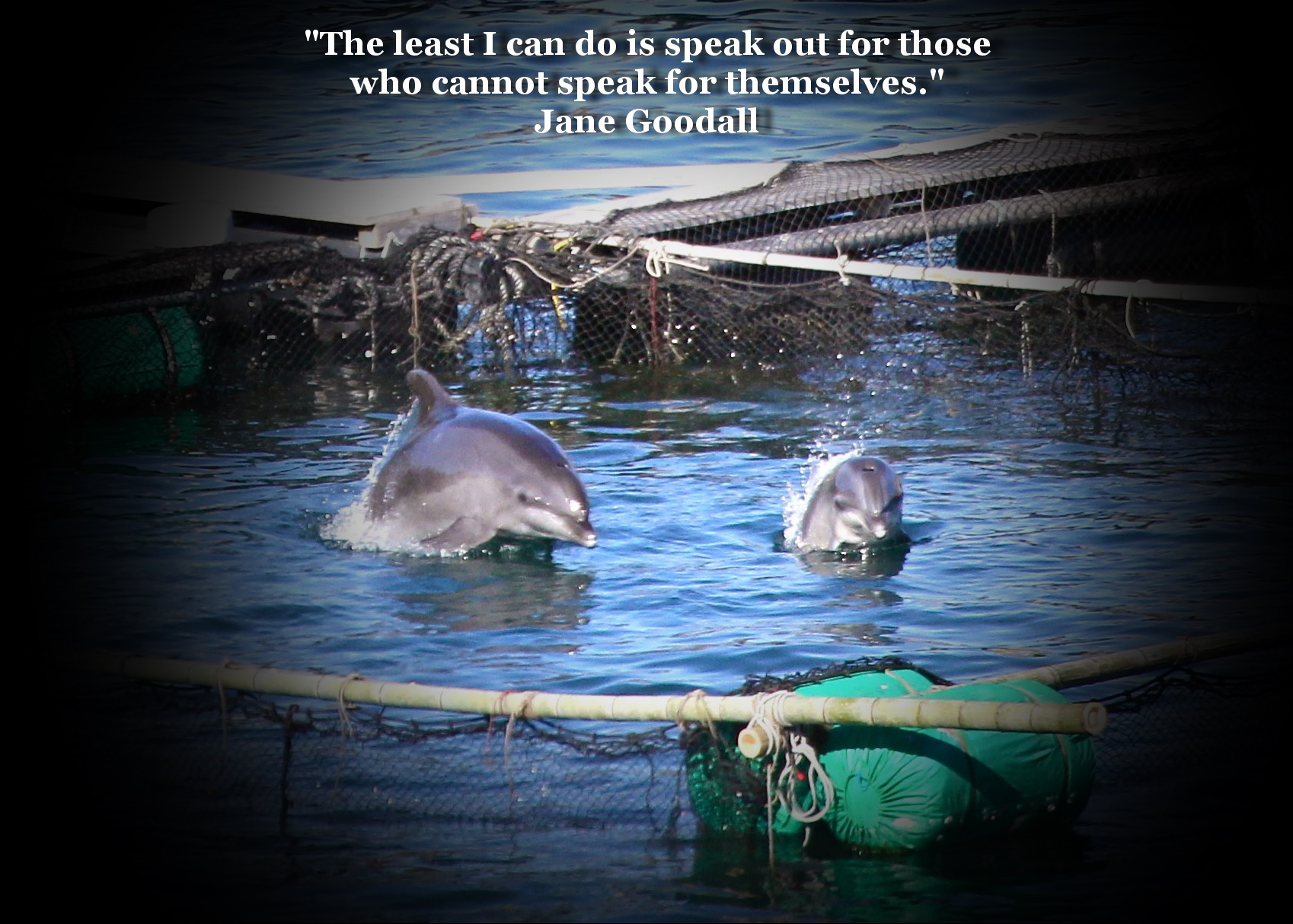
jane goodall 2

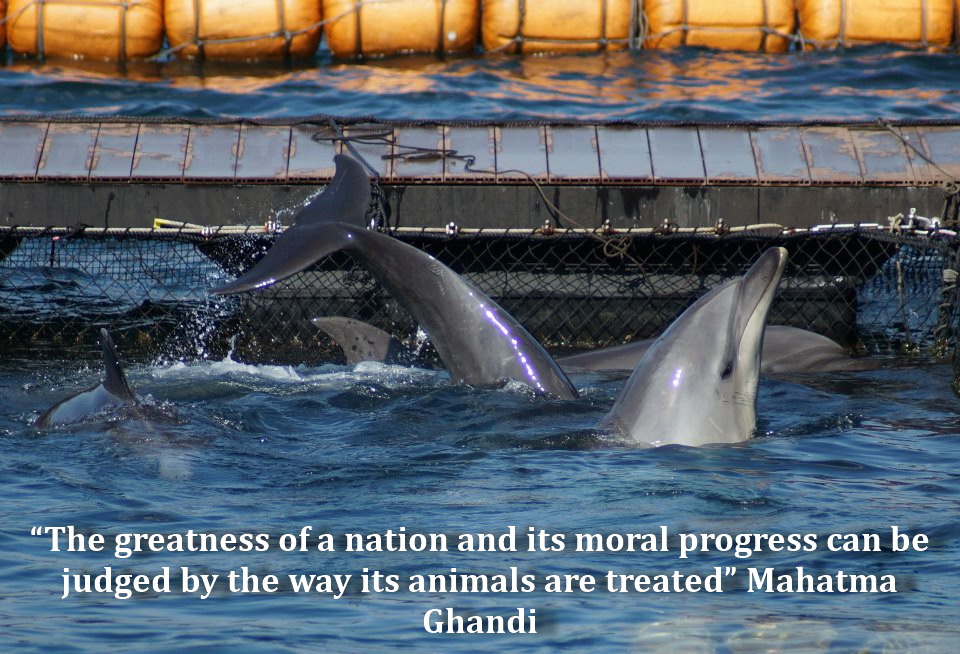
Two captive bottlenose dolphins in the Taiji harbour pens

Photo Credit Sea Shepherd Cove Guardians

For the Dolphins!!


Minds in the Water … Another must see!

Minds in the Water – 5 years in the making, Minds In The Water is the story of one surfer’s international journey to help protect dolphins, whales and their ocean environment. Shot on location in Australia, the Galapagos, Chile and Japan, the film captures a key moment in one person’s life when apathy is no longer an option. Pro surfer Dave Rastovich went from observer to activist when he embarked on a personal mission to help stop the worldwide commercial slaughter of dolphins and whales. While unsure at first, Rasta quickly found his activist sea legs and helped build a core team of filmmakers, journalists, musicians, eco-pirates and celebrity surfers to help spread the message. All this has been documented in the film, Minds In The Water. (Source)

Powerful Message from a Grieving Dolphin

Whale watchers aboard Captain Dave’s Dolphin and Whale Watching Safari had an unexpected and heartbreaking encounter with a pod of bottlenose dolphins yesterday. A deceased dolphin calf was being carried by an adult bottlenose dolphin on its back.

This video sends a powerful message and it is a window into a dolphins heart. This animal is laboring under the strain of carrying the deceased calf on its back and is probably keeping it near the surface so the departed dolphin can breathe. Dolphins do not normally swim with their dorsal fins sticking out of the water continuously like this bottlenose did.  This poor grieving mother dolphin takes us, without words, to a place where as one of our passengers said in the video “humans and dolphins are not so different.”

The pair were surrounded by other dolphins, almost as if they were being protected, during this profoundly sad time. The dolphin was seen an hour later by another boat still carrying the calf.

For the dolphins!

Sharks, A Whale & Eco-Pirate – Must see documentaries!

Sharkwater: For filmmaker Rob Stewart, exploring sharks began as an underwater adventure. What it turned into was a beautiful and dangerous life journey into the balance of life on earth. riven by passion fed from a lifelong fascination with sharks, Stewart debunks historical stereotypes and media depictions of sharks as bloodthirsty, man-eating monsters and reveals the reality of sharks as pillars in the evolution of the seas. Filmed in visually stunning, high definition video, Sharkwater takes you into the most shark rich waters of the world, exposing the exploitation and corruption surrounding the world’s shark populations in the marine reserves of Cocos Island, Costa Rica and the Galapagos Islands, Ecuador.

The Whale: tells the true story of a young, wild killer whale – an orca – nicknamed Luna, who lost contact with his family on the coast of British Columbia and turned up alone in a narrow stretch of sea between mountains, a place called Nootka Sound. Orcas are social. They live with their families all their lives. An orca who gets separated usually just fades away and dies. Luna was alone, but he didn’t fade away. There weren’t any familiar orcas in Nootka Sound, but there were people, in boats and on the shore. So he started trying to make contact. And people welcomed him. Most of them. This contact did not turn out to be simple. It was as if we humans weren’t ready for him. THE WHALE celebrates the life of a smart, friendly, determined, transcendent being from the other world of the sea who appeared among us like a promise out of the blue: that the greatest secrets in life are still to be discovered.

Eco-Pirate: The Story of Paul Watson: “Eco-Pirate” tells the story of a man on a mission to save the planet and its oceans. The film follows professional radical ecologist, Captain Paul Watson as he repeatedly flouts the law, so that he may apprehend what he sees as the more serious law-breakers: the illegal poachers of the world. Using verité sequences shot aboard his ship as a framing device, the documentary examines Watson’s personal history as an activist through archival footage and interviews, while revealing the impact of this relentless pursuit on his personal life. From the genesis of Greenpeace to sinking a pirate whaling ship off Portugal, and from clashes with fisherman in the Galapagos to Watson’s recent headline-grabbing battles with the Japanese whaling fleet in Antarctica, the film chronicles the extraordinary life of the most controversial figure in the environmental movement; the heroics, the ego, the urgency of the world’s original eco-pirate.

For the oceans!

Thought for the Day

Ghandi quote

“I know that some members of the captivity industry have made the point that in captivity these animals are fed fish and they don’t need to deal with the stress of capturing their own prey. But in fact, being fed dead fish can be a stress. In the wild, they really enjoy the opportunity to collaborate with each other and catch prey and travel with their companions, and basically work for their prey. In captivity, all of that stimulation is taken away. There is a lot of scientific evidence that shows that dolphins and whales — both wild-born and captive-born — exhibit a lot of psychological abnormalities in captivity.” Lori Marino. Behavioral neuroscientist at Emory University

What the Captive Marine Mammal Industry Doesn’t Want You to See!

Here are three films the captive marine mammal industry does not want you to see!

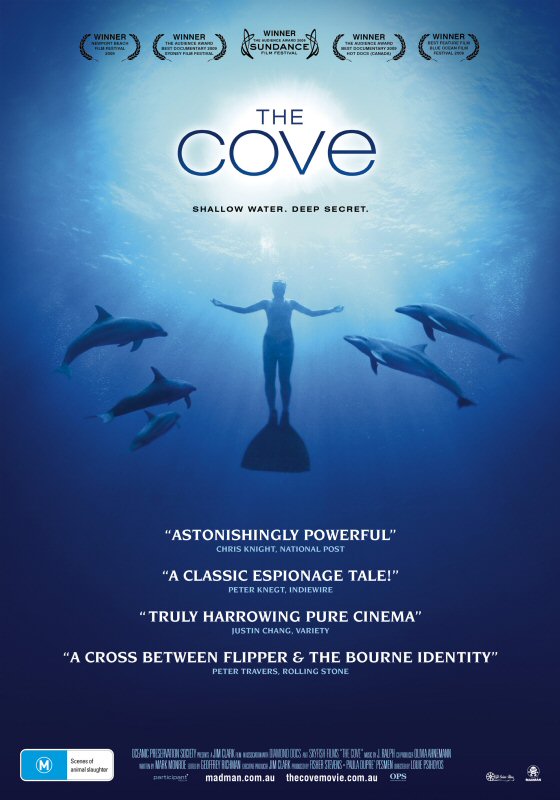
The Cove: Using state-of-the-art equipment, a group of activists, led by renowned dolphin trainer Ric O’Barry, infiltrate a cove near Taijii, Japan to expose both a shocking instance of animal abuse and a serious threat to human health.

A Fall From Freedom: The first comprehensive film to reveal the long and sordid history of the captive whale and dolphin entertainment business. Many of these marine parks and aquariums are directly or indirectly responsible for the death of thousands of the very animals they use for public entertainment. Premature deaths. Trainer injuries. Illegal practices. Educational misrepresentation. Government incompetence. Secret deals. These and many other issues are presented, and documented for the first time in this powerful documentary, narrated by actor Mike Farrell.

Blackfish: Notorious killer whale Tilikum is responsible for the deaths of three individuals, including a top killer whale trainer. Blackfish shows the sometimes devastating consequences of keeping such intelligent and sentient creatures in captivity.


Wild & Free vs. Captivity & Imprisonment

In the wild vs. in captivity ( information credited to – the Animal Welfare Institute http://awionline.org )

In The Wild… In Captivity…
Each day, dolphins travel up to 40 miles and orcas travel up to 100, feeding and socializing with other members of their pods. Pods can contain hundreds of individuals with complex social bonds and hierarchies. Cetaceans are housed in small concrete or glass enclosures with no chance to swim for very long or dive deep distances.

Sometimes they are housed alone without opportunities for socialization, or they are forced to be with other animals and even species with whom they would not naturally have close contact.

Dolphins are naturally energetic, playful and inquisitive. When tasked with entertaining tourists all day, with nowhere to escape, dolphins often become bored, frustrated and aggressive.
Cetaceans spend approximately 80-90% of their time under water. They have the freedom to perform natural behaviors on their own terms. Dolphins are forced to perform artificial activities such as “walking” on water, jumping through hoops, and nodding their heads on cue.
Whales and dolphins eat a variety of fish, squid and octopi species, as well as smaller mammals.

Orcas and others work in groups, utilizing complex strategies to locate their prey. Some dive thousands of feet in search of food sources.

The animals are given a staple diet of dead fish, often as positive reinforcement during training, with no opportunities to utilize their sophisticated hunting techniques.
Cetaceans live in complex societies with their own cultures and dialects, maintaining close family ties with grandparents, aunts and uncles. Some remain in the same pods for life. Individuals are violently removed from the wild, with no hope of ever being reunited with their families. Captive animals are withheld forever from the wild gene pool.
Whales and dolphins live in a world of sound.

They rely on echolocation as their main form of communication and use sound to find mates, migrate, communicate, stay at or return to a favored feeding area, nurse, care for young, and catch and escape prey.

Animals are forced to listen to filtration systems, pumps, music and people clapping and yelling on a regular basis.

Their concrete and/or glass enclosures also manipulate sounds, so even if two individuals are housed together, their communication is warped.

Cetaceans are surrounded by other sea life and are an integral part of the marine food web.

Whales and dolphins have evolved for millions of years in the oceans, and in most cases, they are the top predators.

Artificial captive environments are sterile and lack stimulation. The animals’ water is chemically treated with chlorine – though they still suffer from bacterial infections that can be deadly.

The highly chlorinated water can also cause irritation and even blindness.


  • Activities like beaching themselves in aquatic shows contrast with dolphins in the wild that  never would beach themselves. Scientists believe that this is extremely harmful because dolphins resting on their bellies over a hard surface, will eventually damage their internal organs.
  • By withholding food, some trainers coerce dolphins into repetitive and unnatural behaviours, performing ‘tricks’ for the public. Hunger forces the dolphins to ignore their most basic natural instincts. They are even trained to beach themselves, despite the danger of doing so.
  • The mortality rates and abnormal behaviours of captive dolphins prove that a lack of stimulation causes them terrible stress. Swimming listlessly in circles is just one common indictor of boredom and psychological distress.
  • Space is also an issue – pools are miserably small for large, far ranging animals that would swim up to 50 miles a day in the wild. The shallow waters expose dolphins’ delicate skin to painful sunburns.
  • Dolphins in the wild spend approximately 80% of their time deep below the surface exploring the depths of the ocean. The need for continuous movement of Wild dolphins is one of the reasons that critics of captivity are using as arguments to request the release of dolphins in captivity.
  • Many dolphins do not survive the trauma of capture. Of those that do, 53% die within three months of confinement. Captive dolphins also suffer and die from intestinal disease, stress-related illness and chlorine poisoning.
  • ‘Swim with dolphins’ programmes cannot guarantee the safety of people interacting with dolphins, even those bred in captivity. These powerful animals are often stressed from being in a confined space. Unsurprisingly, accounts of deliberate and inadvertent human injuries caused by captive dolphins include broken limbs.
  • Dolphins in captivity are not trained, they are conditioned to perform “tricks” from being starved and only fed twice daily and generally only when performing “tricks”


A very informative video about Dolphin & Whale captivity.

After watching this video – Take the Pledge Not to Buy a Ticket to a Dolphin Showclick here

Help the Marineland Whistleblowers

Marineland whistleblowers need your help!

To date, 15 ex-employees have bravely spoken out about Marineland’s poor treatment of animals; and now the corporation has taken legal action against two. On Oct 17th, Christine Santos was fired after not signing a document that included a statement she’d never seen animal abuse at the park. Shortly thereafter, Marineland served a $1.25 million defamation lawsuit against the former trainer for telling the Toronto Star a killer whale was sporadically bleeding from its tail. Kiska, Marineland’s lone killer whale is now without her most trusted trainer. On Feb 13th Marineland launched a separate suit against Phil Demers citing $1.5 million in damages, with more suits expected.

If you are able to please consider making a donation by clicking here  Any and all proceeds will be provided solely for the expenses incurred in defending any whistleblowers and any unused proceeds will be dedicate tot he continued avocation for Ontario’s captive animals.

Tweet Storm for Marineland Whistleblowers March 20, 2013 click here  for the Facebook page and more information

Spread the word: Tweet storm for #marineland #Whistleblowers on March 20 #SaveMarinelandAnimals

Support Marineland Whistleblowers by signing this petition: Save Marineland Animals

Watch this informative video – Behind the scenes at Marineland – Phil Demers former Marineland Trainer

For all the animals of Marineland!

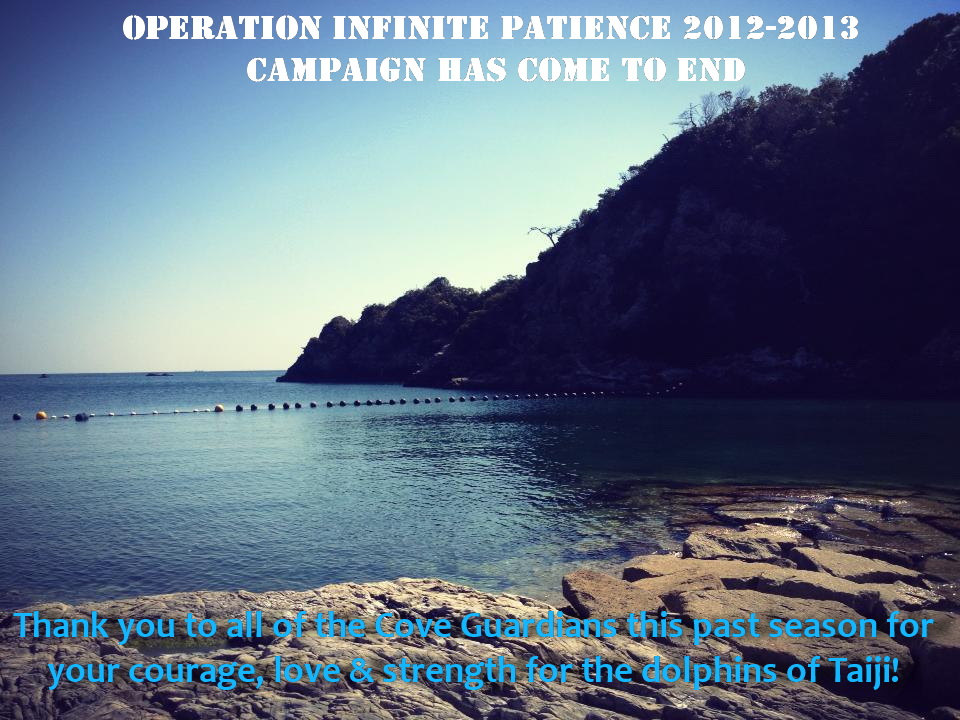
Opertation Infinite Patience 2012-2013

CG OIP

To read the most recent and past Cove Guardian reports please click here

Facebook – Sea Shepherd Cove Guardians

Twitter – @CoveGuardians

Email – coveguardian@seashepherd.org if you are interested in becoming a Cove Guardian for next season

cove guardian logo2

1876_10151779292794616_1726133112_n

For the dolphins!